Hydracrylonitrile → 3-(Tert-butyldiphenylsilyloxy)propanenitrile
Reaction equation

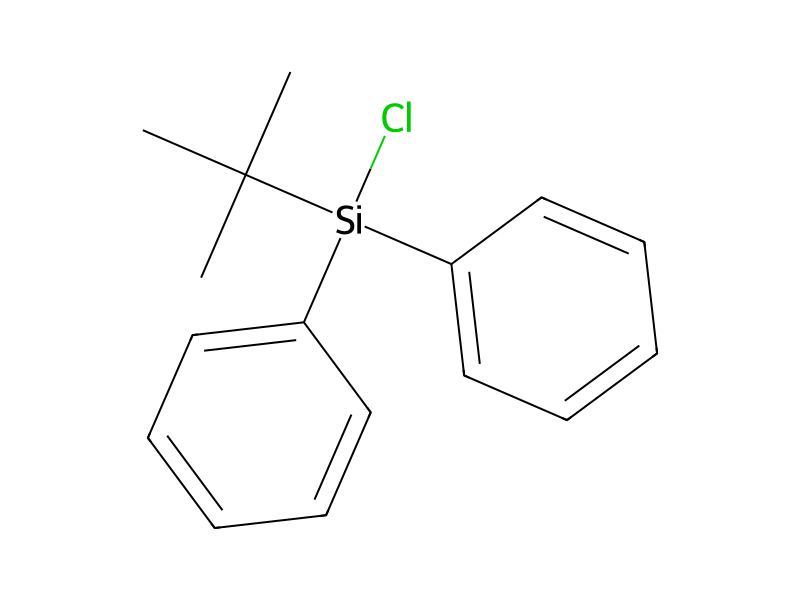
[OH:1][CH2:2][CH2:3][C:4]#[N:5].CCN(CC)CC.[CH3:13][C:14]([Si:17](Cl)([C:24]1[CH:29]=[CH:28][CH:27]=[CH:26][CH:25]=1)[C:18]1[CH:23]=[CH:22][CH:21]=[CH:20][CH:19]=1)([CH3:16])[CH3:15]>CN(C1C=CN=CC=1)C.C(Cl)Cl>[Si:17]([O:1][CH2:2][CH2:3][C:4]#[N:5])([C:14]([CH3:16])([CH3:15])[CH3:13])([C:24]1[CH:25]=[CH:26][CH:27]=[CH:28][CH:29]=1)[C:18]1[CH:23]=[CH:22][CH:21]=[CH:20][CH:19]=1Participants
6





Procedure
To a solution of 3-hydroxypropanenitrile (7.1 g, 0.1 mol) and DMAP (1.22 g, 0.01 mmol) in dry DCM (30 mL) at room temperature was added NEt3 (30.3 g, 0.3 mol), followed by TBDPSCl (27.5 g, 0.1 mol). A lot of white solid appeared. After stirring at room temperature overnight, the reaction mixture was quenched with sat. NH4Cl solution, extracted with DCM, dried over Na2SO4, and evaporated in vacuo. Flash chomatography (SiO2, hexane/EtOAc=100:2 to 100:5 to 100:10) of the crude material gave the title compound as a white solid.
Workup
- customthe reaction mixture was quenched with sat. NH4Cl solution
- extractionextracted with DCM
- dry with materialdried over Na2SO4
- customevaporated in vacuo
Sources & evidence
- ORD record
- ord-6950f317ece74b549c50cb2329207854
- Source dataset
- uspto-grants-2009_11
- Patent number
- US07612060B2
Reaction notes
Loading…