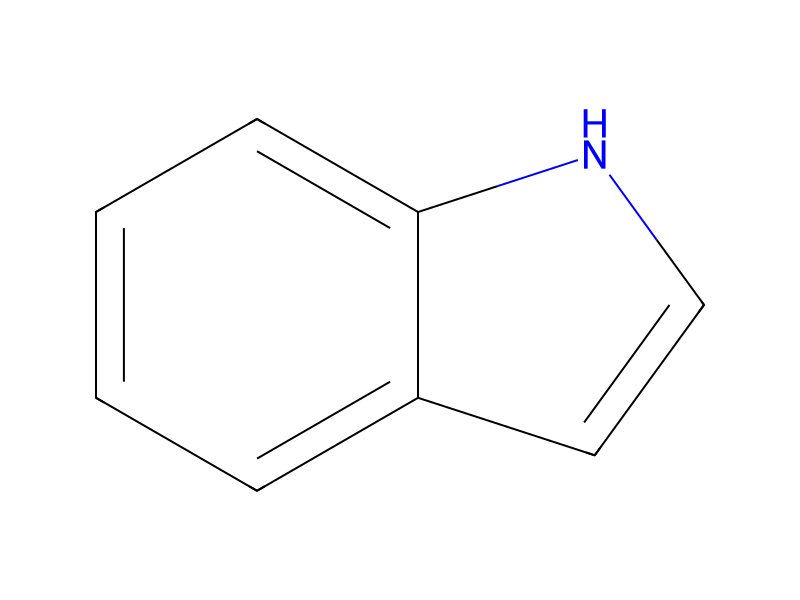
1-Methylpyrrole → Indole
Reaction equation

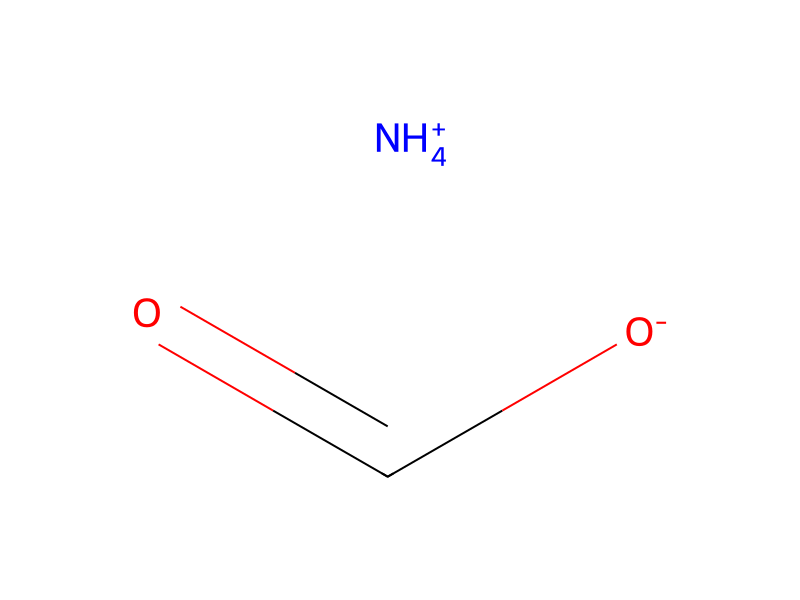
[NH:1]1[C:9]2[CH:8]=[CH:7][CH2:6][C:5](=O)[C:4]=2[CH:3]=[CH:2]1.CN1C=CC=C1.C([O-])=O.[NH4+]>O1CCCC1.CO.[Pd]>[NH:1]1[C:9]2[C:4](=[CH:5][CH:6]=[CH:7][CH:8]=2)[CH:3]=[CH:2]1Participants
Reactant 3
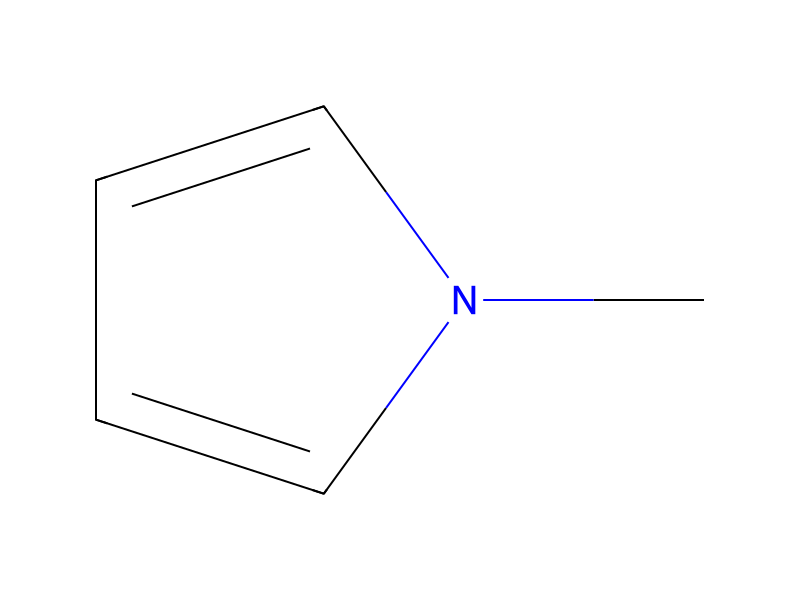

Product 1
Reagents, catalysts & solvents 3



Procedure
Compound CP7-19 of the formula X, where R=trans-CH=CH; Het=N-methylpyrrole; m=1; n=0; A=Butyramido, was prepared. 10% Pd/C(30 mg) and ammonium formate (30 mg) were added to 5-benzyloxy-3-tert-butyloxycarbonyl-1-chloromethyl-8-methyl-1,2-dihydro-3H-pyrrolo 3,2-e!indole (30 mg), which was synthesized using the reported methods (Ref. D. L. Boger and R. S. Coleman, J. Am. Chem. Soc. 1988, 110, 4796-4807), dissolved in a solution of tetrahydrofuran and methanol (0.8 ml, 1/1, v/v) and the reaction mixture was stirred at room temperature for 20 min. The solid was removed by filtration and water (2 ml) was added. The product was extracted with ethyl acetate (10 ml×3) and the organic phase was dried over sodium sulfate. The solvent was removed in vacuo to generate an oil CP7-13. Without further purification, the oil CP7-13 was treated with anhydrous 3N hydrochloric acid in ethyl acetate (3 ml) at room temperature for 40 min. The solvent was removed in vacuo to give an unstable intermediate, CP7-14. Without further purification, CP7-14 was dissolved in dimethylformamide (1 ml) under nitrogen. 4-Butyramido-N-methyl-2-pyrroleacrylic acid (CP7-6) (16.6 mg) and 1- (3-dimethylamino)propyl!-3-ethylcarbodiimide hydrochloride (67.6 mg) were added sequentially. The reaction mixture was stirred in dark at room temperature for 2 days. The mixture was purified on silica plate eluting with a mixture of acetone and ethyl acetate (1:1, v/v) to give an unstable CP7-17. Without further purification, CP7 -17 was dissolved in a mixture of acetonlerile, triethylamine and water (0.6 ml of each) and the reaction mixture was stirred for 30 min under nitrogen. The solvent was removed by a high vacuum pump and the residue was dissolved in acetone. The mixture was then purified on a silica plate eluting with a mixture of acetone and ethyl acetate (1:1, v/v). 9:4 mg (32 % yield) of a yellow powder was obtained. 1H NMR (acetone-d6, ppm): 10.48 (br s, 1H, NH), 8.97 (br s, 1H, NH), 7.63-7.58 (d, 1H, J=15.5 Hz, CHCH), 7.34 (d, 1H, J=2.0 Hz, C5'-H), 6.88 (br m, 1H, C6-H), 6.72 (br s, 1H, C3-H), 6.67 (d, 1H, J=2.0 Hz, C3'-H), 6.58-6.62 (d, 1H, J=15.5 Hz, CHCH), 4.31-4.27 (d, 1H, J=10.5 Hz, NCH), 4.21-416 (dd, 1H, J=4.5, 10.5 Hz, NCHH), 3.76 (s, 3H, NCH3), 3.08-3.03 (m, C8a-H), 2.27-2.21 (t, 2H, J=7.5 Hz, CH3CH2CH2), 1.97-1.93 (dd, 1H, J=4.5, 7.5 Hz, C8-HH), 1.7-1.59 (m, 2H, CH3CH2CH2), 1.28-1.25 (t, 1H, J=4.5 Hz, C8-HH), 0.94-0.89 (t, 3H, J=7.5 Hz, CH3CH2CH2). FABHRMS calcd for C24H26N4O3H 419.2083, found 419.2092 (100%).
Workup
- customA=Butyramido, was prepared
- customThe solid was removed by filtration and water (2 ml)
- additionwas added
- extractionThe product was extracted with ethyl acetate (10 ml×3)
- dry with materialthe organic phase was dried over sodium sulfate
- customThe solvent was removed in vacuo
- customWithout further purification
- additionthe oil CP7-13 was treated with anhydrous 3N hydrochloric acid in ethyl acetate (3 ml) at room temperature for 40 min
- customThe solvent was removed in vacuo
- customto give an unstable intermediate, CP7-14
- customWithout further purification, CP7-14
- dissolutionwas dissolved in dimethylformamide (1 ml) under nitrogen
- addition-3-ethylcarbodiimide hydrochloride (67.6 mg) were added sequentially
- stirringThe reaction mixture was stirred in dark at room temperature for 2 days
- customThe mixture was purified on silica plate
- washeluting with a mixture of acetone and ethyl acetate (1:1, v/v)
- customto give an unstable CP7-17
- customWithout further purification
- dissolutionCP7 -17 was dissolved in a mixture of acetonlerile, triethylamine and water (0.6 ml of each) and the reaction mixture
- stirringwas stirred for 30 min under nitrogen
- customThe solvent was removed by a high vacuum pump
- dissolutionthe residue was dissolved in acetone
- customThe mixture was then purified on a silica plate
- washeluting with a mixture of acetone and ethyl acetate (1:1, v/v)
Sources & evidence
- ORD record
- ord-3bab2b38c40c4bcbb240cb4548616179
- Source dataset
- uspto-grants-1996_03
- Patent number
- US05502068
Reaction notes
Loading…