Ammonia → HCID 12681766, compound
Reaction equation

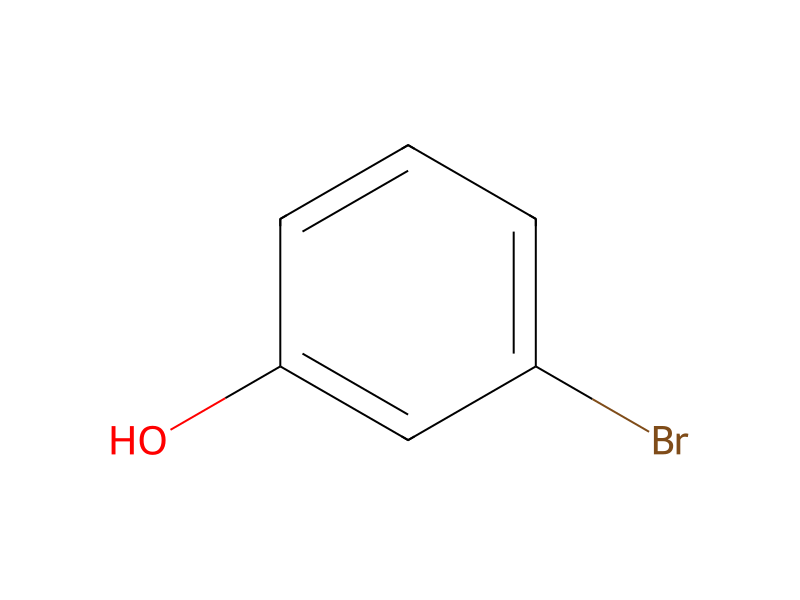
Br[C:2]1[CH:3]=[C:4]([OH:8])[CH:5]=[CH:6][CH:7]=1.O1C=CCCC1.C1(C)C=CC(S(O)(=O)=O)=CC=1.C1O[C:29]2([CH2:34][CH2:33][C:32](C#N)([N:35]([CH3:37])[CH3:36])[CH2:31][CH2:30]2)[O:28]C1.[Cl-].[NH4+].Cl.N>C1C=CC=CC=1.C(OCC)C.C(Cl)(Cl)Cl.CO.O1CCCC1>[OH:8][C:4]1[CH:3]=[C:2]([C:32]2([N:35]([CH3:37])[CH3:36])[CH2:33][CH2:34][C:29](=[O:28])[CH2:30][CH2:31]2)[CH:7]=[CH:6][CH:5]=1Participants
Reactant 7






Product 1

Reagents, catalysts & solvents 5





Conditions
- Temperature
- 25 °C
Procedure
A reaction solution consisting of 5.0 gm. (0.029 mole) m-bromophenol, 5.0 gm. dihydropyran, 0.30 gm. p-toluenesulfonic acid, and 80 ml. anhydrous diethyl ether is stirred at 25° C. for four (4) hours. The mixture is washed successively with 25 ml. portions of 1 N aqueous sodium hydroxide, with water, and with brine. The thus washed organic layer is taken to dryness by removing the solvent by evaporation under reduced pressure. There is thus obtained 7.42 gm. of m-(tetrahydropyranyl-2-oxy)bromobenzene which is converted to the corresponding Grignard reagent by dissolving in 60 ml. of tetrahydrofuran and adding the solution to 0.70 gm. magnesium. To this Grignard is added 1.50 gm. (0.0071 mole) of 4-cyano-4-dimethylaminocyclohexanone ethylene ketal (prepared in Example 41, Part B, above) dissolved in 30 ml. tetrahydrofuran. This reaction mixture is heated at the reflux temperature for 22 hours. After cooling, the mixture is treated with 10 ml. saturated ammonium chloride in benzene. The organic solvent portion is initially washed with water and then with brine. The organic solvent is then removed by evaporation under reduced pressure. The residue thus obtained is dissolved in diethyl ether and treated with 4 N ethereal hydrogen chloride until precipitation of the hydrochloride salt is complete. The salt is collected on a filter and then suspended in 25 ml. water containing 1 ml. 2.5 N hydrochloric acid. The acidified mixture is stirred at 25° C. for one hour, when sodium bicarbonate (solid) is added until the pH is 8. This slightly basic mixture is extracted thoroughly with diethyl ether. The ether extracts are combined and the ether removed be evaporation under reduced pressure. The residue thus obtained is transferred to a column of the grade silica gel 1" in cross section by 48" in length. The chromatogram is developed with a solvent medium consisting of 0.5% ammonia and 7.5% methanol in chloroform, and 20-ml. fractions are collected. Those fractions which contain product (as determined by tlc analysis) are combined. The solvent is removed by evaporation under reduced pressure to give 0.96 gm. (48% yield) of crude 4-(m-hydroxyphenyl)-4-dimethylaminocyclohexanone, ethylene ketal having a melting point at 169° to 175° C. An analytical sample is obtained by recrystallization from a mixture of ethyl acetate and cyclohexane. The melting point is 175° to 177° C.
Workup
- washThe mixture is washed successively with 25 ml
- customby removing the solvent
- customby evaporation under reduced pressure
- dissolutionby dissolving in 60 ml
- additionof tetrahydrofuran and adding the solution to 0.70 gm
- additionTo this Grignard is added 1.50 gm
- dissolutionabove) dissolved in 30 ml
- temperatureThis reaction mixture is heated at the reflux temperature for 22 hours
- temperatureAfter cooling
- additionthe mixture is treated with 10 ml
- washThe organic solvent portion is initially washed with water
- customThe organic solvent is then removed by evaporation under reduced pressure
- customThe residue thus obtained
- customThe salt is collected on
- filtrationa filter
- additionwhen sodium bicarbonate (solid) is added until the pH is 8
- extractionThis slightly basic mixture is extracted thoroughly with diethyl ether
- customthe ether removed
- customevaporation under reduced pressure
- customThe residue thus obtained
- customfractions are collected
- customThe solvent is removed by evaporation under reduced pressure
- customto give 0.96 gm
Sources & evidence
- ORD record
- ord-294e274105d84209a5fc1273e768ed89
- Source dataset
- uspto-grants-1979_12
- Patent number
- US04180584
Reaction notes
Loading…