Potassium Phosphate, Tribasic → 6-Cyclopropylpyridin-2-amine
Reaction equation

[NH2:1][C:2]1[CH:7]=[CH:6][CH:5]=[C:4](Br)[N:3]=1.[CH:9]1(B(O)O)[CH2:11][CH2:10]1.P([O-])([O-])([O-])=O.[K+].[K+].[K+].C1(P(C2CCCCC2)C2CCCCC2)CCCCC1>O.C(OCC)(=O)C.CC([O-])=O.CC([O-])=O.[Pd+2].C1(C)C=CC=CC=1>[CH:9]1([C:4]2[N:3]=[C:2]([NH2:1])[CH:7]=[CH:6][CH:5]=2)[CH2:11][CH2:10]1Participants
Reactant 4

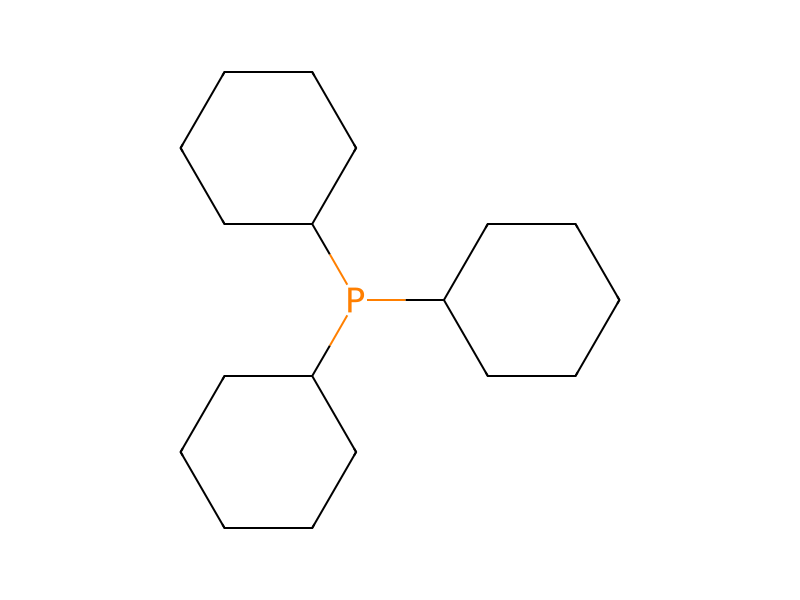

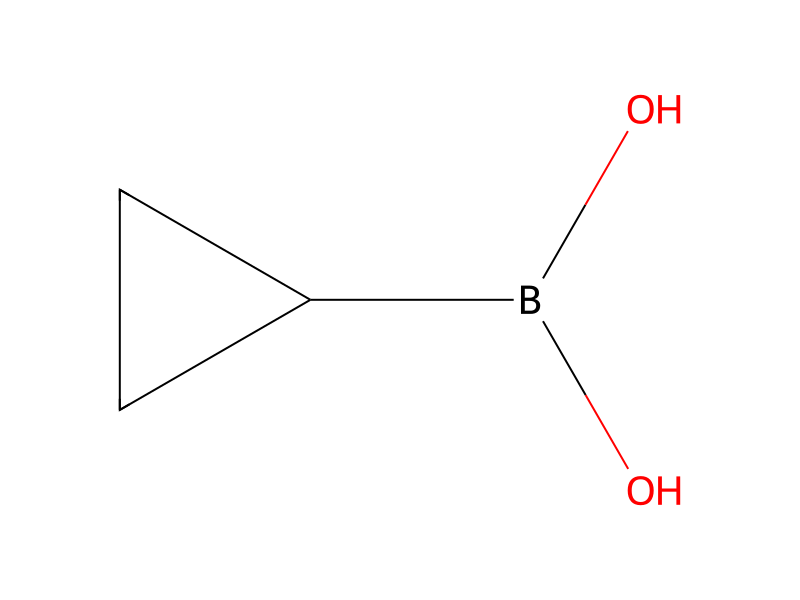
Product 1

Reagents, catalysts & solvents 4




Conditions
- Temperature
- 100 °C
Procedure
To a sealable vial under nitrogen was added 2-amino-6-bromo-pyridine (1.6 g), cyclopropyl boronic acid (1.03 g) (prepared according to Wallace et al. Tetrahedron Lett. 2002, 43, 6987-6990), potassium phosphate (6.87 g), tricyclohexylphosphine (0.260 g) followed by water (2 mL) and toluene (40 mL). Pd(OAc)2 (0.104 g) was then added and the vial was sealed and heated at 100° C. over 16 hours. The reaction was then allowed to cool to ambient temperature and diluted with water and ethyl acetate. The phases were separated and the aqueous phase was extracted with more ethyl acetate (3×). The combined phases were washed with brine and dried over sodium sulfate. Filtration and evaporation of the volatiles afforded a crude residue which was purified via ISCO Combiflash chromatography using ethyl acetate/heptane as the eluent to give the desired 6-cyclopropyl-pyridin-2-ylamine as yellow solid (0.450 g).
Workup
- customthe vial was sealed
- temperatureto cool to ambient temperature
- customThe phases were separated
- extractionthe aqueous phase was extracted with more ethyl acetate (3×)
- washThe combined phases were washed with brine
- dry with materialdried over sodium sulfate
- filtrationFiltration and evaporation of the volatiles
- customafforded a crude residue which
- customwas purified via ISCO Combiflash chromatography
Sources & evidence
- ORD record
- ord-131b9f831ddc4cb5862717b18f819ee6
- Source dataset
- uspto-grants-2009_01
- Patent number
- US07482341B2
Reaction notes
Loading…