Hydrochloric Acid → HCID 53673974, compound
Reaction equation

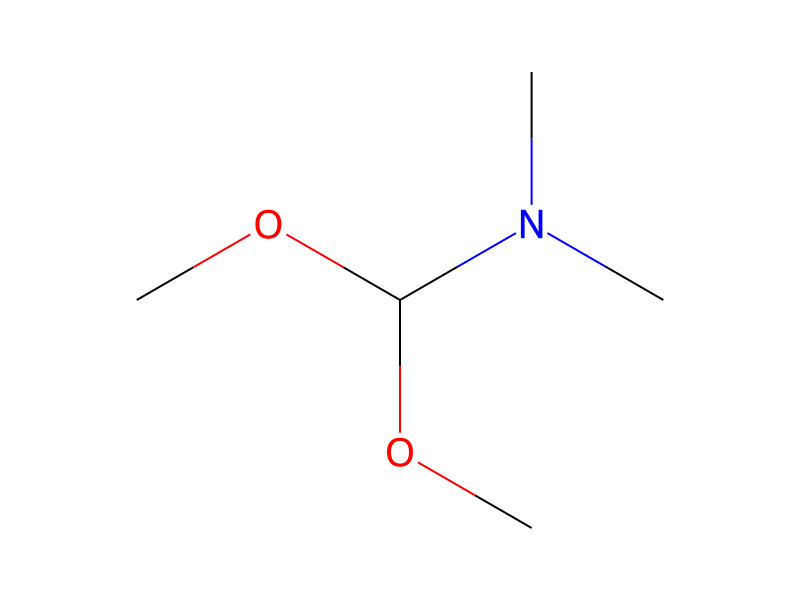
[N+:1]([C:4]1[CH:9]=[CH:8][CH:7]=[C:6]([CH3:10])[C:5]=1[CH3:11])([O-:3])=[O:2].[CH3:12]OC(OC)N(C)C.N1CCCC1.Cl.[NH2:26][NH:27][C:28]([NH2:30])=[O:29].Cl>O>[CH3:10][C:6]1[CH:7]=[CH:8][CH:9]=[C:4]([N+:1]([O-:3])=[O:2])[C:5]=1[CH2:11][CH:12]=[N:26][NH:27][C:28]([NH2:30])=[O:29]Participants






Conditions
- Temperature
- 110 °C
Procedure
3-Nitro-ortho-xylene (1.77 ml, 13.23 mmol, 1.0 eq.) was combined with dimethylformamide dimethyl acetal (2.11 ml, 15.88 mmol, 1.2 eq.) dimethylformamide (7.35 ml, 1.8M) and pyrrolidine (1.32 ml, 15.88 mmol, 1.2 eq.) and heated at 110° C. for 8 hours. The reaction was then cooled to room temperature and concentrated. The residue was dissolved in dimethylformamide (7.35 ml, 1.8M) and treated at room temperature with a solution of semicarbazide-hydrochloride (1.55 g, 13.89 mmol, 1.05 eq.) in concentrated hydrochloric acid (1.2 ml, 14.55 mmol, 1.1 eq.) and water (16.5 ml, 0.8M). The mixture was stirred at room temperature for 30 minutes, cooled to 0° C. and filtered. The precipitate was washed with water (30 ml), cold ethanol (15 ml) and ethyl ether (25 ml) and then dried in vacuo to provide the title A compound (2.44 g).
Workup
- temperatureThe reaction was then cooled to room temperature
- concentrationconcentrated
- dissolutionThe residue was dissolved in dimethylformamide (7.35 ml, 1.8M)
- temperaturecooled to 0° C.
- filtrationfiltered
- washThe precipitate was washed with water (30 ml), cold ethanol (15 ml) and ethyl ether (25 ml)
- customdried in vacuo
Sources & evidence
- ORD record
- ord-7d32c927558e4187832c2f32fde4bb1b
- Source dataset
- uspto-grants-1994_12
- Patent number
- US05374615
Reaction notes
Loading…