Water → 2-Fluoro-5-phenylethynylpyridine
Reaction equation

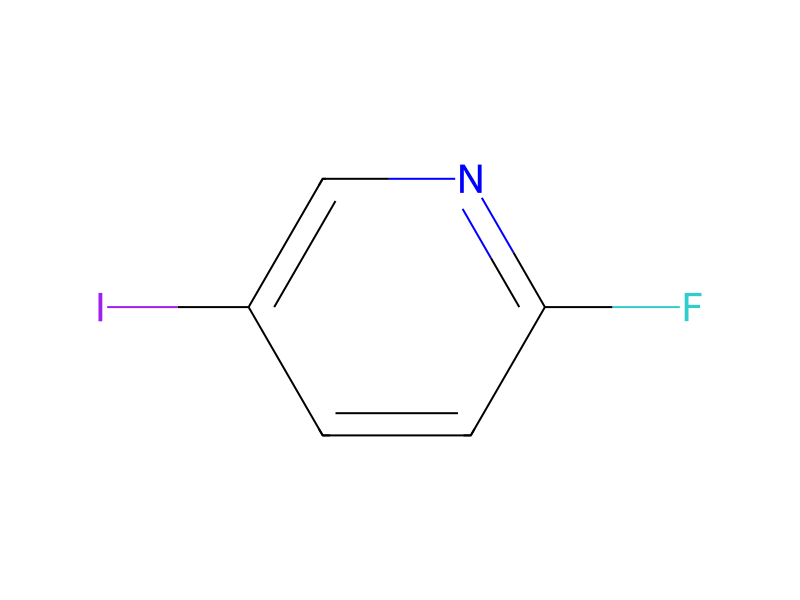
[F:1][C:2]1[CH:7]=[CH:6][C:5](I)=[CH:4][N:3]=1.C(N(CC)CC)C.[C:16]1([C:22]#[CH:23])[CH:21]=[CH:20][CH:19]=[CH:18][CH:17]=1.O>C1COCC1.C1C=CC(P(C2C=CC=CC=2)C2C=CC=CC=2)=CC=1.C1C=CC(P(C2C=CC=CC=2)C2C=CC=CC=2)=CC=1.Cl[Pd]Cl.[Cu]I.C(OCC)C>[F:1][C:2]1[CH:7]=[CH:6][C:5]([C:23]#[C:22][C:16]2[CH:21]=[CH:20][CH:19]=[CH:18][CH:17]=2)=[CH:4][N:3]=1Participants
Reactant 4



Product 1

Reagents, catalysts & solvents 4




Procedure
In an 100 ml 2-necked round bottomed flask under Argon were dissolved 2-fluoro-5-iodopyridine (5.0 g, 22.4 mmol, 1.0 equiv.) in THF (30 ml). After 5 minutes at room temperature were added bis(triphenylphosphine)palladium(II)chloride (944 mg, 1.35 mmol, 0.06 equiv.), triethylamine (6.81 g, 9.32 ml, 67.3 mmol, 3.0 equiv.), phenyl acetylene (2.75 g, 2.95 ml, 26.9 mmol, 1.2 equiv.) and copper(I)iodide (128 mg, 0.67 mmol, 0.03 equiv.). The brown suspension was cooled with water (exothermic) to room temperature and stirred overnight. Then 200 ml of diethylether were added, the mixture was filtered, washed with ether and concentrated in vacuum to yield 5.7 g of a brown solid which was adsorbed on silica and was chromatographed in 2 portions over a 100 g prepacked silica column eluting with a 0-10% ethyl acetate in heptane gradient to yield 3.99 g (91%) of the title compound as a light brown solid, MS: m/e=198.1 (M+H+).
Workup
- filtrationthe mixture was filtered
- washwashed with ether
- concentrationconcentrated in vacuum
Sources & evidence
- ORD record
- ord-86222ba0544a42638b4e9ac3d27607a1
- Source dataset
- uspto-grants-2015_12
- Patent number
- US09221802B2
Reaction notes
Loading…