4-Methylmorpholine → HCID 67529610, compound
Reaction equation

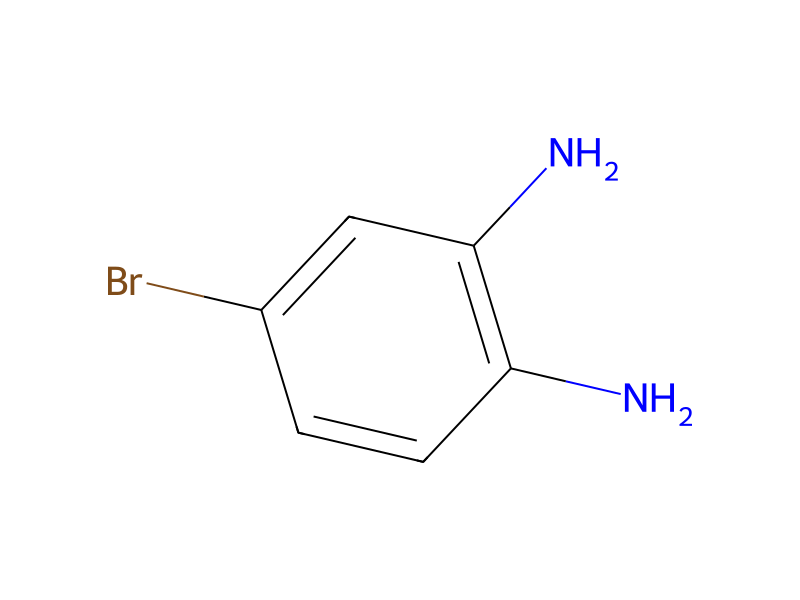
[O:1]1[C:5]2([CH2:10][CH2:9][CH:8]([CH:11]=[CH:12][C:13](Cl)=[O:14])[CH2:7][CH2:6]2)[O:4][CH2:3][CH2:2]1.[Br:16][C:17]1[CH:18]=[C:19]([NH2:24])[C:20]([NH2:23])=[CH:21][CH:22]=1.CN1CCOCC1.C(OCC)(=O)C>O1CCCC1.O>[NH2:24][C:19]1[CH:18]=[C:17]([Br:16])[CH:22]=[CH:21][C:20]=1[NH:23][C:13](=[O:14])[CH:12]=[CH:11][CH:8]1[CH2:9][CH2:10][C:5]2([O:4][CH2:3][CH2:2][O:1]2)[CH2:6][CH2:7]1Participants
7






Procedure
A solution of 3-(1,4-dioxa-spiro[4.5]dec-8-yl)acryloyl chloride (21.7 mmol) in tetrahydrofuran (20 mL) was added slowly to a solution of 4-bromo-benzene-1,2-diamine (5.2 g, 27.9 mmol) and N-methylmorpholine (7.1 mL, 83.7 mmol) in THF (50 mL) at 0° C. The resulting solution was allowed to warm up to room temperature. After 18 h the resulting solution was poured into a solution of ethyl acetate and water (1:1, 80 mL). The layers were separated. The organic layer was washed successively with water and brine dried over sodium sulfate, filtered and concentrated to yield N-(2-amino-4-bromo-phenyl)-3-(1,4-dioxa-spiro[4.5]dec-8-yl)-acrylamide.
Workup
- customThe layers were separated
- washThe organic layer was washed successively with water and brine
- dry with materialdried over sodium sulfate
- filtrationfiltered
- concentrationconcentrated
Sources & evidence
- ORD record
- ord-0f956dd02b2849d09b3aea0008439965
- Source dataset
- uspto-grants-2012_07
- Patent number
- US08217060B2
Reaction notes
Loading…