Triethylamine → 5-Bromo-7-fluoro-1H-indole-2-propanoic acid
Reaction equation

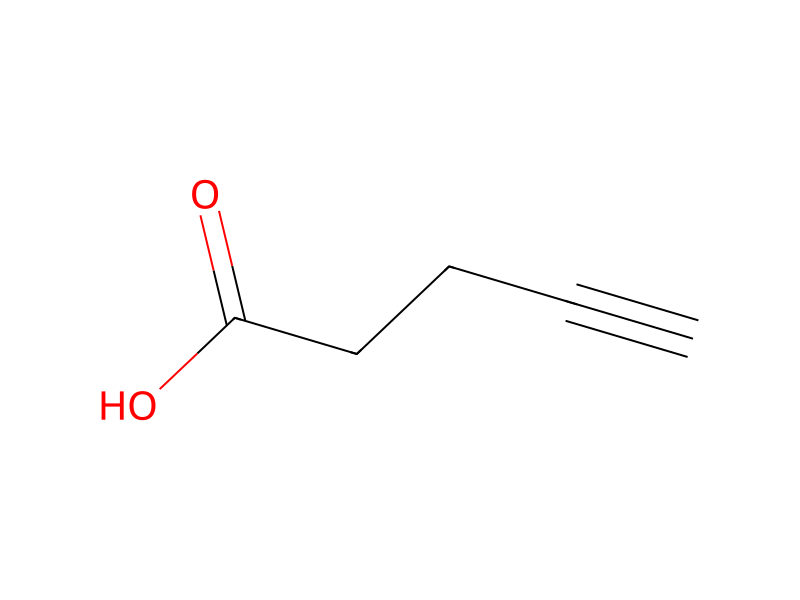
[Br:1][C:2]1[CH:7]=[C:6](I)[C:5]([NH2:9])=[C:4]([F:10])[CH:3]=1.[C:11]([OH:17])(=[O:16])[CH2:12][CH2:13][C:14]#[CH:15].C(N(CC)CC)C>CN(C=O)C.[Cu]I.Cl[Pd](Cl)([P](C1C=CC=CC=1)(C1C=CC=CC=1)C1C=CC=CC=1)[P](C1C=CC=CC=1)(C1C=CC=CC=1)C1C=CC=CC=1>[Br:1][C:2]1[CH:7]=[C:6]2[C:5](=[C:4]([F:10])[CH:3]=1)[NH:9][C:14]([CH2:13][CH2:12][C:11]([OH:17])=[O:16])=[CH:15]2Participants
Reactant 3


Product 1

Reagents, catalysts & solvents 3



Conditions
- Temperature
- 80 °C
Procedure
To a solution of (4-bromo-2-fluoro-6-iodophenyl)amine (D159) (2 g), 4-pentynoic acid (0.62 g) and copper(I) iodide (0.60 g) in DMF (4 mL) stirred under nitrogen at room temperature was added bis(triphenylphosphine)palladium(II) chloride (0.222 g), then triethylamine (2.2 mL) was added in a portion. The reaction mixture was stirred at 80° C. in microwave reactor for 2 hrs. The solid in the mixture was filtered, the filtrate was diluted with EtOAc (30 mL), washed with brine (80 mL) and water (50 mL×2). The organic layer was dried over anhydrous sodium sulfate. The dried solution was concentrated. The residue was purified by column chromatography to afford 3-(5-bromo-7-fluoro-1H-indol-2-yl)propanoic acid (D160) (700 mg) as a yellow solid. MS (ES): C11H9BrFNO2 requires 285; found 286.0 (M+H+). δH (CDCl3, 400 MHz): 2.75 (2H, t), 3.07 (2H, t), 5.45 (1H, s), 7.05 (1H, d), 7.41 (1H, s).
Workup
- filtrationThe solid in the mixture was filtered
- additionthe filtrate was diluted with EtOAc (30 mL)
- washwashed with brine (80 mL) and water (50 mL×2)
- dry with materialThe organic layer was dried over anhydrous sodium sulfate
- concentrationThe dried solution was concentrated
- customThe residue was purified by column chromatography
Sources & evidence
- ORD record
- ord-6a6f3d4cf79d4d92aa9be0a455178675
- Source dataset
- uspto-grants-2012_07
- Patent number
- US08217028B2
Reaction notes
Loading…