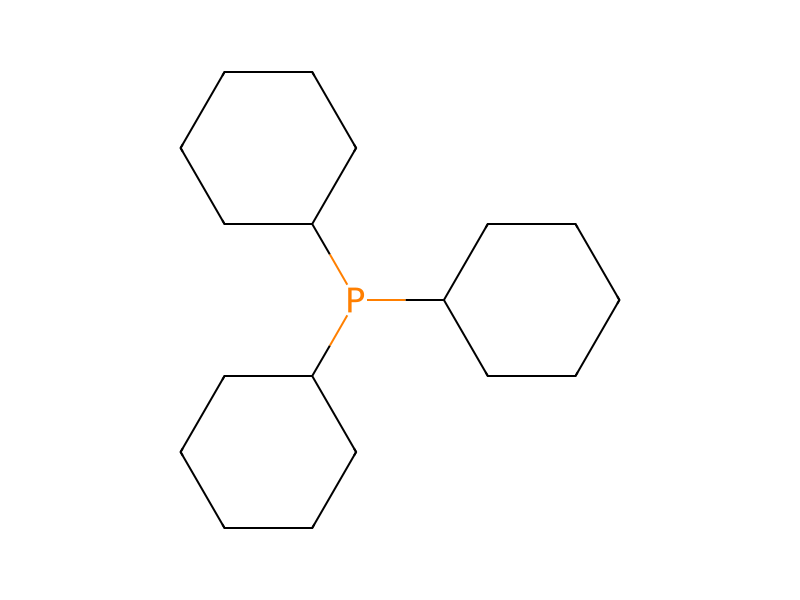
Tricyclohexylphosphine → HCID 70977491, compound
Reaction equation

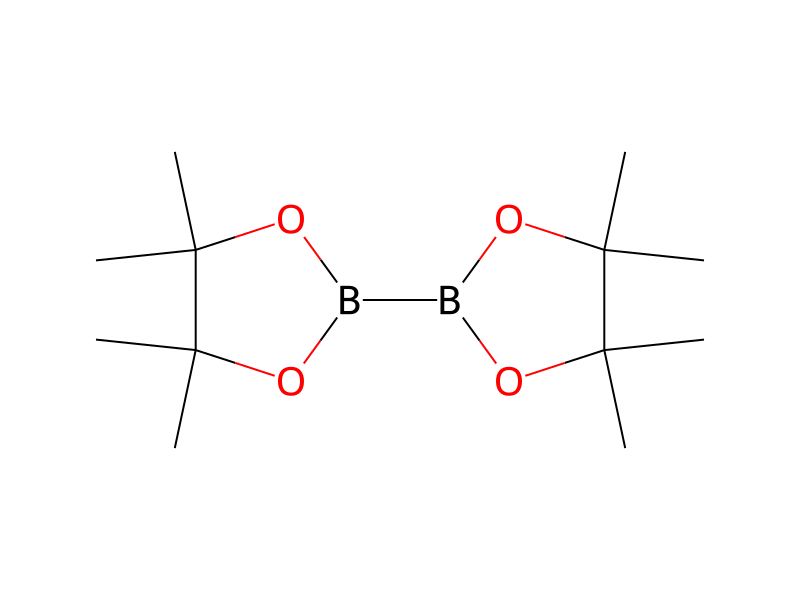
Br[C:2]1[CH:3]=[C:4]([C:8]2([C:11]([O:13][CH3:14])=[O:12])[CH2:10][CH2:9]2)[CH:5]=[N:6][CH:7]=1.[B:15]1(B2OC(C)(C)C(C)(C)O2)[O:19]C(C)(C)C(C)(C)[O:16]1.C1(P(C2CCCCC2)C2CCCCC2)CCCCC1.C([O-])(=O)C.[K+]>C1C=CC(/C=C/C(/C=C/C2C=CC=CC=2)=O)=CC=1.C1C=CC(/C=C/C(/C=C/C2C=CC=CC=2)=O)=CC=1.C1C=CC(/C=C/C(/C=C/C2C=CC=CC=2)=O)=CC=1.[Pd].[Pd].O1CCOCC1>[CH3:14][O:13][C:11]([C:8]1([C:4]2[CH:3]=[C:2]([B:15]([OH:19])[OH:16])[CH:7]=[N:6][CH:5]=2)[CH2:10][CH2:9]1)=[O:12]Participants
7
Reactant 4


Product 1

Reagents, catalysts & solvents 2


Conditions
- Temperature
- 80 °C
Procedure
To a vial containing the title compound from Example 71 Step B (0.150 g, 0.586 mmol), bis(pinacolato)diboron (0.178 g, 0.703 mmol), tris(dibenzylideneacetone)dipalladium (0) (0.054 g, 0.059 mmol), tricyclohexylphosphine (0.033 g, 0.117 mmol) and potassium acetate (0.17 g, 1.76 mmol) was added dioxane (5.9 mL). The reaction was heated to 80° C. for 16 hours. It was then cooled to room temperature, passed through a syringe filter and concentrated under reduced pressure to afford the title compound: LCMS m/z 221.63 [M+H]+.
Workup
- temperatureIt was then cooled to room temperature
- custompassed through a syringe
- filtrationfilter
- concentrationconcentrated under reduced pressure
Sources & evidence
- ORD record
- ord-fa6fbae1abb14217b18e3565efe9b0a9
- Source dataset
- uspto-grants-2015_07
- Patent number
- US09073929B2
Reaction notes
Loading…