Potassium Phosphate, Tribasic → 5-cyclopropyl-3,4-dihydroquinolin-2(1H)-one
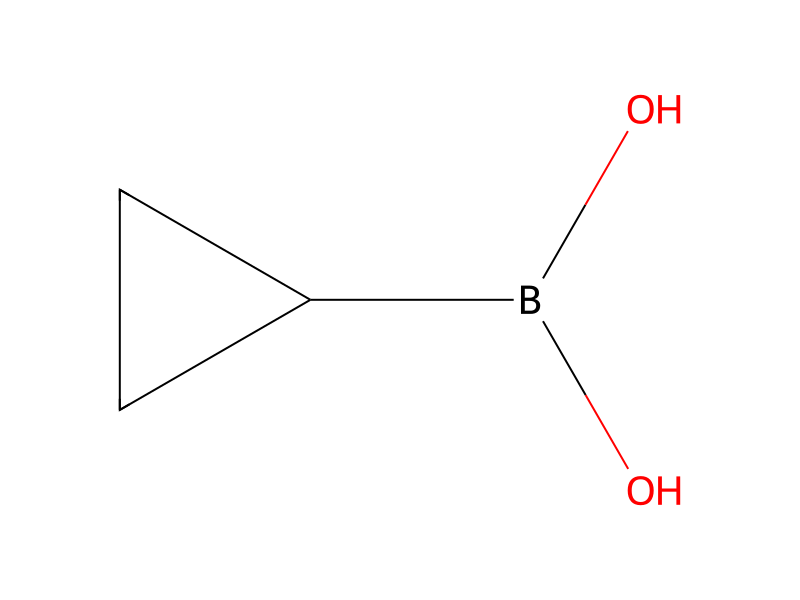
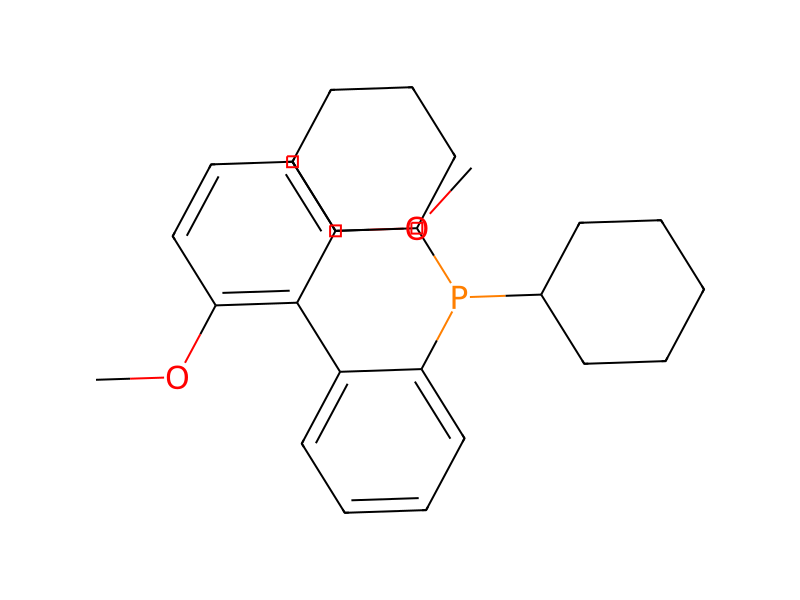
Reaction equation

Cl[C:2]1[CH:11]=[CH:10][CH:9]=[C:8]2[C:3]=1[CH2:4][CH2:5][C:6](=[O:12])[NH:7]2.[CH:13]1(B(O)O)[CH2:15][CH2:14]1.P([O-])([O-])([O-])=O.[K+].[K+].[K+].COC1C=CC=C(OC)C=1C1C=CC=CC=1P(C1CCCCC1)C1CCCCC1>O1CCCC1.C([O-])(=O)C.[Pd+2].C([O-])(=O)C>[CH:13]1([C:2]2[CH:11]=[CH:10][CH:9]=[C:8]3[C:3]=2[CH2:4][CH2:5][C:6](=[O:12])[NH:7]3)[CH2:15][CH2:14]1Participants
7
Reactant 4


Product 1

Reagents, catalysts & solvents 2


Conditions
- Temperature
- 120 °C
Procedure
To a stirred solution of 5-chloro-3,4-dihydroquinolin-2(1H)-one (147-4; 1 g, 0.0055 mol) and cyclopropylboronic acid (0.95 g, 0.0110 mol) in tetrahydrofuran (30 mL) was added potassium phosphate (3.4 g, 0.0165 mol) and S-Phos (0.45 g, 0.0011 mol). Reaction mass was purged with argon for 20 min. Then catalyst palladium acetate (0.123 g, 0.00055 mol) was added and allowed to stir at 120° C. for 12 h. The reaction mixture was filtered through CELITE bed and filter bed was thoroughly washed with ethyl acetate. The collected organic part was concentrated under vacuum to afford the crude compound, which was purified by silica gel column chromatography to obtain title compound. MS (M+1): 188.1.
Workup
- customReaction mass
- customwas purged with argon for 20 min
- filtrationThe reaction mixture was filtered through CELITE bed
- filtrationfilter bed
- washwas thoroughly washed with ethyl acetate
- concentrationThe collected organic part was concentrated under vacuum
- customto afford the crude compound, which
- customwas purified by silica gel column chromatography
Sources & evidence
- ORD record
- ord-8fd4e810a2224416a6b56c4f73323882
- Source dataset
- uspto-grants-2015_07
- Patent number
- US09073929B2
Reaction notes
Loading…