Hydrochloric Acid → 2,6-Dichloro-5-fluoro-3-pyridinecarbonitrile
Reaction equation

[Na].[C:2]([C:4]1[CH:9]=[C:8]([F:10])[C:7](=O)[NH:6][C:5]=1O)#[N:3].P(Cl)(Cl)(Cl)=O.P(Cl)(Cl)Cl.[ClH:22].[Cl:23]Cl>C(Cl)Cl.O.C(N(CC)CC)C>[Cl:22][C:5]1[N:6]=[C:7]([Cl:23])[C:8]([F:10])=[CH:9][C:4]=1[C:2]#[N:3]Participants
Reactant 5

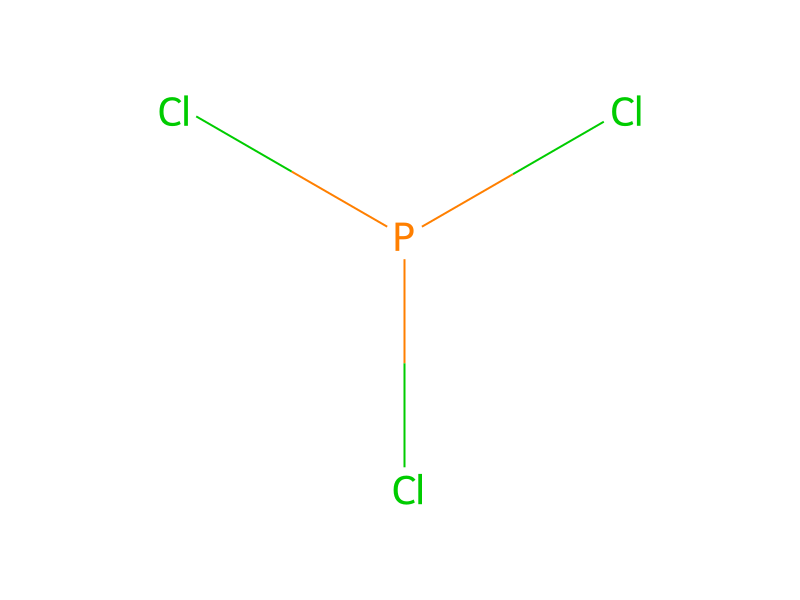



Product 1

Reagents, catalysts & solvents 3



Conditions
- Temperature
- 40 °C
Procedure
240 g of 3-cyano-2-hydroxy-5-fluoropyrid-6-one monosodium salt (cf. Example 8) were initially introduced into 2,400 g of phosphorus oxychloride. 15.8 g of triethylamine and subsequently 648 g of phosphorus trichloride were then added while heeding the evolution of heat. The mixture was heated to the reflux temperature (74° C., evolution of hydrogen chloride) and 312 g of chlorine were then passed in over a period of 2 hours, the reflux temperature slowly rising to 106° C. and a vigorous evolution of hydrogen chloride being observed. To bring the reaction to completion, after the chlorine had been passed in, the mixture was heated under reflux for a further 8 hours. Thereafter, 2794 g of phosphorus oxychloride (comprising excess phosphorus trichloride) were distilled off at a bottom temperature of about 70° C., the pressure slowly being reduced down to 120 mbar. The mixture was allowed to cool and the residue was taken up in methylene chloride. The suspension formed was added slowly to water, while heeding the evolution of heat, during which the temperature rose up to 40° C. (reflux of methylene chloride). The mixture was then subsequently stirred at 40° C. for 1 hour and allowed to cool, the organic phase was separated off and the aqueous phase was extracted with fresh methylene chloride. The combined methylene chloride phases were dried and evaporated on a rotary evaporator. The residue which remained was dried in vacuo at 60° C. 232.5 g of 2,6-dichloro-5-fluoronicotinonitrile (purity 94.7%, yield 85% of theory) were obtained as a brown-yellow solid.
Workup
- temperatureof heat
- customwere then passed in over a period of 2 hours
- customslowly rising to 106° C.
- customthe reaction to completion
- temperaturewas heated
- temperatureunder reflux for a further 8 hours
- distillationThereafter, 2794 g of phosphorus oxychloride (comprising excess phosphorus trichloride) were distilled off at a bottom temperature of about 70° C.
- temperatureto cool
- customThe suspension formed
- temperatureof heat, during which the temperature
- customrose up to 40° C.
- temperatureto cool
- customthe organic phase was separated off
- extractionthe aqueous phase was extracted with fresh methylene chloride
- dry with materialThe combined methylene chloride phases were dried
- customevaporated on a rotary evaporator
- customThe residue which remained was dried in vacuo at 60° C
Sources & evidence
- ORD record
- ord-415f0dd8bf5f42e8ae57db755dee5625
- Source dataset
- uspto-grants-2001_03
- Patent number
- US06197964B1
Reaction notes
Loading…