4-Methylmorpholine → HCID 73933413, compound
Reaction equation

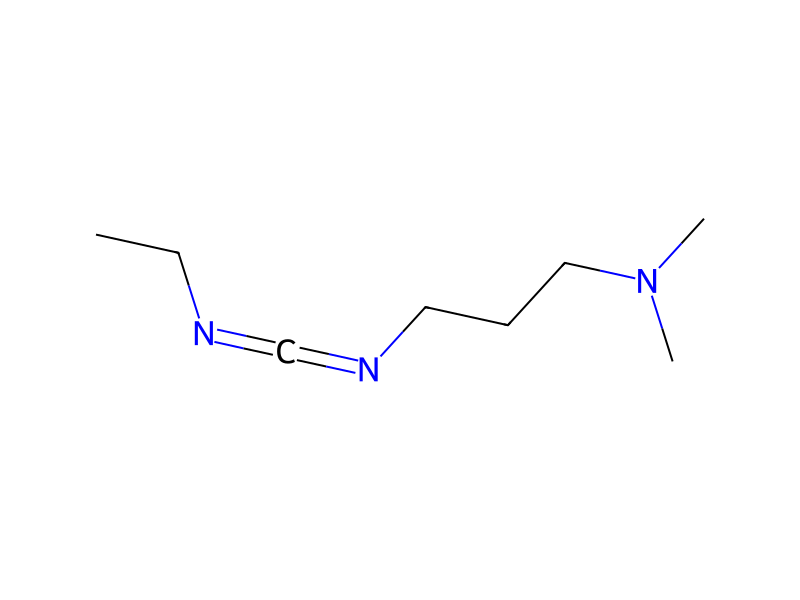
Cl.[CH3:2][O:3][C:4](=[O:14])[C@H:5]([CH2:7][C:8]1[CH:13]=[CH:12][CH:11]=[CH:10][CH:9]=1)[NH2:6].[OH2:15].[OH:16][C:17]1[C:25]2[N:24]=NN[C:21]=2[CH:20]=[CH:19][CH:18]=1.CN1[CH2:32][CH2:31][O:30][CH2:29]C1.CCN=C=N[CH2:38][CH2:39][CH2:40]N(C)C.Cl.CN(C)CCCN=C=N[CH2:53][CH3:54]>O1CCCC1>[C:32]1([CH2:31][O:30][C:29]([NH:24][CH2:25][CH2:21][CH2:20][CH2:19][CH2:18][C:17]([NH:6][C@H:5]([C:4]([O:3][CH3:2])=[O:14])[CH2:7][C:8]2[CH:13]=[CH:12][CH:11]=[CH:10][CH:9]=2)=[O:16])=[O:15])[CH:38]=[CH:39][CH:40]=[CH:54][CH:53]=1Participants
Reactant 5



Product 1

Reagents, catalysts & solvents 1

Procedure
To a mixture of Z-aminocaproic acid (i.e. the title A compound) (18.6 g, 0.07), L-phenylalanine methyl ester hydrochloride (16.6 g, 0.077 mol), hydroxybenzotriazole hydrate (10.7 g, 0.07 mol) in 350 mL of dry tetrahydrofuran cooled in an ice bath was added N-methylmorpholine (7.1 g, 0.07 mol) followed by water soluble carbodiimide reagent, 1-(3-dimethylaminopropyl)-3-ethylcarbodiimide (13.5 g, 0.07 mol). After stirring cold for 4 hours, the reaction was allowed to warm to ambient temperature overnight. The reaction mixture was then concentrated in vacuo and next treated with ethyl acetate (400 mL) and pH 4 phosphate buffer (200 mL). The organic phase was rinsed with saturated aqueous sodium hydrogen carbonate solution until thin layer chromatography showed the absence of Z-aminocaproic acid, then with brine and dried over anhydrous magnesium hydrate. Removal of solvents gave 28 g of crude product. This crude product was absorbed onto Baker silica gel (50 g), then flash chromatographed on Merck silica gel (400 g) eluting with 1:1 ethyl acetate:hexane. Collection of the product, eluted in yellow colored fractions, gave 23.3 g of the title B compound as a solid, m.p. 83°-85° C.
Workup
- temperaturecooled in an ice bath
- concentrationThe reaction mixture was then concentrated in vacuo
- additionnext treated with ethyl acetate (400 mL) and pH 4 phosphate buffer (200 mL)
- washThe organic phase was rinsed with saturated aqueous sodium hydrogen carbonate solution until thin layer chromatography
- dry with materialwith brine and dried over anhydrous magnesium hydrate
- customRemoval of solvents
- customgave 28 g of crude product
- customThis crude product was absorbed onto Baker silica gel (50 g)
- customflash chromatographed on Merck silica gel (400 g)
- washeluting with 1:1 ethyl acetate
- customCollection of the product
- washeluted in yellow colored fractions
- customgave 23.3 g of the title B compound as a solid, m.p. 83°-85° C.
Sources & evidence
- ORD record
- ord-78b234d4391b4983949089e411fa93b9
- Source dataset
- uspto-grants-1993_06
- Patent number
- US05217958
Reaction notes
Loading…