Hydrochloric Acid → HCID 58997683, compound
Reaction equation

C(O[C:4](=[O:15])[C@@H:5]([CH3:14])[NH:6][C:7]([O:9][C:10]([CH3:13])([CH3:12])[CH3:11])=[O:8])C.I[CH2:17][Cl:18].[Li+].CC([N-]C(C)C)C.Cl.[BH4-].[Na+]>C1COCC1.C1(C)C=CC=CC=1.CO.C(O)(=O)C.C1COCC1>[Cl:18][CH2:17][C@H:4]([OH:15])[C@H:5]([NH:6][C:7](=[O:8])[O:9][C:10]([CH3:11])([CH3:12])[CH3:13])[CH3:14]Participants
Reactant 5




Product 1

Reagents, catalysts & solvents 4




Conditions
- Temperature
- -70 °C
Procedure
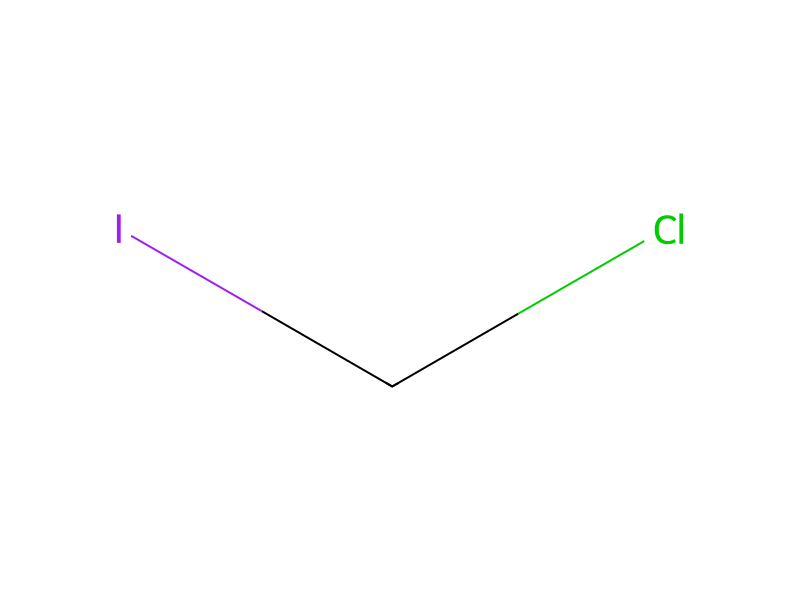
Boc-D-alanine ethyl ester (4.9 g, 22.6 mMol) and iodochloromethane (15.9 g, 90.2 mMol) were dissolved in dry THF (50 ml), and the mixture was cooled to −70° C. To this solution was added dropwise a solution of freshly prepared LDA (115 mMol, 5.1 eq) in 1:1 THF/Hexanes (150 ml) at a rate which did not allow the temperature to rise above −65° C. After the addition was completed, the mixture was stirred for an additional 15 minutes, then a 1:1 solution of acetic acid/THF was added dropwise, at a rate which did not allow the temperature to rise above −65° C. After the addition was completed, the mixture was stirred for an additional 20 minutes, then allowed to warm to −20° C. The solution was diluted with toluene (60 ml) followed by an ice-cold aqueous 1% HCl solution (60 ml). The resulting mixture was stirred until all salts had dissolved, then the phases were separated. The organic phase was combined with an ice-cold aqueous 5% sodium bicarbonate solution, and the mixture was stirred for 10 minutes. The phases were separated, ethanol (60 ml) was added to the organic phase, and the mixture was cooled to −70° C. To this solution was added dropwise a solution of sodium borohydride (2.2 g, 58.6 mMol) in MeOH (60 ml), and the resulting mixture was stirred for two days at −70° C. The solution was allowed to come to 0° C., stirred for 3 hours, then carefully quenched with saturated sodium bicarbonate (30 ml) and water (30 ml). The mixture was stirred at 0° C. for 30 minutes, the organic solvents were stripped, the residue was diluted with 100 ml water, and the slurry was vigorously stirred for ten minutes. The resulting brown solids were collected by filtration, rinsed with water followed by hexanes, then dried under vacuum to yield 4.1 g of a brown solid, which was a 6:1 diasteromeric mixture by NMR. These solids were crystallized from methylcyclohexane to yield 2.1 g of brown needles containing only the desired diastereomer. NMR (300 MHz, CDCl3) δ 4.77 (b, 1H), 3.83-3.81 (m, 2H), 3.61 (dd, 1H, J=4, 7 Hz), 3.55-3.48 (m, 1H), 2.99 (b, 1H), 1.45 (s, 9H), 1.18 (d, 3H, J=7 Hz).
Workup
- customto rise above −65° C
- additionAfter the addition
- customto rise above −65° C
- additionAfter the addition
- stirringthe mixture was stirred for an additional 20 minutes
- temperatureto warm to −20° C
- stirringThe resulting mixture was stirred until all salts
- dissolutionhad dissolved
- customthe phases were separated
- stirringthe mixture was stirred for 10 minutes
- customThe phases were separated
- additionethanol (60 ml) was added to the organic phase
- temperaturethe mixture was cooled to −70° C
- stirringthe resulting mixture was stirred for two days at −70° C
- customto come to 0° C.
- stirringstirred for 3 hours
- customcarefully quenched with saturated sodium bicarbonate (30 ml) and water (30 ml)
- stirringThe mixture was stirred at 0° C. for 30 minutes
- additionthe residue was diluted with 100 ml water
- stirringthe slurry was vigorously stirred for ten minutes
- filtrationThe resulting brown solids were collected by filtration
- washrinsed with water
- customdried under vacuum
Sources & evidence
- ORD record
- ord-d734d67a11184949b03dc1881ce5bcd3
- Source dataset
- uspto-grants-2007_11
- Patent number
- US07291744B2
Reaction notes
Loading…