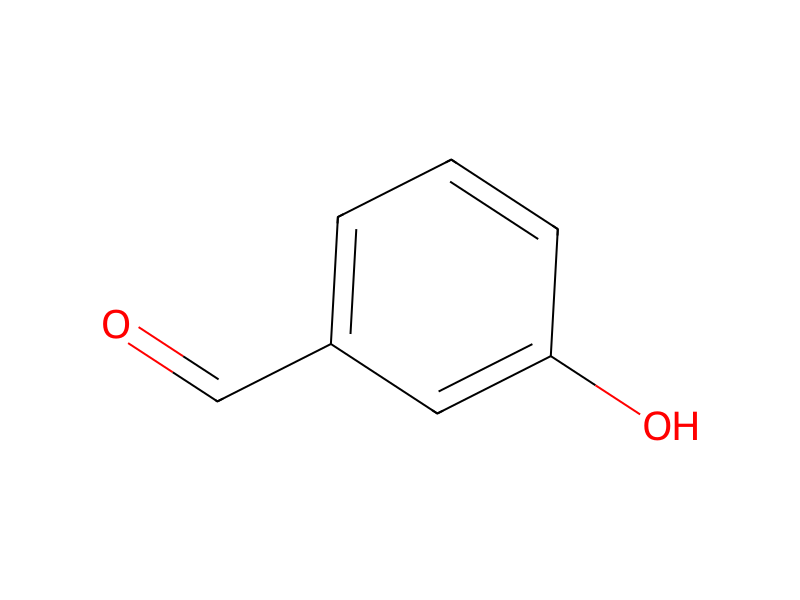
3-Hydroxybenzaldehyde → HCID 21846101, compound
Reaction equation

[OH:1][C:2]1[CH:3]=[C:4]([CH:7]=[CH:8][CH:9]=1)[CH:5]=[O:6].[CH3:10][N:11]1[CH2:16][CH2:15][CH:14](O)[CH2:13][CH2:12]1.C1(P(C2C=CC=CC=2)C2C=CC=CC=2)C=CC=CC=1.CCOC(/N=N/C(OCC)=O)=O>C1COCC1>[CH3:10][N:11]1[CH2:16][CH2:15][CH:14]([O:1][C:2]2[CH:3]=[C:4]([CH:7]=[CH:8][CH:9]=2)[CH:5]=[O:6])[CH2:13][CH2:12]1Participants
6





Procedure
To a stirred solution of 3-hydroxybenzaldehyde (8 g, 65 mmol), 1-methyl-4-piperidinol (7.5 g, 65 mmol), triphenylphosphine (13.1 g, 65 mmol) and THF (100 ml) was added diethylazodicarboxylate (11.4 g, 65 mmol) in THF (20 ml) over a 35 minute period. The reaction mixture was stirred in an ice bath for 3 hours, then at room temperature for 5 days. The reaction mixture was concentrated in vacuo, and partitioned between CHCl3 (300 ml) and 3N HCl (300 ml). The aqueous layer was concentrated in vacuo, the residue was treated with 10% K2CO3 and extracted with CHCl3 (2×100 ml). The solvent was removed in vacuo to afford 7.4 g of crude 3-(1-methyl-4-piperidinyloxy)benzaldehyde.
Workup
- waitat room temperature for 5 days
- concentrationThe reaction mixture was concentrated in vacuo
- custompartitioned between CHCl3 (300 ml) and 3N HCl (300 ml)
- concentrationThe aqueous layer was concentrated in vacuo
- additionthe residue was treated with 10% K2CO3
- extractionextracted with CHCl3 (2×100 ml)
- customThe solvent was removed in vacuo
Sources & evidence
- ORD record
- ord-e7319e40553941f8851d946c0b78099a
- Source dataset
- uspto-grants-1998_04
- Patent number
- US05736548
Reaction notes
Loading…