Hydrochloric Acid → L-Aspartic Acid
Reaction equation

C(O)[C@H]1O[C@H]([O:8][C@:9]2([CH2:18]O)[O:13][C@H](CO)[C@@H](O)[C@@H]2O)[C@H](O)[C@@H](O)[C@@H]1O.N[C:25]([NH2:27])=O.OP([O-])(O)=O.[K+].[OH:34][C:35](CCCC[C@H]1[C@@H]2[C@@H](NC(N2)=O)CS1)=[O:36].CC1[N+](CC2C=NC(C)=NC=2N)=CSC=1CCO.Cl.[Cl-].Cl>[Fe]>[NH2:27][C@H:25]([C:35]([OH:36])=[O:34])[CH2:18][C:9](=[O:8])[OH:13]Participants
Reactant 6


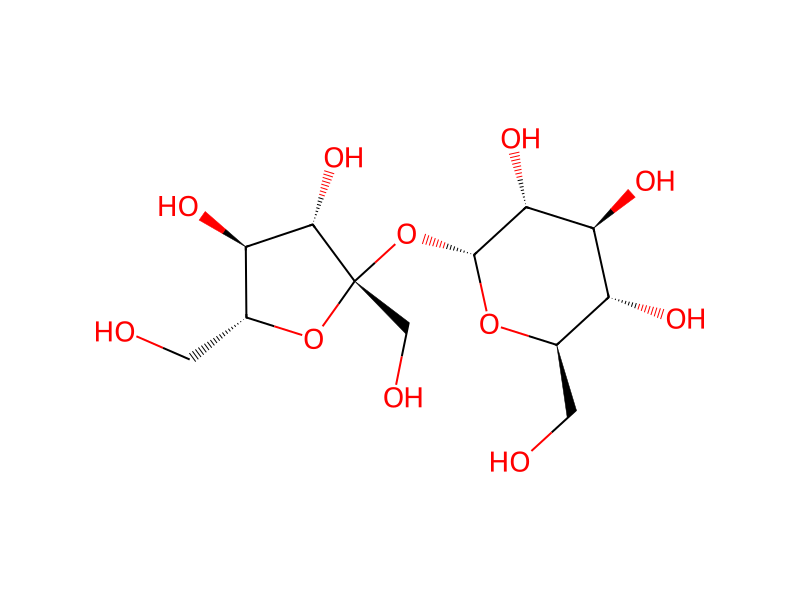


Product 1

Reagents, catalysts & solvents 1

Procedure
An aqueous solution medium containing 13 g/dl of sucrose, 0.5 g/dl of urea, 0.1 g/dl of KH2PO4, 0.04 g/dl of MgSO4.7H2O, ppm each of Fe and Mn ions, 5 μg/l of biotin, 200 μg/l of thiamine hydrochloride and 0.3 ml/dl of soybean protein hydrochloric acid hydrolysate "AJI-EKI" (total nitrogen of 7%), adjusted to pH 7.2 was prepared and 20 ml of the medium was separately charged into a shake flask of 500 ml volume. After sterilization, Asp-producing bacteria, Brevibacterium flavum (FERM BP-2178) and His-producing bacteria, Brevibacterium flavum (ATCC 21406), which had been previously grown on bouillon slants, were inoculated in the same flask followed by spinner culture at 31° C. for 72 hours. During the incubation, an aqueous urea solution having a concentration of 40 g/dl was supplemented by small portions to keep the pH between 6.5 to 8.0. In the fermentation broth, 0.95 g/dl of L-aspartic acid and 0.85 g/dl of L-histidine were accumulated.
Workup
- customwas prepared
- addition20 ml of the medium was separately charged into a shake flask of 500 ml volume
Sources & evidence
- ORD record
- ord-db47c05bf73746e3a8a9cb155122eda2
- Source dataset
- uspto-grants-1993_03
- Patent number
- US05196326
Reaction notes
Loading…