Imidazole → 3-(1H-Imidazol-1-YL)-5-(trifluoromethyl)aniline
Reaction equation

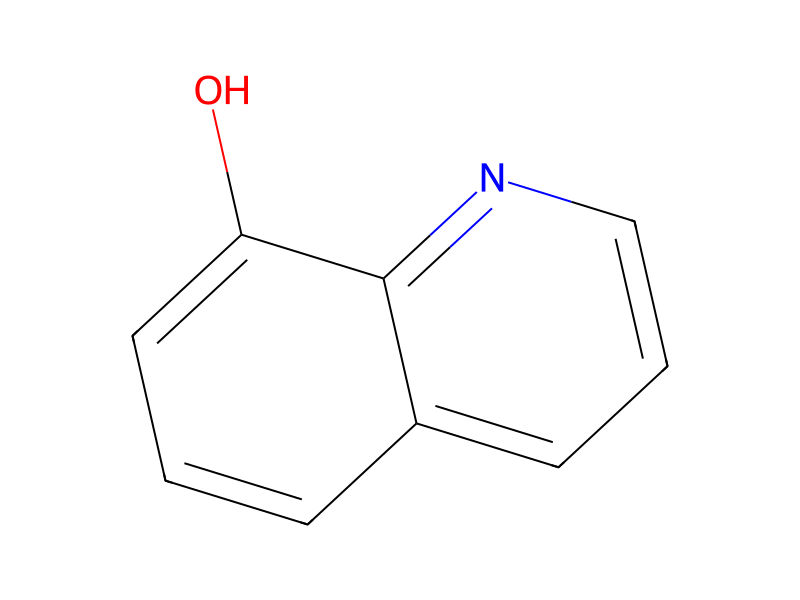
[NH2:1][C:2]1[CH:3]=[C:4]([C:9]([F:12])([F:11])[F:10])[CH:5]=[C:6](Br)[CH:7]=1.OC1C=CC=C2C=1N=CC=C2.[NH:24]1[CH:28]=[CH:27][N:26]=[CH:25]1.C(=O)([O-])[O-].[K+].[K+].[OH-].[NH4+]>CS(C)=O.[Cu]I.CCOC(C)=O.O>[N:24]1([C:6]2[CH:7]=[C:2]([CH:3]=[C:4]([C:9]([F:10])([F:12])[F:11])[CH:5]=2)[NH2:1])[CH:28]=[CH:27][N:26]=[CH:25]1Participants
Reactant 5




Product 1

Reagents, catalysts & solvents 4




Conditions
- Temperature
- 120 °C
Procedure
A mixture of 3-Amino-5-bromobenzotrifluoride (4.0 g, 0.0167 mol), 8-hydroxy quinoline (0.362 g, 0.0025 mol), CuI (0.476 g, 0.025 mol), imidazole (1.36 g, 0.0199 mol), and potassium carbonate (2.52 g, 0.0183 mol) in 17 mL of DMSO (degassed with argon for ˜10 min) was heated at 120° C. under an atmosphere of argon for 15 h; the HPLC indicated no starting material. A 14% aqueous solution of ammonium hydroxide was added to the cooled mixture and this was stirred for 1 h at ambient temperature. Water (50 mL) and EtOAc (200 mL) were added and the aqueous layer was extracted with EtOAc (3×30 mL). The combined organic layers were dried over Na2SO4 and concentrated. The crude product was purified by silica gel flash chromatography (eluted with EtOAc/hexanes) to provide 2.51 g of product.
Workup
- extractionthe aqueous layer was extracted with EtOAc (3×30 mL)
- dry with materialThe combined organic layers were dried over Na2SO4
- concentrationconcentrated
- customThe crude product was purified by silica gel flash chromatography (eluted with EtOAc/hexanes)
Sources & evidence
- ORD record
- ord-2d4b599547994c949881f5f72dc53400
- Source dataset
- uspto-grants-2014_07
- Patent number
- US08778942B2
Reaction notes
Loading…