Benzyl Bromide → Benzyl-[2-(3,4-dimethoxy-phenyl)-ethyl]-amine
Reaction equation

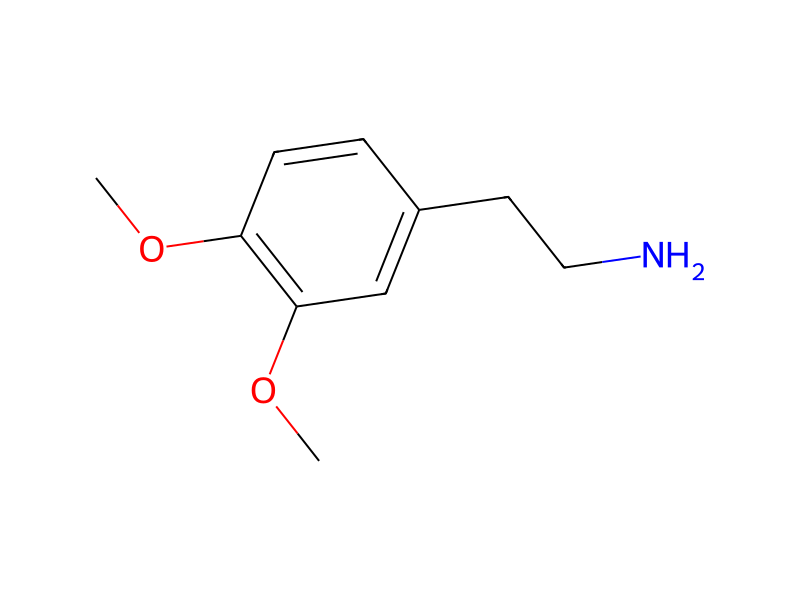
[CH3:1][O:2][C:3]1[CH:4]=[C:5]([CH2:11][CH2:12][NH2:13])[CH:6]=[CH:7][C:8]=1[O:9][CH3:10].C(N(CC)CC)C.[CH2:21](Br)[C:22]1[CH:27]=[CH:26][CH:25]=[CH:24][CH:23]=1>O1CCCC1>[CH2:21]([NH:13][CH2:12][CH2:11][C:5]1[CH:6]=[CH:7][C:8]([O:9][CH3:10])=[C:3]([O:2][CH3:1])[CH:4]=1)[C:22]1[CH:27]=[CH:26][CH:25]=[CH:24][CH:23]=1Participants
Reactant 3


Product 1

Reagents, catalysts & solvents 1

Procedure
N-benzyl-2-(3,4-dimethoxyphenyl)ethylamine was prepared using a system (FRX200, Syrris Limited) including a microflow reactor. For this purpose, 83 μl (0.5 mmol) of 2-(3,4-dimethoxyphenyl)ethylamine and 5 ml of tetrahydrofuran were added to the first storage unit of the system including the microflow reactor, and then 70 μl (0.5 mmol) of triethylamine was added thereto. Meanwhile, 60 μl (0.5 mmol) of benzyl bromide and 5 ml of tetrahydrofuran were added to the second storage unit of the system. The reactants included in the first and second storage units were transferred through the first and second flow channels to the mixing unit, and then transferred through the third flow channel into the microflow reactor including microchannels. The first and second flow channels could transfer 360 μl (180 μl for each flow channel) of the reactants to the microflow reactor. The microflow reactor was set at a capacity of 250 μl, a temperature of 100° C. and a pressure of 8 bar. The reactants in the first and second storage units were set such that they were passed through the first to third flow channels at a flow rate of 0.05 ml/min and introduced into the microflow reactor. Also, the residence time of the reactants in the microflow reactor was set at 2.5 minutes.
Workup
- customa temperature of 100° C.
- additionintroduced into the microflow reactor
Sources & evidence
- ORD record
- ord-829a079113d84c6582c2a17f4e17f29f
- Source dataset
- uspto-grants-2014_07
- Patent number
- US08791301B2
Reaction notes
Loading…