Hydrochloric Acid → 1-Decylpiperazine
Reaction equation

[CH:1]([N:3]1[CH2:8][CH2:7][NH:6][CH2:5][CH2:4]1)=O.Br[CH2:10][CH2:11][CH2:12][CH2:13][CH2:14][CH2:15][CH2:16][CH2:17][CH2:18]C.C(=O)([O-])[O-].[K+].[K+].Cl>CN(C)C=O>[CH2:1]([N:3]1[CH2:8][CH2:7][NH:6][CH2:5][CH2:4]1)[CH2:10][CH2:11][CH2:12][CH2:13][CH2:14][CH2:15][CH2:16][CH2:17][CH3:18]Participants
Reactant 4

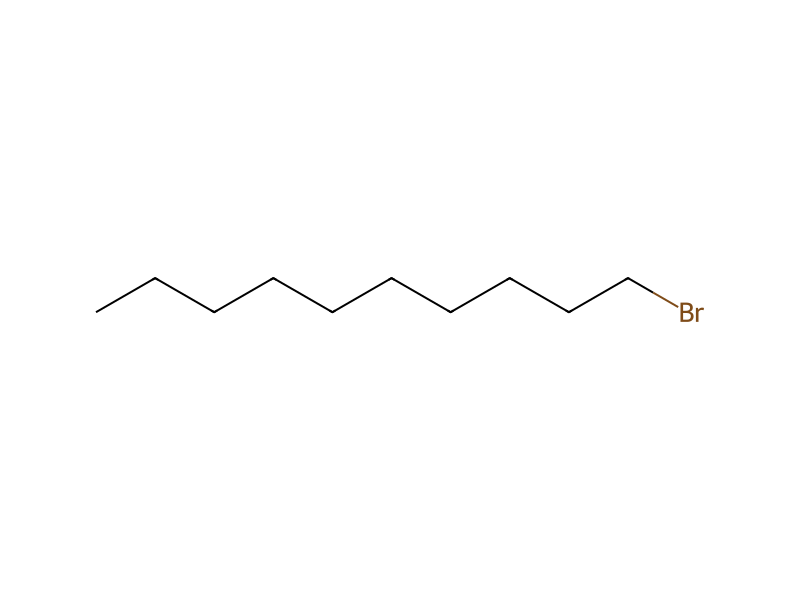


Product 1

Reagents, catalysts & solvents 1

Conditions
- Temperature
- 80 °C
Procedure
A 20 g (0.18 mole) quantity of N-formylpiperazine, 37.2 ml (0.18 mole) of 1-bromodecane and 25 g (0.18 mole) of potassium carbonate were suspended in 20 ml of N,N-dimethylformamide and the suspension was stirred at 80° C. for 3 hours. The suspension was further extracted with 300 ml of benzene, and the organic layer was washed with water, dried over anhydrous magnesium sulfate and concentrated under reduced pressure. The residue was dissolved in 80 ml of methanol, and 20 ml of concentrated hydrochloric acid was added thereto and the mixture was refluxed for 3 hours. The solvent was evaporated under reduced pressure and the precipitated crystals were washed with acetone, giving 35.6 g (yield: 66%) of N-decylpiperazine as the hydrochloride.
Workup
- extractionThe suspension was further extracted with 300 ml of benzene
- washthe organic layer was washed with water
- dry with materialdried over anhydrous magnesium sulfate
- concentrationconcentrated under reduced pressure
- dissolutionThe residue was dissolved in 80 ml of methanol
- addition20 ml of concentrated hydrochloric acid was added
- temperaturethe mixture was refluxed for 3 hours
- customThe solvent was evaporated under reduced pressure
- washthe precipitated crystals were washed with acetone
Sources & evidence
- ORD record
- ord-5ac381ccbdca42e09a34ebae0d5cec7a
- Source dataset
- uspto-grants-1993_01
- Patent number
- US05182284
Reaction notes
Loading…