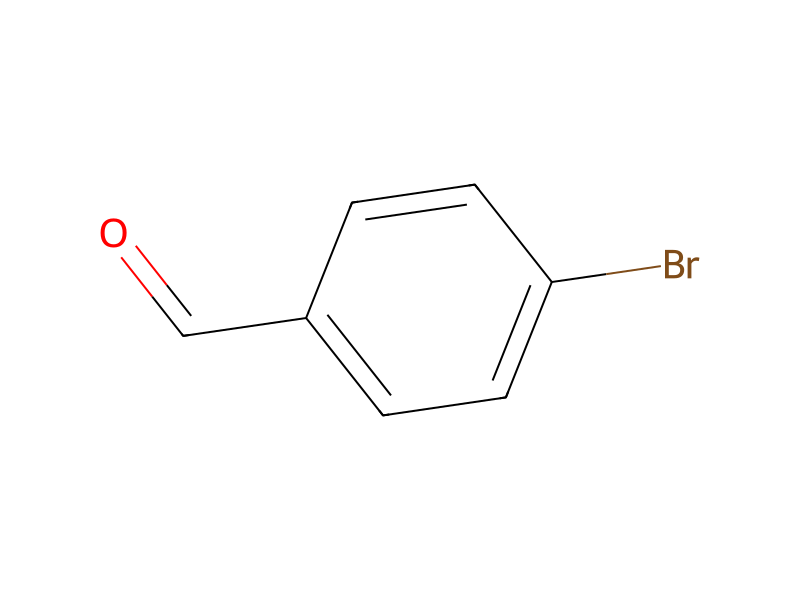
4-Bromobenzaldehyde → 2'-TrifluoroMethyl-Biphenyl-4-Carbaldehyde
Reaction equation

Br[C:2]1[CH:9]=[CH:8][C:5]([CH:6]=[O:7])=[CH:4][CH:3]=1.B(O)(O)[C:11]1[C:16]([C:17]([F:20])([F:19])[F:18])=[CH:15][CH:14]=[CH:13][CH:12]=1.[F-].[K+]>C1COCC1.C([O-])(=O)C.[Pd+2].C([O-])(=O)C.C1(P(C2CCCCC2)C2C=CC=CC=2C2C=CC=CC=2)CCCCC1>[F:18][C:17]([F:20])([F:19])[C:16]1[CH:11]=[CH:12][CH:13]=[CH:14][C:15]=1[C:2]1[CH:9]=[CH:8][C:5]([CH:6]=[O:7])=[CH:4][CH:3]=1Participants
7
Reactant 3


Product 1

Reagents, catalysts & solvents 3


Procedure
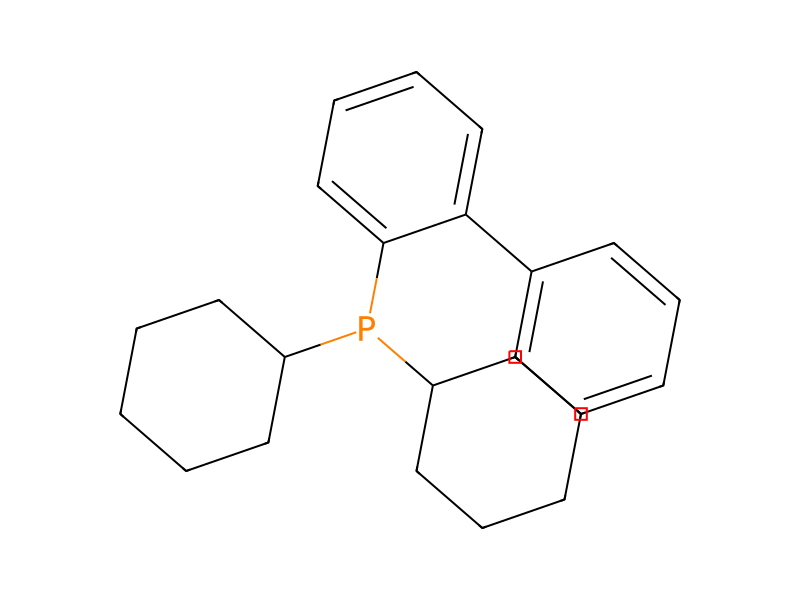
To a solution of 4-bromobenzaldehyde (1 g, 5.40 mmol) in THF (21.6 mL) is added (2-trifluoromethyl)phenylboronic acid (1.67 g, 8.1 mmol), potassium fluoride (780 mg, 16.2 mmol), palladium(II) acetate (12.1 mg, 0.054 mmol), and 2-(dicyclohexylphosphino)-biphenyl (37.9 mg, 0.108 mmol). The reaction mixture is heated to reflux overnight. After cooling to rt, the reaction mixture is partitioned between dichloromethane and water. The aqueous layer is back-extracted with dichloromethane, the combined organic layers are dried and concentrated, then loaded onto silica gel and eluted using hexanes with an ethyl acetate gradient from 0% to 60% giving 2′-trifluoromethylbiphenyl-4-carbaldehyde (1.0548 g).
Workup
- temperatureThe reaction mixture is heated
- temperatureto reflux overnight
- customthe reaction mixture is partitioned between dichloromethane and water
- extractionThe aqueous layer is back-extracted with dichloromethane
- customthe combined organic layers are dried
- concentrationconcentrated
- washeluted
Sources & evidence
- ORD record
- ord-3076514e25ce44ba8c2ddb473812e79f
- Source dataset
- uspto-grants-2011_08
- Patent number
- US07989457B2
Reaction notes
Loading…