Methyl iodide → HCID 44178156, compound
Reaction equation

[N:1]1([C:6]([O:8][C:9]([CH3:12])([CH3:11])[CH3:10])=[O:7])[CH2:5][CH2:4][CH2:3][CH2:2]1.C1C[C@H]2N(C[C@H]3[C@@H]4CCCCN4C[C@@H]2C3)CC1.C([Li])(CC)C.CI.I[C:38]1[N:39]=[C:40]([C:59]2[CH:64]=[CH:63][CH:62]=[CH:61][C:60]=2[C:65]([F:68])([F:67])[F:66])[N:41]([C:43]2[CH:48]=[CH:47][C:46]([C:49]3[CH:54]=[CH:53][CH:52]=[C:51]([S:55]([CH3:58])(=[O:57])=[O:56])[CH:50]=3)=[CH:45][CH:44]=2)[CH:42]=1.P(C(C)(C)C)(C(C)(C)C)C(C)(C)C.[H+].[B-](F)(F)(F)F>C1CCCCC1.C(OCC)C.COC(C)(C)C.[Cl-].[Cl-].[Zn+2].CC([O-])=O.CC([O-])=O.[Pd+2]>[CH3:58][S:55]([C:51]1[CH:50]=[C:49]([C:46]2[CH:47]=[CH:48][C:43]([N:41]3[CH:42]=[C:38]([C@H:2]4[CH2:3][CH2:4][CH2:5][N:1]4[C:6]([O:8][C:9]([CH3:12])([CH3:11])[CH3:10])=[O:7])[N:39]=[C:40]3[C:59]3[CH:64]=[CH:63][CH:62]=[CH:61][C:60]=3[C:65]([F:68])([F:66])[F:67])=[CH:44][CH:45]=2)[CH:54]=[CH:53][CH:52]=1)(=[O:56])=[O:57]Participants
Reactant 7



Product 1

Reagents, catalysts & solvents 5





Conditions
- Temperature
- -78 °C
Procedure
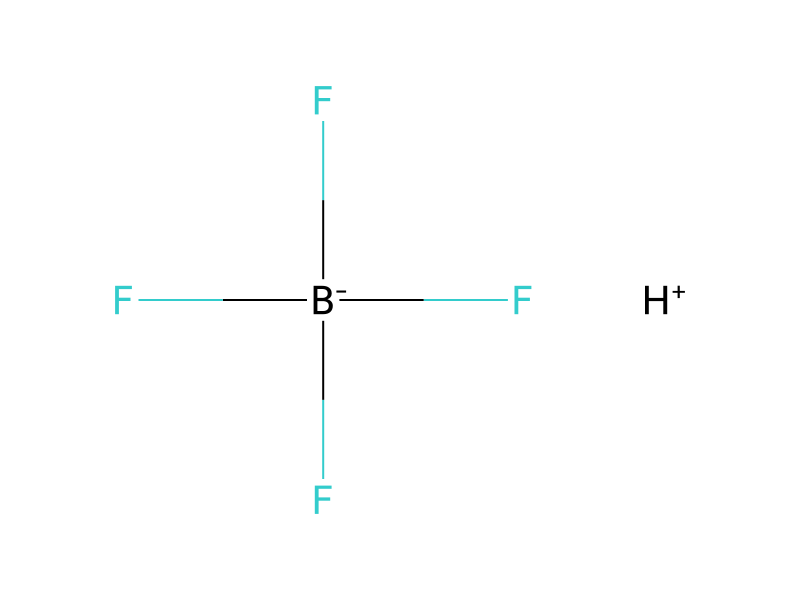
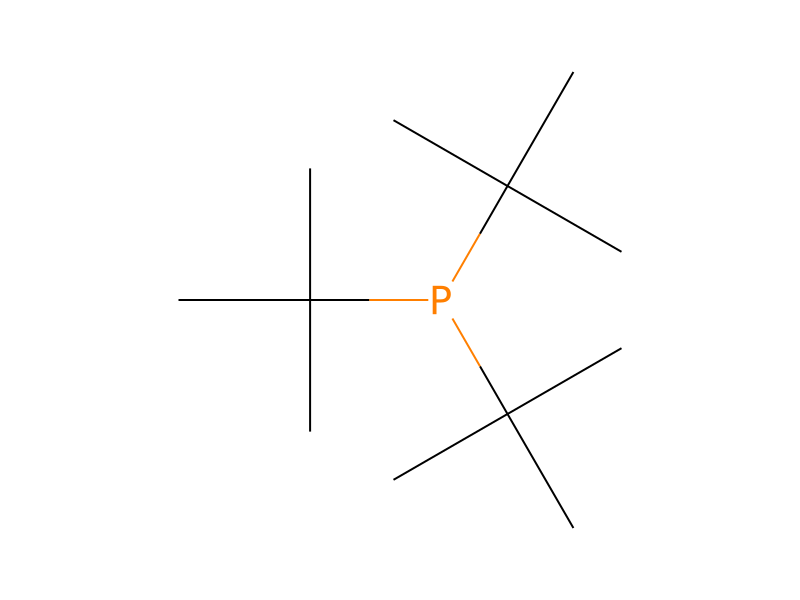
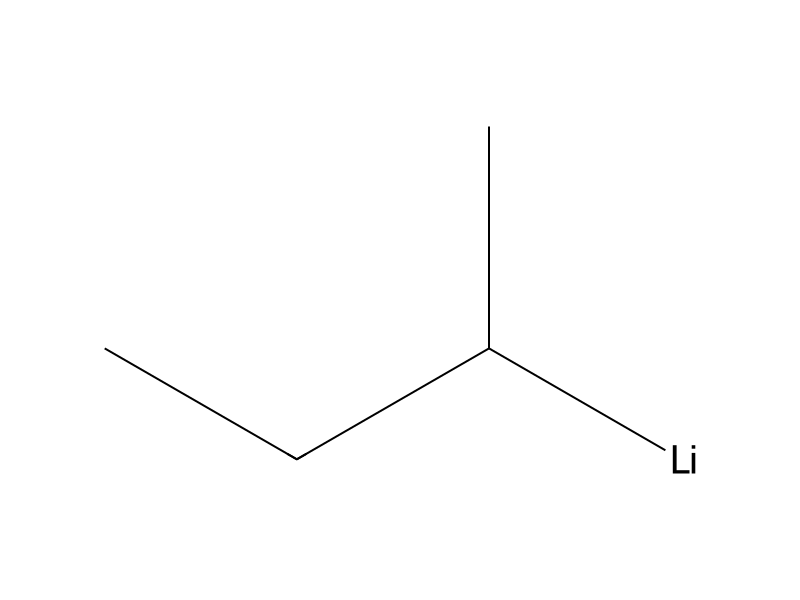
Into a 25 mL round bottom flask was added 480 μL (2.7 mmol) of tert-butyl pyrrolidine-1-carboxylate, 650 μL (2.8 mmol) of (−)-sparteine, and 8 mL of methyl-tert-butyl ether. The resulting solution was cooled in an acetone/dry ice bath. The cold solution was then treated dropwise with 2.4 ml (3.4 mmol) of a 1.4M solution of sec-butyllithium in cyclohexane. After stirring for 90 minutes at −78° C., a small sample of the reaction solution was treated with methyl iodide and analyzed by GC/MS. The GC/MS analysis showed about 60% conversion to the methylated derivative of the lithiated intermediate. After a total of 130 minutes at −78° C., the reaction was treated with 1.8 mL (1.8 mmol) of a 1M solution of ZnCl2 in diethyl ether. The cooling bath was then removed and the reaction was allowed to warm to ambient temperature. After 1 hour at ambient temperature 438 mg (0.77 mmol) of 4-iodo-1-(3′-(methylsulfonyl)biphenyl-4-yl)-2-(2-(trifluoromethyl)phenyl)-1H-imidazole was added as a solution in 2 mL of methyl-tert-butyl ether. The mixture was then treated with 35 mg (160 μmol) of Pd(OAc)2, and 50 mg (170 μmol) of tBu3P.HBF4. The resulting pale brown suspension was heated to 50° C. After stirring for 16 hours at 50° C., most of the solvent had evaporated. The reaction was treated with 10 mL of methyl-tert-butyl ether and a sample analyzed by LC/MS. LC/MS showed no remaining 4-iodo-1-(3′-(methylsulfonyl)biphenyl-4-yl)-2-(2-(trifluoromethyl)phenyl)-1H-imidazole, a quantity of de-iodinated material and a smaller peak that appeared to be product. The reaction mixture was diluted with EtOAc and with 1N HCl. The layers were separated and the acidic aqueous was extracted with EtOAc (3×). Combined organics were washed with saturated aqueous NaHCO3, brine, dried over Na2SO4, filtered and concentrated in vacuo to afford a brown semi-solid. The crude product was purified on the reverse phase preparative HPLC eluting with acetonitrile/water. (Phenomenex Axia Gemini C18 30×100 mm 5 μm, A=H2O with 0.1% trifluoroacetic acid, B=acetonitrile with 0.1% trifluoroacetic acid, 8 minute gradient from 30% B to 65% B at 35 mL/minute). Product fractions were combined, made basic by the addition of sat. NaHCO3, and concentrated in vacuo to remove the acetonitrile. The resulting basic aqueous was extracted with CH2Cl2 (3×), and the organics were dried over Na2SO4, filtered and concentrated in vacuo. The resulting (2R)-tert-butyl 2-(1-(3′-(methylsulfonyl)biphenyl-4-yl)-2-(2-(trifluoromethyl)phenyl)-1H-imidazol-4-yl)pyrrolidine-1-carboxylate was isolated as a clear film; 75 mg (15%). The NMR of the product was very complicated, possibly due to rotamers of the material. Treatment of the CDCl3 NMR sample with 100 μL of trifluoroacetic acid for 65 hours showed complete conversion to a product by NMR. LC/MS analysis of the reaction solution showed a large peak with the correct mass for the desired deprotected amine product.
Workup
- temperatureThe resulting solution was cooled in an acetone/dry ice bath
- customThe cooling bath was then removed
- temperatureto warm to ambient temperature
- temperatureThe resulting pale brown suspension was heated to 50° C
- stirringAfter stirring for 16 hours at 50° C., most of the solvent
- customhad evaporated
- additionThe reaction was treated with 10 mL of methyl-tert-butyl ether
- additionThe reaction mixture was diluted with EtOAc and with 1N HCl
- customThe layers were separated
- extractionthe acidic aqueous was extracted with EtOAc (3×)
- washCombined organics were washed with saturated aqueous NaHCO3, brine
- dry with materialdried over Na2SO4
- filtrationfiltered
- concentrationconcentrated in vacuo
- customto afford a brown semi-solid
- customThe crude product was purified on the reverse phase preparative HPLC
- washeluting with acetonitrile/water
- customwith 0.1% trifluoroacetic acid, 8 minute gradient
- additionmade basic by the addition of sat. NaHCO3
- concentrationconcentrated in vacuo
- customto remove the acetonitrile
- extractionThe resulting basic aqueous was extracted with CH2Cl2 (3×)
- dry with materialthe organics were dried over Na2SO4
- filtrationfiltered
- concentrationconcentrated in vacuo
Sources & evidence
- ORD record
- ord-a82b6fe5383d4ea7bf4eb58448a75eb1
- Source dataset
- uspto-grants-2011_08
- Patent number
- US07998995B2
Reaction notes
Loading…