1,2-Dichloroethane → Triphenylphosphine Oxide
Reaction equation

[C:1]1([P:7]([C:14]2[CH:19]=[CH:18][CH:17]=[CH:16][CH:15]=2)[C:8]2[CH:13]=[CH:12][CH:11]=[CH:10][CH:9]=2)[CH:6]=[CH:5][CH:4]=[CH:3][CH:2]=1.ClCCCl.NC1C=CC=CC=1N.C(=O)C1C(=CC=CC=1)[OH:35]>[Co].N1C=CC=CC=1>[C:14]1([P:7](=[O:35])([C:1]2[CH:2]=[CH:3][CH:4]=[CH:5][CH:6]=2)[C:8]2[CH:13]=[CH:12][CH:11]=[CH:10][CH:9]=2)[CH:15]=[CH:16][CH:17]=[CH:18][CH:19]=1Participants
Reactant 4

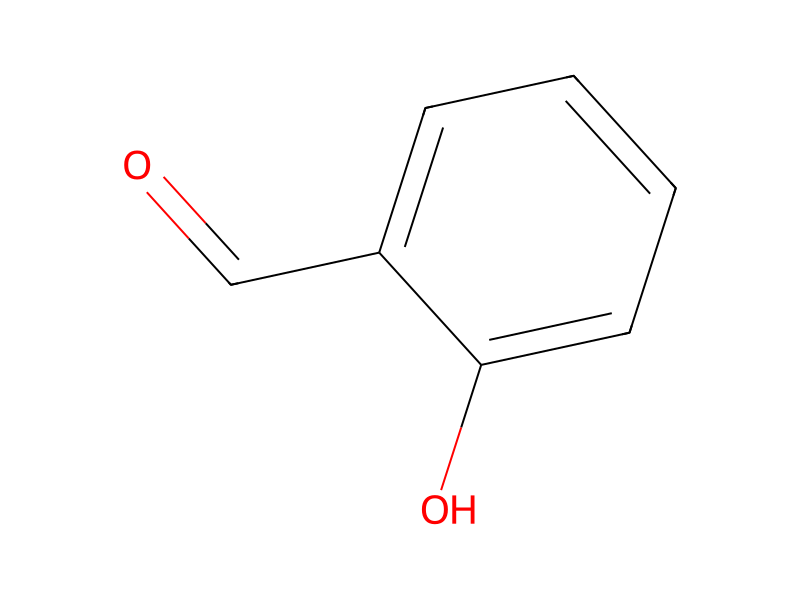
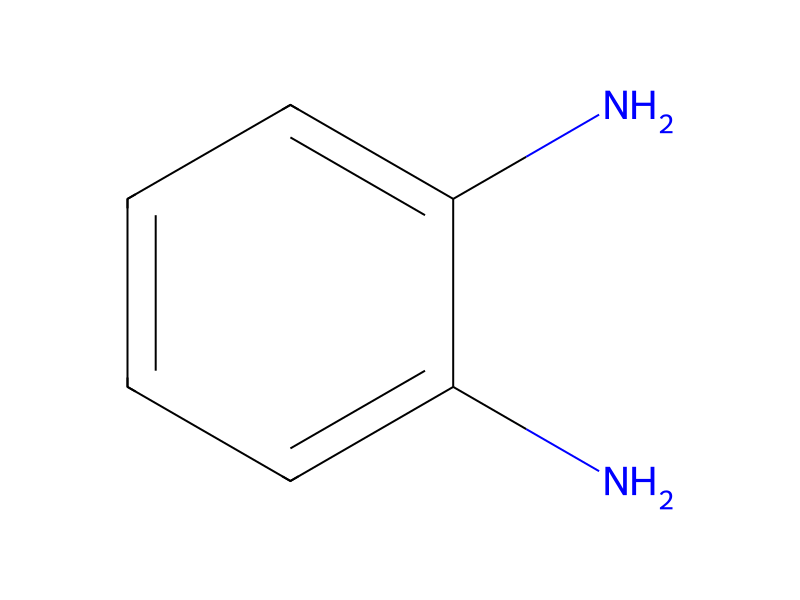

Product 1

Reagents, catalysts & solvents 2


Conditions
- Temperature
- 60 °C
Procedure
81.7 mg. (0.164 mmol) of cobalt (saloph) pyridine nitro complex and 187 mg. (0.713 mmol) of triphenylphosphine were dissolved in 20 ml. of 1,2-dichloroethane together with 0.5 ml. of pyridine. (The saloph ligand is the tetradentate ligand [1,2-(ortho-OC6H4CH=N)2C6H4 ]2- obtained by condensation reaction of o-diaminobenzene with salicylaldehyde). The resulting solution was stirred under an oxygen atmosphere for 18 hours at 60° C. The resulting reaction product was analyzed by infrared spectroscopy showing a quantitative yield of triphenylphosphine oxide, i.e. 0.713 mmol. This example is illustrative of catalytic oxidation by a cobalt nitro complex having a tetradentate ligand and a monodentate basic ligand in accordance with this invention.
Workup
- customThe resulting reaction product
Sources & evidence
- ORD record
- ord-1110662407a24155976d1ff3f5d5c66f
- Source dataset
- uspto-grants-1980_03
- Patent number
- US04191696
Reaction notes
Loading…