1,2-Dichloroethane → Diethyl cyclopropane-1,1-dicarboxylate
Reaction equation

[C:1]([O:9][CH2:10][CH3:11])(=[O:8])[CH2:2][C:3]([O:5][CH2:6][CH3:7])=[O:4].Cl[CH2:13][CH2:14]Cl.C(=O)([O-])[O-].[K+].[K+].C(=O)=O>O.CN(C)C=O>[C:2]1([C:3]([O:5][CH2:6][CH3:7])=[O:4])([C:1]([O:9][CH2:10][CH3:11])=[O:8])[CH2:14][CH2:13]1Participants
7
Reactant 4


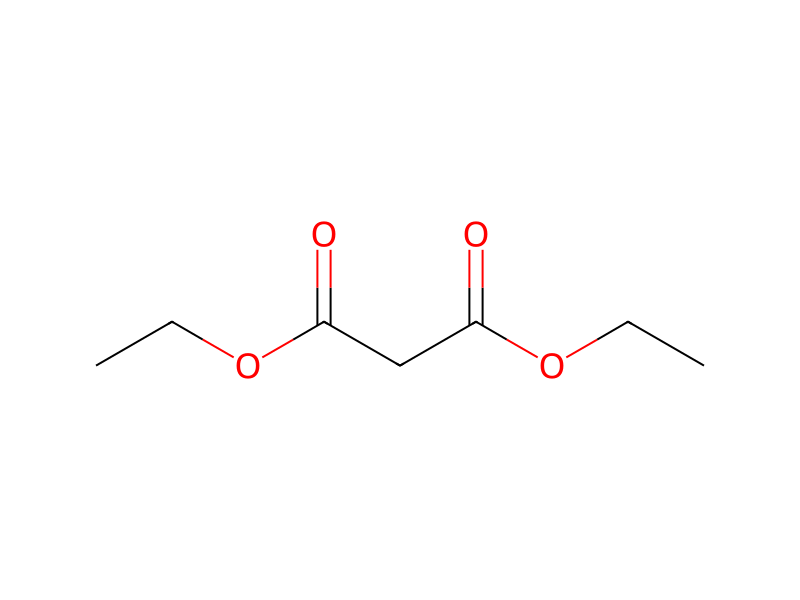

Product 1

Reagents, catalysts & solvents 2


Procedure
The apparatus described in Example 1 was successively charged with 320 g diethyl malonate (2.0 mols), 1000 ml dimethylformamide, 1308 g of 1,2-dichloroethane (13.2 mols) and 664 g (4.8 mols) of finely comminuted potassium carbonate. While thoroughly stirring, the mixture was heated to 115° C., whereupon release of carbon dioxide and separation of water commenced. Over a period of 3 hours, another 320 g of diethyl malonate (2.0 mols) were metered into the reaction vessel through a dropping funnel. After 6 hours, when no more water separated out, the reaction was complete.
Workup
- waitAfter 6 hours
- customwhen no more water separated out
Sources & evidence
- ORD record
- ord-cfd8aba1ffbd401c8f5b7ae36e4ef8cb
- Source dataset
- uspto-grants-1996_04
- Patent number
- US05510509
Reaction notes
Loading…