4-Bromotoluene → (2S)-1,1-Bis(4-methylphenyl)propane-1,2-diol
Reaction equation

Br[C:2]1[CH:7]=[CH:6][C:5]([CH3:8])=[CH:4][CH:3]=1.[CH2:9]([Li])[CH2:10][CH2:11][CH3:12].C(OCC)(=O)[C@H](C)O.[C:22]([O-:25])(=O)[CH3:23].[NH4+].[O:27]1[CH2:31][CH2:30][CH2:29][CH2:28]1>CCOCC>[CH3:12][C:11]1[CH:31]=[CH:30][C:29]([C:28]([C:2]2[CH:7]=[CH:6][C:5]([CH3:8])=[CH:4][CH:3]=2)([OH:27])[C@@H:22]([OH:25])[CH3:23])=[CH:9][CH:10]=1Participants
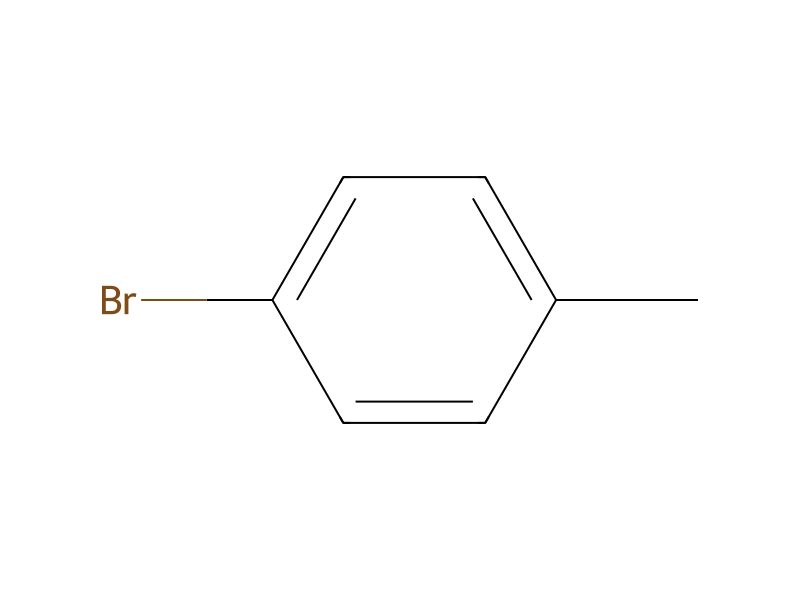






Procedure
Part A. A solution of 4-bromotoluene (53.0 g, 0.31 mole) in tetrahydrofuran (400 mL) was stirred at -75° and treated dropwise with n-butyllithium (1.6 M in hexane; 194 mL, 0.31 mole). After stirring for an additional 20 minutes, (S)-ethyl lactate (11.8 g, 0.1 mole) was added dropwise as a solution in tetrahydrofuran (20 mL). The reaction was stirred for three hours, during which time the temperature was allowed to rise to room temperature. Saturated aqueous ammonium acetate was added, after which the reaction mixture was diluted with ether, washed with water and brine, dried (MgSO4) and concentrated under reduced pressure. (S)-1,1-bis(4-methyl-phenyl)-1,2-propanediol (27 g) was isolated as a pale yellow solid, and was used without further purification. NMR(CDCl3) 7.44(2H,d,J=8 Hz) 7.28(2H,d,J=8 Hz) 7.13(2H,d,J=8 Hz) 7.06(2H,d,J=8 Hz) 4.74(1H,q,J=6 Hz) 2.97(1H,broad) 2.29(6H,2s) 1.90(1H,braod s) 1.10(3H,d,J=6 Hz).
Workup
- stirringThe reaction was stirred for three hours, during which time the temperature
- customto rise to room temperature
- washwashed with water and brine
- dry with materialdried (MgSO4)
- concentrationconcentrated under reduced pressure
Sources & evidence
- ORD record
- ord-1534f8ad5d3e486faadcc1adbca15793
- Source dataset
- uspto-grants-1989_08
- Patent number
- US04859693
Reaction notes
Loading…