3-Hydroxypyridine → HCID 10292524, compound
Reaction equation

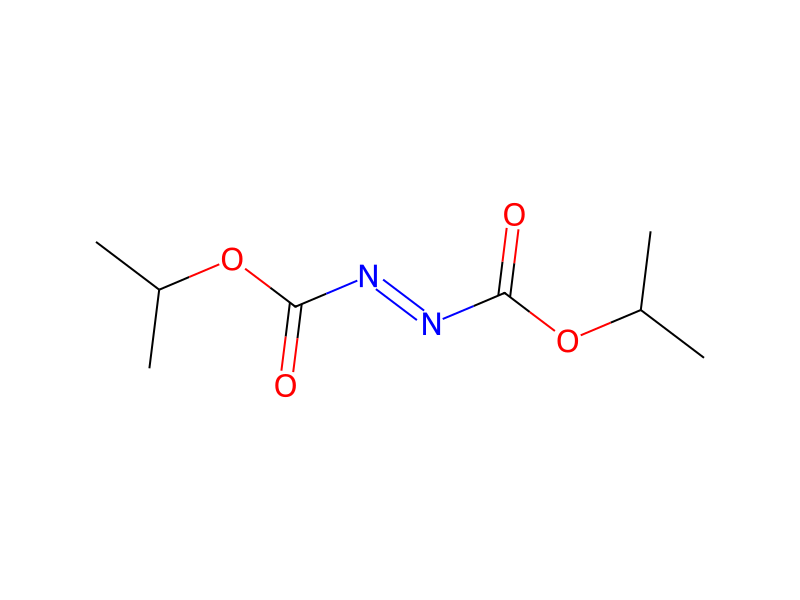
CC(OC(/N=N/C(OC(C)C)=O)=O)C.C1(P(C2C=CC=CC=2)C2C=CC=CC=2)C=CC=CC=1.[OH:34][C:35]1[CH:36]=[N:37][CH:38]=[CH:39][CH:40]=1.[N:41]1[CH:46]=[CH:45][N:44]=[C:43]2[NH:47][C:48]([C:50]3[C:58]4[C:53](=[CH:54][CH:55]=[CH:56][CH:57]=4)[N:52]([CH2:59][CH2:60][CH2:61]O)[CH:51]=3)=[CH:49][C:42]=12>O1CCCC1>[N:37]1[CH:38]=[CH:39][CH:40]=[C:35]([O:34][CH2:61][CH2:60][CH2:59][N:52]2[C:53]3[C:58](=[CH:57][CH:56]=[CH:55][CH:54]=3)[C:50]([C:48]3[NH:47][C:43]4=[N:44][CH:45]=[CH:46][N:41]=[C:42]4[CH:49]=3)=[CH:51]2)[CH:36]=1Participants





Procedure
A solution of diisopropylazodicarboxylate (269 μM) in tetrahydrofuran (0.5 mL) was added dropwise, over 2 minutes, to a solution of triphenylphosphine (359 mg) in tetrahydrofuran (2.5 mL) at 0° C. under an atmosphere of nitrogen. After stirring at that temperature for 20 minutes the mixture was treated with a solution of 3-hydroxypyridine (65 mg) in tetrahydrofuran (1 mL) over 1 minute then with a suspension of 3-[3-(5H-pyrrolo[2,3-b]pyrazin-6-yl)-indol-1-yl]-propan-1-ol [200 mg, Example 2(a)] in tetrahydrofuran (2 mL). The mixture was allowed to warm to ambient temperature over 18 hours then evaporated. The residue was subjected to flash chromatography on silica eluting with a mixture of ethyl acetate and methanol (9:1, v/v) to give the title compound (110 mg) as a yellow solid, m.p. 208–209° C. MS: 370 (MH+).
Workup
- customthen evaporated
- additionThe residue was subjected to flash chromatography on silica eluting with a mixture of ethyl acetate and methanol (9:1
Sources & evidence
- ORD record
- ord-27c5ba83bcac4fd79fdb07c6abb64484
- Source dataset
- uspto-grants-2007_06
- Patent number
- US07227020B2
Reaction notes
Loading…