Hydrochloric Acid → HCID 85826614, compound
Reaction equation

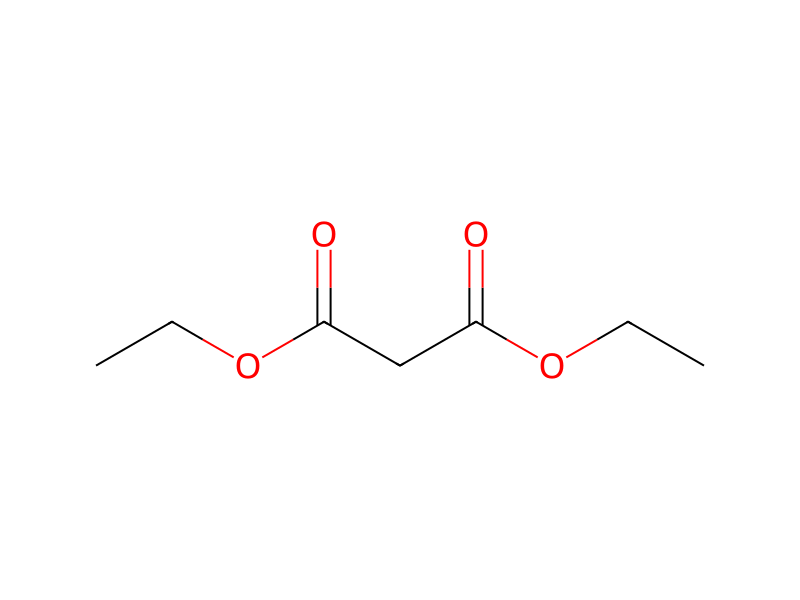
[C:1]([O:9][CH2:10][CH3:11])(=[O:8])[CH2:2][C:3]([O:5][CH2:6][CH3:7])=[O:4].[H-].[Na+].Br[CH2:15][CH2:16][CH2:17][CH:18]=[CH2:19].Cl>C1COCC1>[CH2:15]([C:2]([CH2:19][CH2:18][CH2:17][CH:16]=[CH2:15])([C:3]([O:5][CH2:6][CH3:7])=[O:4])[C:1]([O:9][CH2:10][CH3:11])=[O:8])[CH2:16][CH2:17][CH:18]=[CH2:19]Participants
Reactant 4



Product 1

Reagents, catalysts & solvents 1

Procedure
Diethyl malonate (25 g, 156 mmol) was dissolved in 150 mL dry THF in a 3 necked round bottom flask, and NaH (18.74 g of 60% dispersion in mineral oil, 469 mmol, 3.0 eq.) was added portionwise. The suspension was magnetically stirred for 30 minutes. Subsequently, 58.1 g 5-bromo-1-pentene (390 mmol, 2.5 eq.) was added in one portion via syringe. The yellow suspension was heated at reflux overnight and cooled to room temperature. Aqueous 1 M HCl was added until the pH of the mixture was ≦7. The THF was removed via rotary evaporation and diethyl ether (300 mL) was added. The mixture was extracted with 2×150 mL aqueous 1 M HCl and 2×150 mL brine. The organic layer was then dried over MgSO4, filtered, and concentrated to give a yellow-brown oil, diethyl di-(4-pentenyl)malonate. This oil was placed in a 500 mL round-bottomed flask and 100 mL ethanol was added, followed by a large excess (30 g, ˜5 eq.) of NaOH, some of which did not dissolve. H2O (5 mL) was added and the resulting mixture was stirred at reflux overnight. Subsequently, the entire mixture was poured into a large beaker, cooled to 0° C. using an ice water bath, and stirred (additional H2O may be added to dissolve any residual solids interfering with stirring). Concentrated aqueous HCl was added portionwise until the pH of the mixture was ≦7; solids were formed upon acidification. Diethyl ether (300 mL) was added to the mixture at room temperature, and the aqueous layer was extracted with 2×150 mL diethyl ether. The combined organic layers were extracted with 4×150 mL 1 M aqueous NaOH. The combined aqueous fractions from the extractions were then transferred to a beaker and acidified with concentrated aqueous HCl until the pH of the mixture was ≦7. Diethyl ether (200 mL) was added. The aqueous layer was extracted with 3×100 mL diethyl ether, and all of the combined organic layers were dried over MgSO4 and filtered. Volatiles were removed to give 2,2-di-(4-pentenyl)malonic acid as a yellow-brown oil. Subsequently, 2,2-di-(4-pentenyl)malonic acid (60 g, 250 mmol) was placed in a large round-bottomed flask equipped with a reflux condenser and heated with vigorous magnetic stirring to 200° C.-210° C. using an oil bath. Gas evolution was observed upon reflux. After a 1 hour period, decarboxylation (evidenced by vigorous frothing) was complete and the mixture was cooled to room temperature and purified by flash chromatography on silica using 15% ethyl acetate:hexanes as mobile phase to give 2-(4-pentenyl)-6-heptenoic acid (23 g, 79%). 1H NMR (CDCl3): δ 11.2-12.2 (br, 1H), 5.6-6.0 (m, 2H), 4.8-5.0 (m, 4H), 2.2-2.4 (m, 1H), 1.9-2.1 (m, 4H), 1.8-1.9 (m, 2H), 1.2-1.8 (m, 6H) ppm.
Workup
- additionwas added portionwise
- temperatureThe yellow suspension was heated
- temperatureat reflux overnight
- customThe THF was removed via rotary evaporation and diethyl ether (300 mL)
- additionwas added
- extractionThe mixture was extracted with 2×150 mL aqueous 1 M HCl and 2×150 mL brine
- dry with materialThe organic layer was then dried over MgSO4
- filtrationfiltered
- concentrationconcentrated
Sources & evidence
- ORD record
- ord-d51665ec66ee4cddb865a4238acfc063
- Source dataset
- uspto-grants-2009_03
- Patent number
- US07504465B2
Reaction notes
Loading…