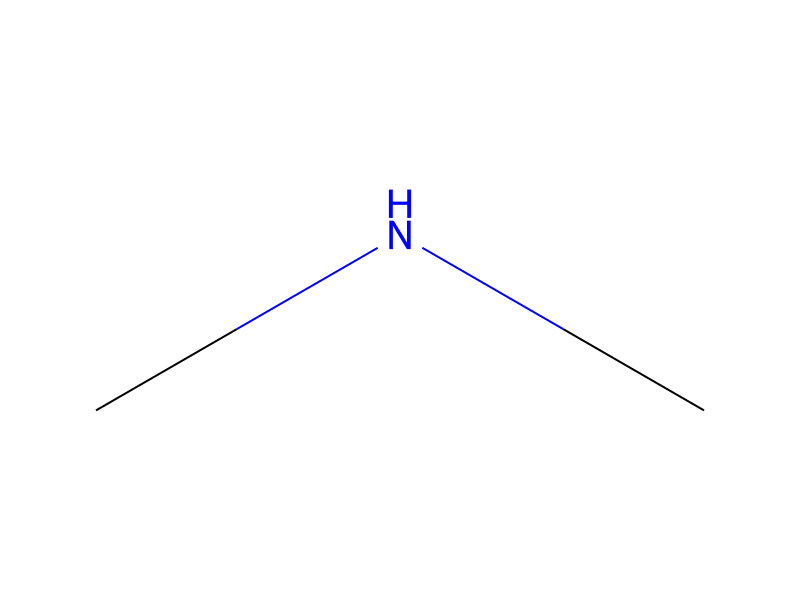
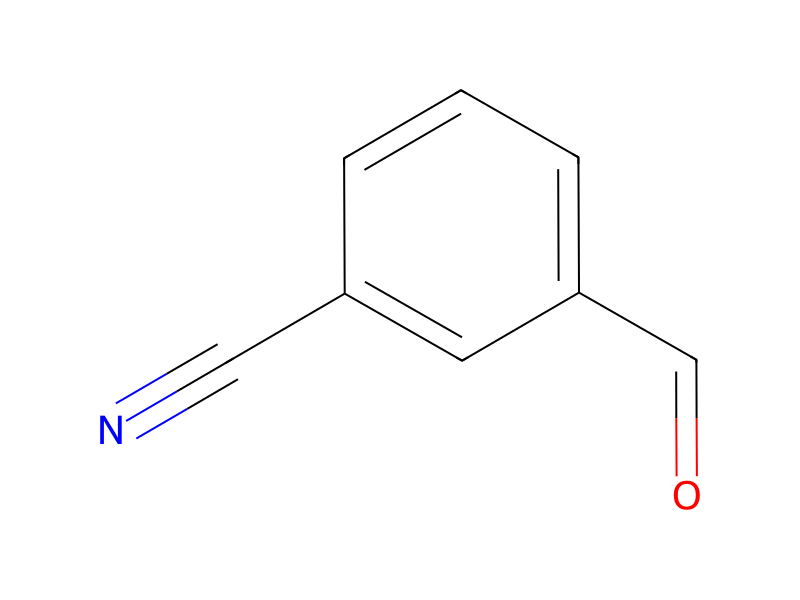
Dimethylamine → 3-(dimethylaminomethyl)benzonitrile
Reaction equation

[C:1]([C:3]1[CH:4]=[C:5]([CH:8]=[CH:9][CH:10]=1)[CH:6]=O)#[N:2].[CH3:11][NH:12][CH3:13].C(O[BH-](OC(=O)C)OC(=O)C)(=O)C.[Na+].C(=O)([O-])[O-].[K+].[K+]>O1CCCC1.C(OCC)(=O)C>[CH3:11][N:12]([CH2:6][C:5]1[CH:4]=[C:3]([CH:10]=[CH:9][CH:8]=1)[C:1]#[N:2])[CH3:13]Participants
7





Conditions
- Temperature
- 0 °C
Procedure
5.00 g (37.37 mmol) 3-cyanobenzaldehyde and 20.00 ml (40 mmol) dimethylamine (2 molar solution in tetrahydrofuran) are placed in 150 ml of tetrahydrofuran and cooled to 0° C. 12.40 g (81.73 mmol) sodium triacetoxyborohydride are added, then the mixture is stirred for 2 hours at 0° C. and 2 hours at ambient temperature. The reaction mixture is combined with 25 ml of 15% potassium carbonate solution and stirred for 0.5 hours. After the addition of ethyl acetate the mixture is extracted. The organic phase is washed with potassium carbonate solution, dried and evaporated to dryness.
Workup
- stirringstirred for 0.5 hours
- extractionis extracted
- washThe organic phase is washed with potassium carbonate solution
- customdried
- customevaporated to dryness
Sources & evidence
- ORD record
- ord-357828be552e4ee19b4fff3cd2c8e243
- Source dataset
- uspto-grants-2013_01
- Patent number
- US08354418B2
Reaction notes
Loading…