Trifluoroacetic acid → HCID 25176817, compound
Reaction equation

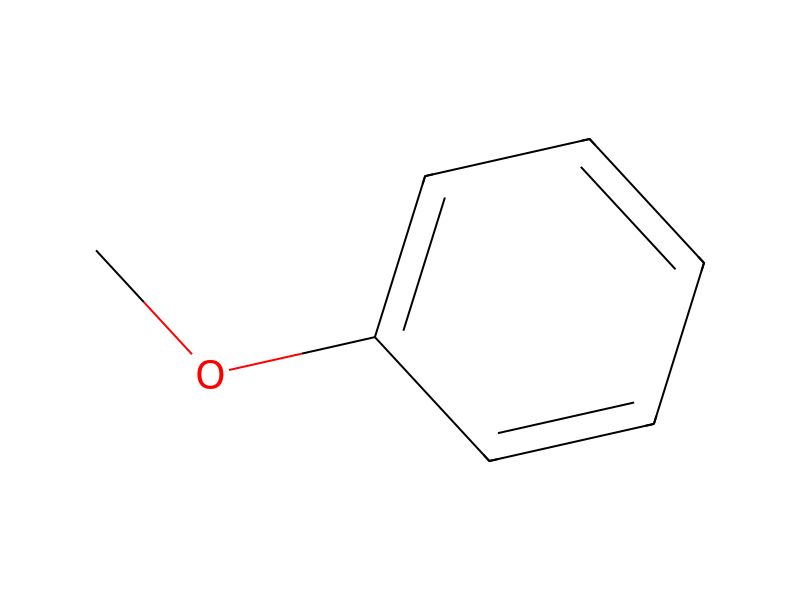
C1(OC)C=CC=CC=1.FC(F)(F)C(O)=O.C(OC(=O)[C:22]1[CH:27]=[C:26]([C:28]2[CH:33]=[C:32]([S:34][CH2:35][CH2:36][CH2:37][C:38](=[O:50])[NH:39][CH2:40][CH2:41][NH:42][C:43](OC(C)(C)C)=[O:44])[N:31]=[C:30]([NH2:51])[N:29]=2)[C:25]([CH3:52])=[CH:24][C:23]=1[CH3:53])(C)(C)C.ON1C2C=CC=CC=2N=N1.C(N(C(C)C)CC)(C)C.Cl.C(N=C=NCCCN(C)C)C>ClCCl>[NH2:51][C:30]1[N:31]=[C:32]2[CH:33]=[C:28]([C:26]3[CH:27]=[C:22]([C:43](=[O:44])[NH:42][CH2:41][CH2:40][NH:39][C:38](=[O:50])[CH2:37][CH2:36][CH2:35][S:34]2)[C:23]([CH3:53])=[CH:24][C:25]=3[CH3:52])[N:29]=1Participants
Reactant 6





Product 1

Reagents, catalysts & solvents 1

Procedure
Anisole (0.060 ml, 0.55 mmol) and trifluoroacetic acid (1.2 ml) were added to a dichloromethane (3.7 ml) solution of 5-{2-amino-6-[3-(2-tert-butoxycarbonylaminoethylcarbamoyl)propylsulfanyl]pyrimidin-4-yl}-2,4-dimethylbenzoic acid tert-butyl ester (124 mg, 0.22 mmol) obtained in Step 2 above. The mixture was stirred for 8 hours while gradually warming from 0° C. to room temperature. The reaction solution was concentrated under reduced pressure, and then benzene (1.5 ml) was added to the residue. The resulting solution was concentrated under reduced pressure. This treatment was repeated three times, and then the obtained pale yellow oily material was dissolved in N,N-dimethylformamide (111 ml). N-Hydroxybenzotriazole (150 mg, 1.11 mmol), diisopropylethylamine (0.39 ml, 2.2 mmol), and 1-ethyl-3-(3′-dimethylaminopropyl)carbodiimide hydrochloride (426 mg, 2.2 mmol) were sequentially added to the solution. The resulting mixture was reacted at room temperature for 14 hours. The reaction solution was concentrated under reduced pressure. The resulting residue was diluted with ethyl acetate (100 ml), and then sequentially washed twice with water (50 ml), and with a saturated aqueous sodium bicarbonate solution (50 ml), water (50 ml), and a saturated aqueous sodium chloride solution (50 ml). The washed ethyl acetate solution was dried over anhydrous sodium sulfate (10 g). After filtration, the filtrate was concentrated under reduced pressure. The resulting crude product was purified by silica gel column chromatography with diol-silica gel (developing solvent: ethyl acetate to ethyl acetate:methanol=15:1) and amino-silica gel (developing solvent: ethyl acetate to ethyl acetate:methanol=15:1) to yield 4-amino-18,20-dimethyl-7-thia-3,5,12,15-tetraazatricyclo[15.3.1.12,6]docosa-1(20),2(22),3,5,17(21),18-hexaene-11,16-dione (Compound 4) (17 mg) as a white solid material.
Workup
- temperaturewhile gradually warming from 0° C. to room temperature
- concentrationThe reaction solution was concentrated under reduced pressure
- additionbenzene (1.5 ml) was added to the residue
- concentrationThe resulting solution was concentrated under reduced pressure
- dissolutionthe obtained pale yellow oily material was dissolved in N,N-dimethylformamide (111 ml)
- customThe resulting mixture was reacted at room temperature for 14 hours
- concentrationThe reaction solution was concentrated under reduced pressure
- additionThe resulting residue was diluted with ethyl acetate (100 ml)
- washsequentially washed twice with water (50 ml)
- dry with materialThe washed ethyl acetate solution was dried over anhydrous sodium sulfate (10 g)
- filtrationAfter filtration
- concentrationthe filtrate was concentrated under reduced pressure
- customThe resulting crude product was purified by silica gel column chromatography with diol-silica gel (developing solvent: ethyl acetate to ethyl acetate:methanol=15:1) and amino-silica gel (developing solvent: ethyl acetate to ethyl acetate:methanol=15:1)
Sources & evidence
- ORD record
- ord-98e011fae2604b448eca3d9a988a3997
- Source dataset
- uspto-grants-2013_01
- Patent number
- US08362236B2
Reaction notes
Loading…