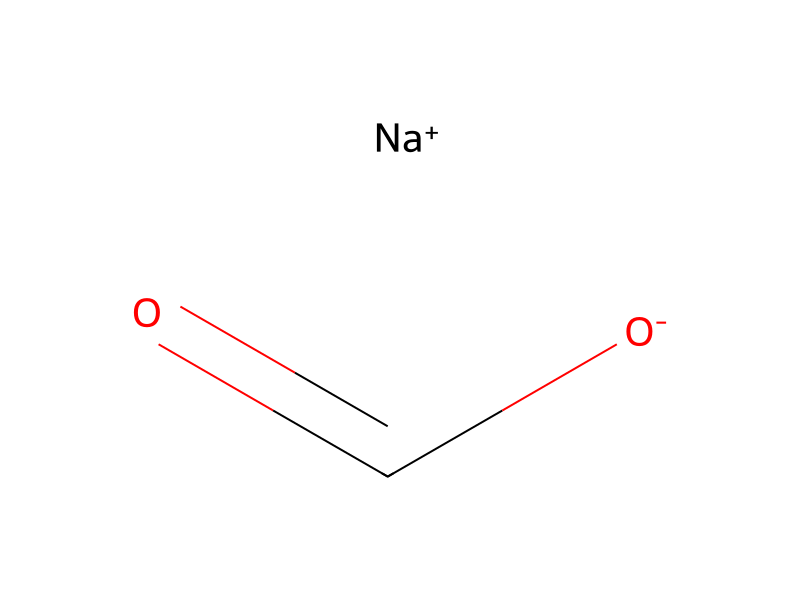
Sodium Formate → HCID 20777476, compound
Reaction equation

Br[C:2]1[CH:3]=[C:4]([CH2:10][NH:11][C:12](=[O:14])[O-:13])[C:5]([O:8][CH3:9])=[N:6][CH:7]=1.[CH:15]([O-:17])=O.[Na+].[C]=O>CN(C)C=O.C(OCC)(=O)C.C1(P(C2C=CC=CC=2)C2C=CC=CC=2)C=CC=CC=1>[CH:15]([C:2]1[CH:3]=[C:4]([CH2:10][NH:11][C:12](=[O:14])[O:13][C:4]([CH3:10])([CH3:5])[CH3:3])[C:5]([O:8][CH3:9])=[N:6][CH:7]=1)=[O:17]Participants
7






Procedure
1.009 g of N-[(5-bromo-2-methoxy-3-pyridyl)methyl]carbamate, 45 mg of dichlorobistriphenylphosphine palladium, 325 mg of sodium formate and 17 mg of triphenylphosphine were dissolved in 3 ml anhydrous N,N-dimethylformamide, followed by stirring at 110° C. for 2.5 hours in a carbon monoxide atmosphere. The reaction mixture was diluted with ethyl acetate, and the organic layer was washed with water and saturated aqueous sodium bicarbonate solution, dried over anhydrous magnesium sulfate and the solvent was evaporated. The residue was purified by silica gel column chromatography, to give 401 mg of tertiary butyl N-[(5-formyl-2-methoxy-3-pyridyl)methyl]carbamate was obtained from fractions eluted with hexane-ethyl acetate (3.5:1).
Workup
- washthe organic layer was washed with water and saturated aqueous sodium bicarbonate solution
- dry with materialdried over anhydrous magnesium sulfate
- customthe solvent was evaporated
- customThe residue was purified by silica gel column chromatography
Sources & evidence
- ORD record
- ord-cdfbcee0e0e747e69db7eb375ba6a042
- Source dataset
- uspto-grants-2005_04
- Patent number
- US06884821B1
Reaction notes
Loading…