Ammonium Chloride → 5-Bromonicotinamide
Reaction equation

[Br:1][C:2]1[CH:3]=[N:4][CH:5]=[C:6]([CH:10]=1)[C:7](O)=[O:8].[Cl-].[NH4+].Cl.C([N:16]=C=NCCCN(C)C)C.O.ON1C2C=CC=CC=2N=N1>CN(C=O)C.O.C(OCC)(=O)C.C(N(CC)CC)C>[Br:1][C:2]1[CH:3]=[N:4][CH:5]=[C:6]([CH:10]=1)[C:7]([NH2:16])=[O:8]Participants
9
Reactant 4



Product 1

Reagents, catalysts & solvents 4




Procedure
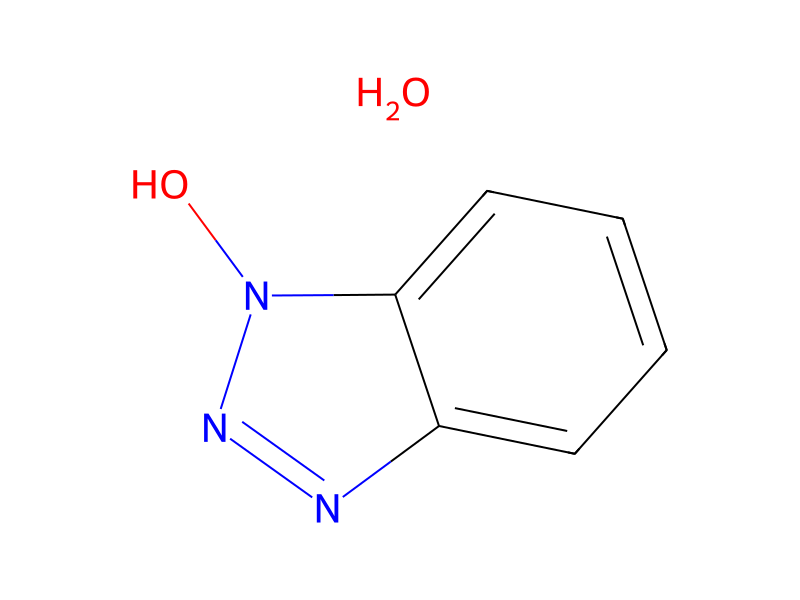
5-Bromonicotinic acid (5.05 g), ammonium chloride (2.10 g), 1-ethyl-3-(3-dimethylaminopropyl)-carbodiimide hydrochloride (7.30 g), 1-hydroxy-1H-benzotriazole monohydrate (3.90 g) and triethylamine (5.5 ml) were suspended in DMF (40 ml) and the mixture was stirred at room temperature for 16 hrs. Ethyl acetate and water were added to the reaction mixture and the organic layer was washed with saturated aqueous sodium hydrogen carbonate, water and saturated brine. The organic layer was concentrated by drying and recrystallized from ethyl acetate to give the title compound (2.33 g) as colorless needle crystals.
Workup
- washthe organic layer was washed with saturated aqueous sodium hydrogen carbonate, water and saturated brine
- concentrationThe organic layer was concentrated
- customby drying
- customrecrystallized from ethyl acetate
Sources & evidence
- ORD record
- ord-5d24d23ce20241e98c25ba5baf5cb16a
- Source dataset
- uspto-grants-2006_06
- Patent number
- US07067537B2
Reaction notes
Loading…