Phosphoric Acid → Isoquinoline, 4-cyclopropyl-
Reaction equation

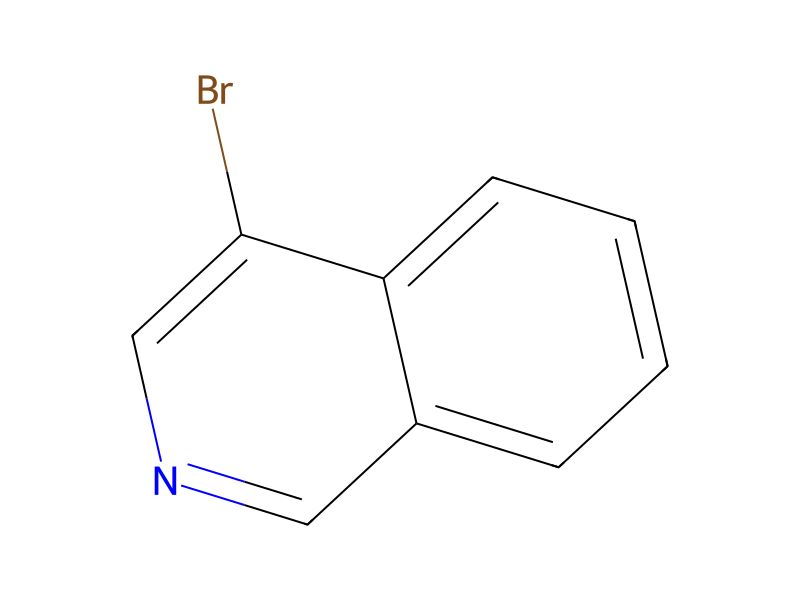
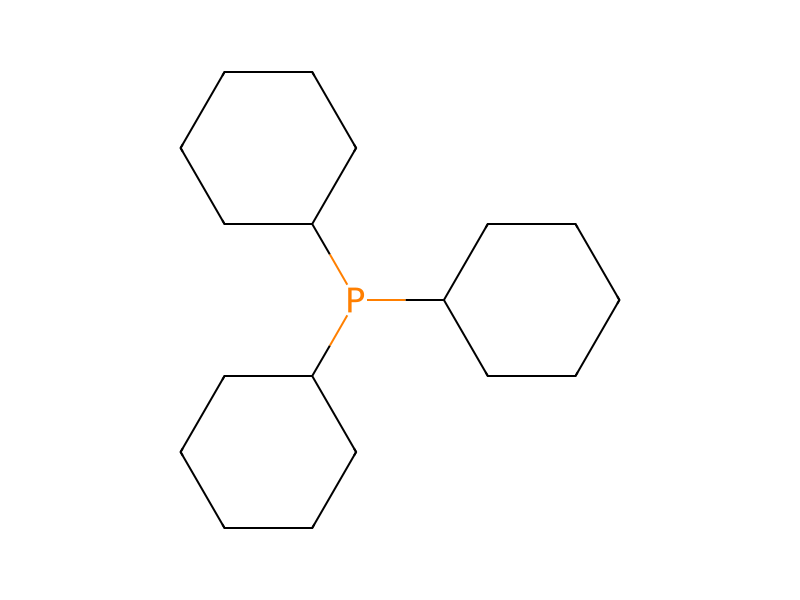
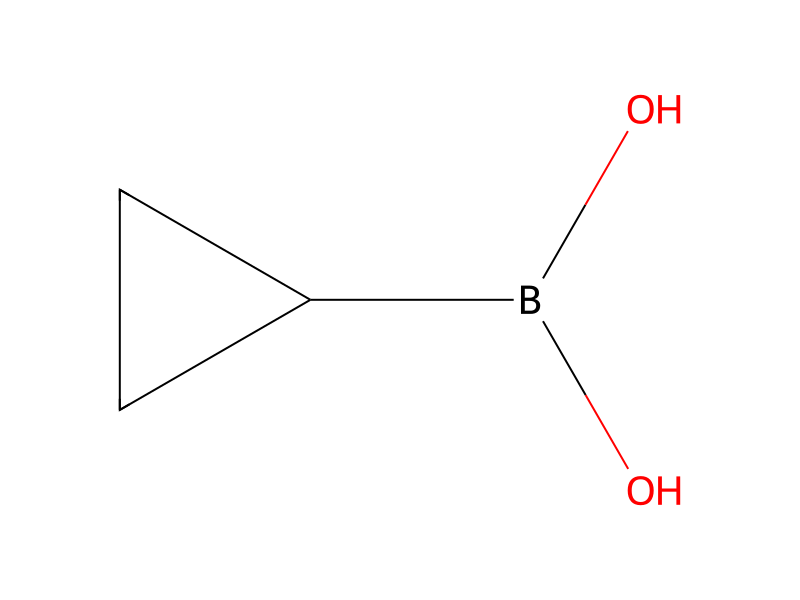
Br[C:2]1[C:11]2[C:6](=[CH:7][CH:8]=[CH:9][CH:10]=2)[CH:5]=[N:4][CH:3]=1.[CH:12]1(B(O)O)[CH2:14][CH2:13]1.P(=O)(O)(O)O.[K].C1(P(C2CCCCC2)C2CCCCC2)CCCCC1>C1(C)C=CC=CC=1.O.O.C([O-])(=O)C.[Pd+2].C([O-])(=O)C>[CH:12]1([C:2]2[C:11]3[C:6](=[CH:7][CH:8]=[CH:9][CH:10]=3)[CH:5]=[N:4][CH:3]=2)[CH2:14][CH2:13]1Participants
Reactant 5


Product 1

Reagents, catalysts & solvents 3



Conditions
- Temperature
- 100 °C
Procedure
To a solution of 4-bromoisoquinoline (0.5 g, 2.403 mmol) and cyclopropylboronic acid (0.248 g, 2.88 mmol) in Toluene/water (11 ml, 10:1) was added phosphoric acid, potassium salt (1.02 g, 4.81 mmol) followed by addition of tricyclohexylphosphine (0.067 g, 0.240 mmol) and palladium(II) acetate (0.027 g, 0.120 mmol). The reaction mass was heated 100° C. and stirred for overnight. The reaction mass was diluted with water and extracted with ethyl acetate. The organic layer was dried over anhydrous Na2SO4 and evaporated under reduced pressure to get crude compound. The crude compound was purified by silica gel chromatography (10% ethyl acetate in pet ether) to get desired compound (0.4 g, 93%) as an oil. 1H NMR (400 MHz, CDCl3): δ ppm 9.12(s, 1H), 8.34-8.32 (d, J=8 Hz, 1H), 8.31 (s, 1H), 7.98-7.96 (d, J=8 Hz, 1H), 7.76 (t, J=4 Hz, 1H), 7.62 (t, J=4 Hz, 1H), 2.23 (s, 1H), 1.11 (t, J=4 Hz, 2H), 0.82 (t, J=8 Hz, 2H).
Workup
- extractionextracted with ethyl acetate
- dry with materialThe organic layer was dried over anhydrous Na2SO4
- customevaporated under reduced pressure
- customto get crude compound
- customThe crude compound was purified by silica gel chromatography (10% ethyl acetate in pet ether)
Sources & evidence
- ORD record
- ord-fd88227fc1cc4ee299860777781add02
- Source dataset
- uspto-grants-2015_02
- Patent number
- US08957203B2
Reaction notes
Loading…