Dichloromethane → HCID 18446542, compound
Reaction equation

Cl[C:2]1[C:7]2[N:8]=[C:9]([C:11]3[CH:16]=[CH:15][CH:14]=[CH:13][CH:12]=3)[S:10][C:6]=2[C:5]([C:17]#[N:18])=[CH:4][N:3]=1.C(=O)([O-])[O-].[K+].[K+].[CH3:25][O:26][C:27]1[CH:34]=[CH:33][C:30]([CH2:31][NH2:32])=[CH:29][CH:28]=1.ClCCl>CN1C(=O)CCC1.C(OCC)(=O)C>[CH3:25][O:26][C:27]1[CH:34]=[CH:33][C:30]([CH2:31][NH:32][C:2]2[C:7]3[N:8]=[C:9]([C:11]4[CH:16]=[CH:15][CH:14]=[CH:13][CH:12]=4)[S:10][C:6]=3[C:5]([C:17]#[N:18])=[CH:4][N:3]=2)=[CH:29][CH:28]=1Participants
7


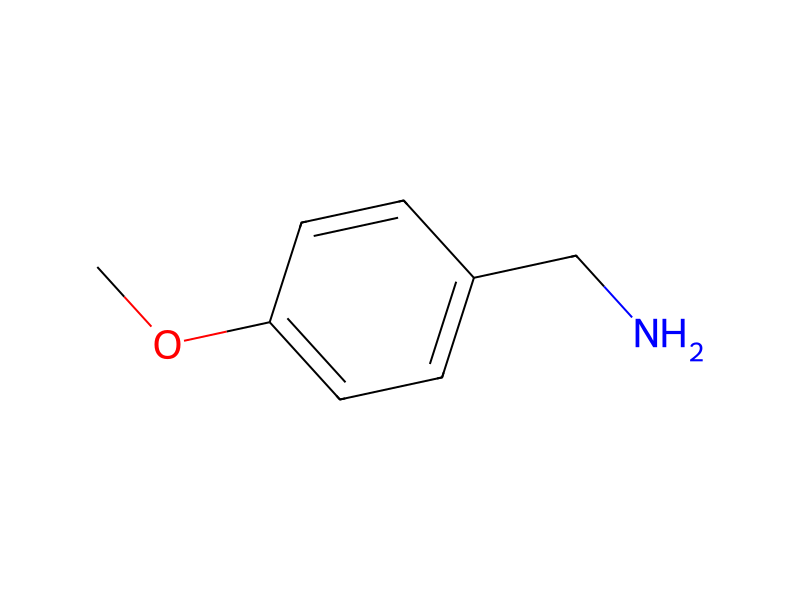




Conditions
- Temperature
- 130 °C
Procedure
A mixture of 4-chloro-2-phenyl-thiazolo[4,5-c]pyridine-7-carbonitrile 47 (54.2 mg, 0.2 mmol) and potassium carbonate (66 mg, 0.48 mmol) in NMP (1 mL) was treated with 4-methoxybenzylamine (32.5 μL, 2.4 mmol) and the mixture stirred at 130° C. for 8 hours. Silica gel column chromatography (eluent: dichloromethane and ethyl acetate (10 to 1)) afforded 48 as a pale yellow solid (70 mg). 1H NMR (400 MHz, d6-DMSO) δ: 3.71 (s, 3H), 4.72 (d, J=5.9 Hz, 2H), 6.87 (d, J=8.4 Hz, 2H), 7.31 (d, J=8.4 Hz, 2H), 7.60 (m, 3H), 8.15 (m, 2H), 8.47 (s, 1H), 8.84 (t, J=6.1 Hz, 1H). MS (EI) m/z (M+H+) 373.
Sources & evidence
- ORD record
- ord-4825a4859245488c84e4a3486829d057
- Source dataset
- uspto-grants-2009_12
- Patent number
- US07635695B2
Reaction notes
Loading…