Triphenylphosphine → 1-(1-Ethynylhexyloxy)-2,3-difluorobenzene
Reaction equation

[F:1][C:2]1[C:7]([F:8])=[CH:6][CH:5]=[CH:4][C:3]=1[OH:9].[CH:10]#[C:11][CH:12](O)[CH2:13][CH2:14][CH2:15][CH2:16][CH3:17].C1(P(C2C=CC=CC=2)C2C=CC=CC=2)C=CC=CC=1.CC(OC(/N=N/C(OC(C)C)=O)=O)C>C1COCC1.CC(OC)(C)C>[C:11]([CH:12]([O:9][C:3]1[CH:4]=[CH:5][CH:6]=[C:7]([F:8])[C:2]=1[F:1])[CH2:13][CH2:14][CH2:15][CH2:16][CH3:17])#[CH:10]Participants
7


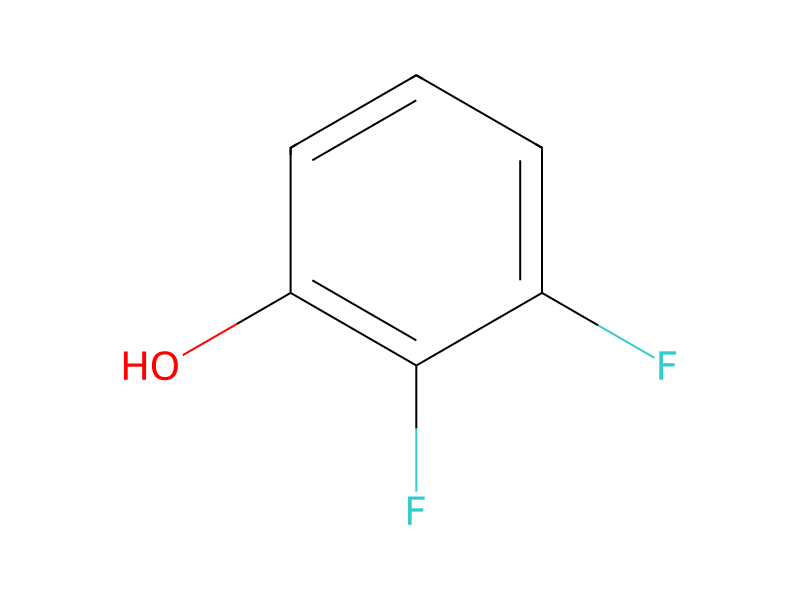
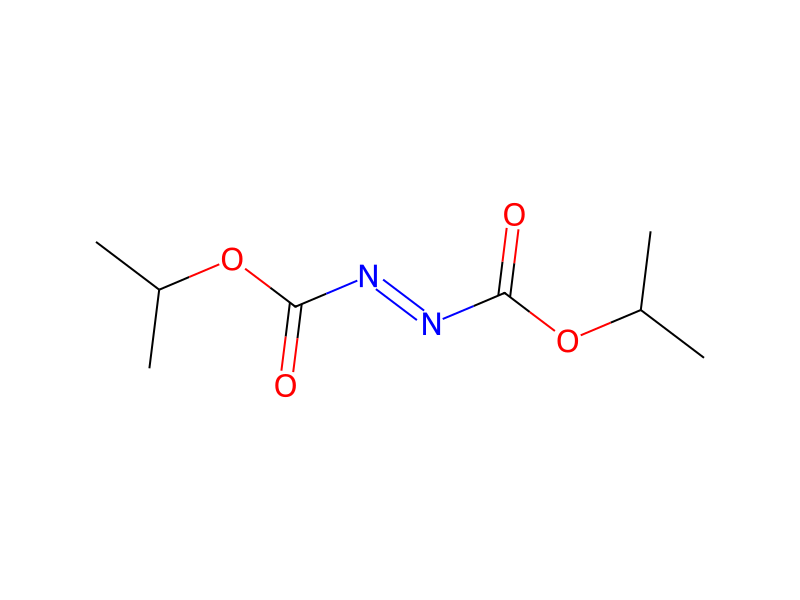



Procedure
2.4 g (0.33 mol) of 2,3-difluorophenol are initially introduced in 1.2 l of THF together with 50.0 ml (0.34 mol) of 1-octyn-3-ol and 94.1 g (0.36 mol) of triphenylphosphine, and a solution of 76.1 ml (0.39 mol) of DIAD in 100 ml of THF is added dropwise. After 19 h at RT, the batch is diluted with MTBE and washed with water. The aqueous phase is extracted with MTBE, and the combined organic phases are washed with saturated sodium chloride solution. The solution is dried using sodium sulfate and evaporated to dryness. The residue is purified by column chromatography (SiO2, 1-chlorobutane), giving 1-(1-ethynylhexyloxy)-2,3-difluorobenzene as a colourless oil.
Workup
- washwashed with water
- extractionThe aqueous phase is extracted with MTBE
- washthe combined organic phases are washed with saturated sodium chloride solution
- customThe solution is dried
- customevaporated to dryness
- customThe residue is purified by column chromatography (SiO2, 1-chlorobutane)
Sources & evidence
- ORD record
- ord-99a9c6d81ce54503a22202bff0fb1439
- Source dataset
- uspto-grants-2012_11
- Patent number
- US08303844B2
Reaction notes
Loading…