1-Hydroxybenzotriazole → HCID 86650707, compound
Reaction equation

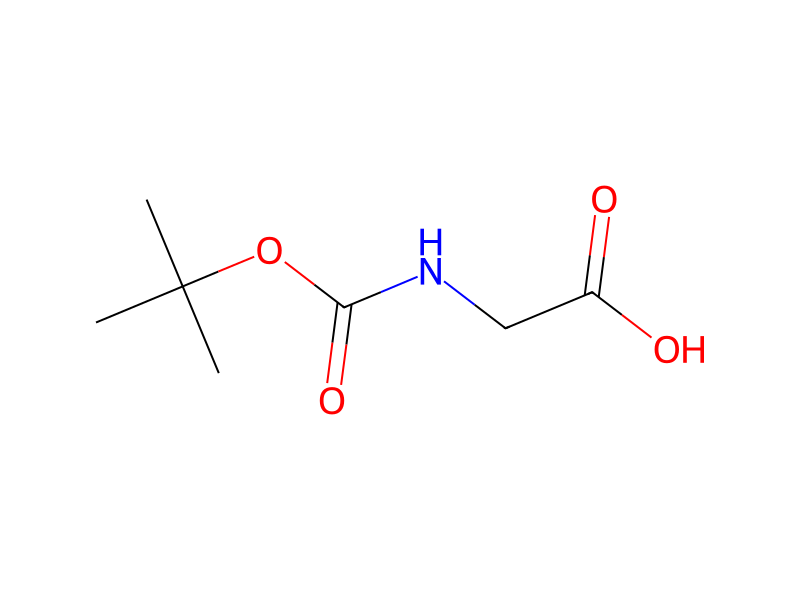
Cl.[F:2][C@H:3]1[CH2:7][CH2:6][NH:5][CH2:4]1.[C:8]([NH:15][CH2:16][C:17](O)=[O:18])([O:10][C:11]([CH3:14])([CH3:13])[CH3:12])=[O:9].Cl.C(N=C=NCCCN(C)C)C.ON1C2C=CC=CC=2N=N1>O1CCCC1.C(N(CC)CC)C>[F:2][C@H:3]1[CH2:7][CH2:6][N:5]([C:17](=[O:18])[CH2:16][NH:15][C:8](=[O:9])[O:10][C:11]([CH3:12])([CH3:13])[CH3:14])[CH2:4]1Participants
7
Reactant 4



Product 1

Reagents, catalysts & solvents 2


Conditions
- Temperature
- 70 °C
Procedure
(S)-3-Fluoropyrrolidine hydrochloride (535 mg), N-Boc glycine (746 mg), 1-ethyl-3-(3-dimethylaminopropyl)carbodiimide hydrochloride (1.41 g), 1-hydroxybenzotriazole (993 mg), and triethylamine (1.19 mL) were dissolved in tetrahydrofuran (5 mL), and the solution was stirred at 70° C. for 1 hour. The reaction mixture was concentrated under reduced pressure, and aqueous saturated sodium bicarbonate (20 mL) was added to the residue, followed by extraction with ethyl acetate (10 mL). The organic layer was washed sequentially with 0.1N HCl (10 mL) and saturated brine (10 mL) and dried over sodium sulfate, followed by concentration under reduced pressure, to thereby yield compound 20a (98.1 mg, yield: 9.3%).
Workup
- concentrationThe reaction mixture was concentrated under reduced pressure, and aqueous saturated sodium bicarbonate (20 mL)
- additionwas added to the residue
- extractionfollowed by extraction with ethyl acetate (10 mL)
- washThe organic layer was washed sequentially with 0.1N HCl (10 mL) and saturated brine (10 mL)
- dry with materialdried over sodium sulfate
- concentrationfollowed by concentration under reduced pressure
Sources & evidence
- ORD record
- ord-6f72a3539bac46bbb0930b59828b8637
- Source dataset
- uspto-grants-2012_11
- Patent number
- US08304427B2
Reaction notes
Loading…