Hydrochloric Acid → HCID 178507161, compound
Reaction equation

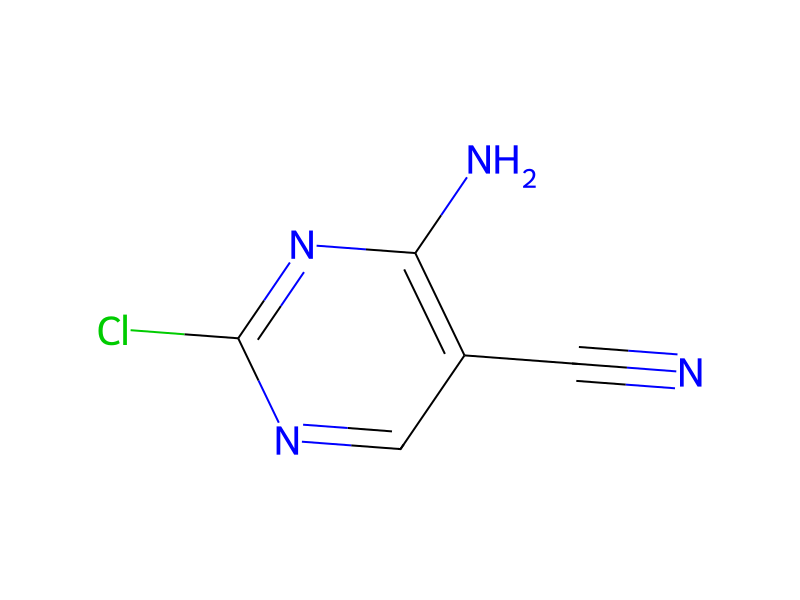
[H-].[Na+].[NH2:3][C:4]1[C:9]([C:10]#[N:11])=[CH:8][N:7]=[C:6]([Cl:12])[N:5]=1.[Cl:13][C:14]1[CH:19]=[CH:18][CH:17]=[C:16]([Cl:20])[C:15]=1[N:21]=[C:22]=[O:23].Cl>C(OCC)(=O)C.CN(C)C=O>[Cl:12][C:6]1[N:5]=[C:4]2[NH:3][C:22](=[O:23])[N:21]([C:15]3[C:14]([Cl:13])=[CH:19][CH:18]=[CH:17][C:16]=3[Cl:20])[C:10](=[NH:11])[C:9]2=[CH:8][N:7]=1Participants
Reactant 4



Product 1

Reagents, catalysts & solvents 2


Procedure
1.12 g of sodium hydride was added to an N,N-dimethylformamide (35 mL) solution containing 3.0 g of 4-amino-2-chloropyrimidin-5-carbonitrile, and the mixture was stirred for 5 minutes at room temperature. Then, 4.38 g of 2,6-dichlorophenyl isocyanate was added to the reaction mixture, which was then stirred for 1 hour at room temperature. Thereafter, ethyl acetate and a 1 N hydrochloric acid aqueous solution were added to the reaction mixture to separate the organic layer. After washing with saturated saline, the solution was dried with anhydrous magnesium sulfate, and the solvent was distilled away. The deposited solid was solidified using a methanol-ethyl acetate mixed solvent. After leaching, 3.8 g of a white solid was obtained as a subject compound.
Workup
- stirringwas then stirred for 1 hour at room temperature
- customto separate the organic layer
- washAfter washing with saturated saline
- dry with materialthe solution was dried with anhydrous magnesium sulfate
- distillationthe solvent was distilled away
Sources & evidence
- ORD record
- ord-44fb22245fd14b39af6af0a33b3ed4f7
- Source dataset
- uspto-grants-2013_08
- Patent number
- US08507505B2
Reaction notes
Loading…