3-Hydroxybenzaldehyde → 3-butoxybenzaldehyde
Reaction equation

[OH:1][C:2]1[CH:3]=[C:4]([CH:7]=[CH:8][CH:9]=1)[CH:5]=[O:6].C(=O)([O-])[O-].[K+].[K+].Br[CH2:17][CH2:18][CH2:19][CH3:20]>CN(C)C=O>[CH2:17]([O:1][C:2]1[CH:3]=[C:4]([CH:7]=[CH:8][CH:9]=1)[CH:5]=[O:6])[CH2:18][CH2:19][CH3:20]Participants
5
Reactant 3
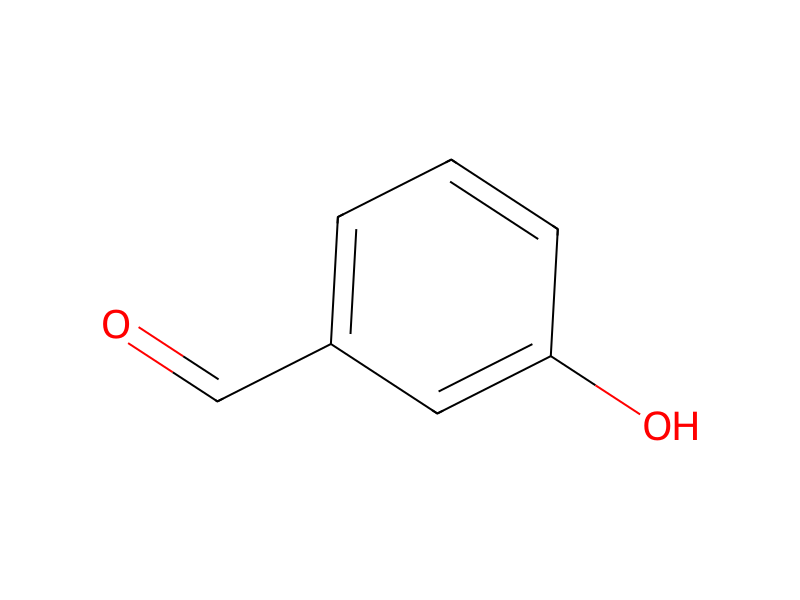


Product 1

Reagents, catalysts & solvents 1

Procedure
3-Hydroxybenzaldehyde (3 g, 24.6 mmol) and potassium carbonate (10.2 g, 73.8 mmol) were suspended in N,N-dimethylformamide (60 mL). 1-Bromobutane (3.17 mL, 29.5 mmol) was added to this suspension and stirred for 19 hours at room temperature. This mixture was partitioned into ethyl acetate and water. This organic layer was separated, washed with water, dried over anhydrous magnesium sulfate, and filtered. The filtrate was concentrated under a reduced pressure to obtain the title compound (4.23 g).
Workup
- customThis mixture was partitioned into ethyl acetate and water
- customThis organic layer was separated
- washwashed with water
- dry with materialdried over anhydrous magnesium sulfate
- filtrationfiltered
- concentrationThe filtrate was concentrated under a reduced pressure
Sources & evidence
- ORD record
- ord-03f4420bd5a14e258438d1b7de32cd02
- Source dataset
- uspto-grants-2013_08
- Patent number
- US08507530B2
Reaction notes
Loading…