Hydrochloric Acid → 4-(2-Methoxyethoxy)-3-methylbenzoic acid
Reaction equation

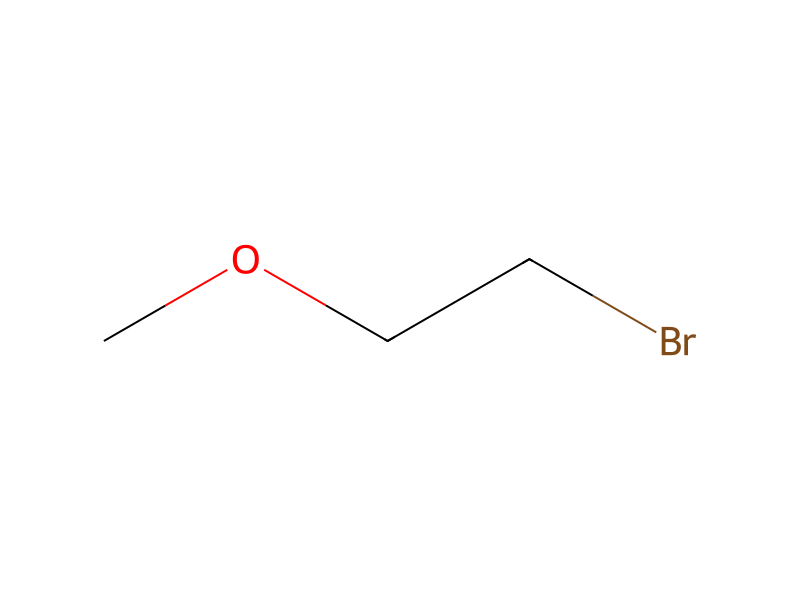
[OH:1][C:2]1[CH:10]=[CH:9][C:5]([C:6]([OH:8])=[O:7])=[CH:4][C:3]=1[CH3:11].[OH-].C([P+](CCCC)(CCCC)CCCC)CCC.Br[CH2:31][CH2:32][O:33][CH3:34].Cl>C1COCC1>[CH3:34][O:33][CH2:32][CH2:31][O:1][C:2]1[CH:10]=[CH:9][C:5]([C:6]([OH:8])=[O:7])=[CH:4][C:3]=1[CH3:11]Participants





Conditions
- Temperature
- 0 °C
Procedure
To a solution of 4-hydroxy-3-methyl-benzoic acid (2.0 g, 13 mmol) in THF (24 mL) was added tetrabutylphosphonium hydroxide (18 mL of 40% w/v, 26 mmol). The reaction mixture was cooled to 0° C. in an ice water bath and then 1-bromo-2-methoxy-ethane (1.8 g, 1.2 mL, 13 mmol) was added. The reaction mixture was then allowed to warm to room temperature and stir overnight. The reaction mixture was made acidic by addition of 1M HCl and the reaction was extracted with ethyl acetate. The organics were dried over sodium sulfate and evaporated to yield 180 mg of 4-(2-methoxyethoxy)-3-methylbenzoic acid (yield: 6%). ESI-MS m/z calc. 210.2. found 209.2 (M-H)−. Retention time: 0.96 minutes (3 min run). The following compounds were synthesized using the procedures described above: 3-methyl-4-propoxybenzoic acid, 4-(2-isopropoxyethoxy)-3-methylbenzoic acid, and 4-(3-methoxypropoxy)-3-methylbenzoic acid.
Workup
- temperatureto warm to room temperature
- extractionthe reaction was extracted with ethyl acetate
- dry with materialThe organics were dried over sodium sulfate
- customevaporated
Sources & evidence
- ORD record
- ord-8a3dfc1ca3b544c1af9c6e282e77a18d
- Source dataset
- uspto-grants-2013_12
- Patent number
- US08598164B2
Reaction notes
Loading…