Triethylamine → 1-(5-Bromo-2-fluorophenyl)ethanone
Reaction equation

[Br:1][C:2]1[CH:3]=[CH:4][C:5]([F:11])=[C:6]([CH:10]=1)[C:7]([OH:9])=O.[CH2:12](N(CC)CC)C.Cl.CN(C)CCCN=C=NCC.CNOC.C[Mg]Cl.BrC1C=CC(F)=C(C=1)C(N(OC)C)=O>ClCCl.CN(C)C1C=CN=CC=1.O1CCCC1>[Br:1][C:2]1[CH:3]=[CH:4][C:5]([F:11])=[C:6]([C:7](=[O:9])[CH3:12])[CH:10]=1Participants
Reactant 6



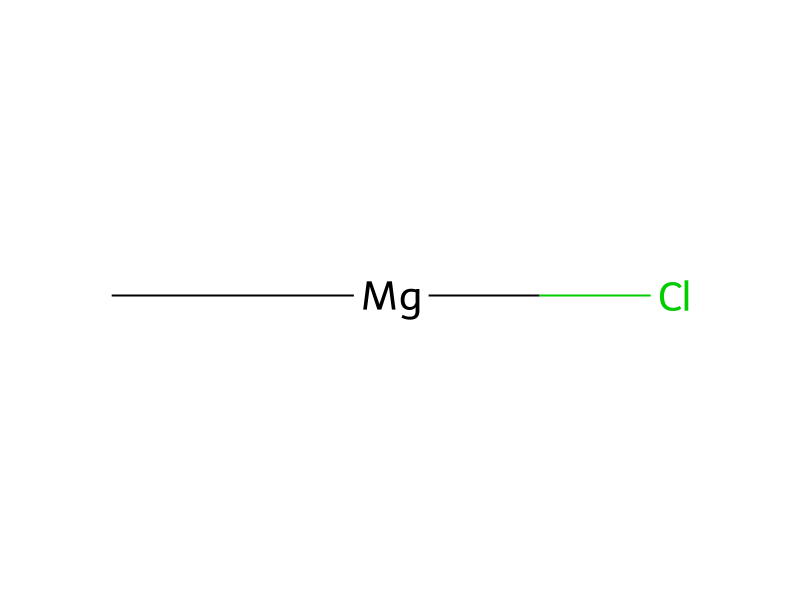
Product 1

Reagents, catalysts & solvents 3



Procedure
A solution of 5-bromo-2-fluoro-benzoic acid (3.50 g, 16 mmol) in dichloromethane (70 ml) was cooled to 0° C. and treated with triethylamine (1.725 g, 17 mmol), N-(3-dimethylamino-propyl)-N′-ethyl-carbodiimide hydrochloride (3.032 g, 16 mmol), 4-dimethylamino-pyridine (0.097 g, 0.8 mmol), and N,O-dimethyl-hydroxylamine (1.774 g, 18 mmol). The reaction mixture was left to warm to room temperature and stirred for 16 hours. For the workup, the reaction mixture was diluted with dichloromethane (100 ml) and, consecutively, extracted with water (50 ml), citric acid (10%, 50 ml), and saturated sodium hydrogen-carbonate solution (50 ml). The organic layer was dried over sodium sulfate, then evaporated. The crude 5-bromo-2-fluoro-N-methoxy-N-methyl-benzamide material (3.73 g, 91% of theory) was sufficiently pure and was directly engaged in the next step. In a dried flask, a solution of methylmagnesium chloride (3M in tetrahydrofuran, 5.69 ml, 17 mmol) in tetrahydrofuran (24 ml) was treated at 12-16° C. with a solution of 5-bromo-2-fluoro-N-methoxy-N-methyl-benzamide (3.73 g, 14.2 mmol) in tetrahydrofuran (24 ml). After complete addition, the reaction mixture was heated to reflux. After 20 minutes, the white suspension was quenched under ice cooling with a saturated solution of ammonium chloride (25 ml). After dilution with ethyl acetate (50 ml), the aqueous layer was separated and re-extracted with ethyl acetate (50 ml). The combined organic layers were washed with brine (20 ml), dried over sodium sulfate, and evaporated at reduced pressure. 1-(5-bromo-2-fluoro-phenyl)-ethanone was obtained as a light yellow solid (2.6 g, 84% of theory), which was directly engaged in the next step. Rf: 0.55 (silica gel; eluent: heptane/ethyl acetate=4/1).
Workup
- waitThe reaction mixture was left
- extractionconsecutively, extracted with water (50 ml), citric acid (10%, 50 ml), and saturated sodium hydrogen-carbonate solution (50 ml)
- dry with materialThe organic layer was dried over sodium sulfate
- customevaporated
- additionAfter complete addition
- temperaturethe reaction mixture was heated to reflux
- waitAfter 20 minutes
- customthe white suspension was quenched under ice cooling with a saturated solution of ammonium chloride (25 ml)
- customAfter dilution with ethyl acetate (50 ml), the aqueous layer was separated
- extractionre-extracted with ethyl acetate (50 ml)
- washThe combined organic layers were washed with brine (20 ml)
- dry with materialdried over sodium sulfate
- customevaporated at reduced pressure
Sources & evidence
- ORD record
- ord-0a2db97ce3b44e1c85aedc1e52a0a060
- Source dataset
- uspto-grants-2012_05
- Patent number
- US08188079B2
Reaction notes
Loading…