Pyrrole → 3-Fluoro-1-nitro-4-(1H-pyrrol-1-yl)benzene
Reaction equation

[H-].[Na+].[NH:3]1[CH:7]=[CH:6][CH:5]=[CH:4]1.[F:8][C:9]1[CH:10]=[C:11]([N+:16]([O-:18])=[O:17])[CH:12]=[CH:13][C:14]=1F.[Cl-].[NH4+]>C1COCC1.C(OCC)(=O)C>[F:8][C:9]1[CH:10]=[C:11]([N+:16]([O-:18])=[O:17])[CH:12]=[CH:13][C:14]=1[N:3]1[CH:7]=[CH:6][CH:5]=[CH:4]1Participants
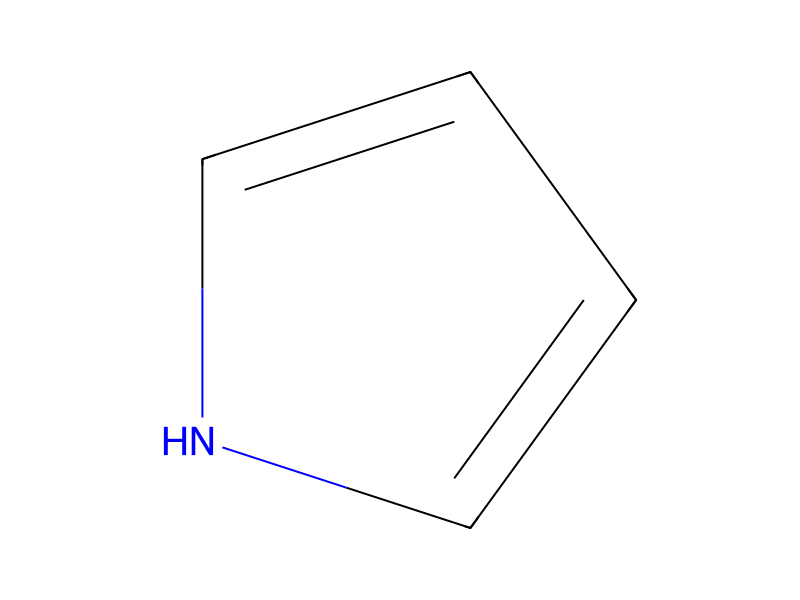






Conditions
- Temperature
- 50 °C
Procedure
A slurry of 403 mg(630 mg of 60% in oil, 15.75 mmol) of sodium hydride in 85 mL THF was treated with 1.01 g(1.04 mL, 15 mmol) of pyrrole, followed by warming at 50° C. foe 15 min. The solution was then treated with 2.51 g(1.74 mL, 15.75 mmol) of 3.4-difluoronitrobenzene, followed by warming at reflux for 18h. The mixture was then cooled and treated with lOmL saturated ammonium chloride solution. The mixture was diluted with ethyl acetate and extracted with water (2×). Drying (Na2SO4) and concentration in vacuo afforded a dark brown solid, which was chromatographed over 75 g of 230-400 mesh silica gel, eluting with 30%(v/v) dichloromethane in hexane. These procedures afforded 2.05 g(66%) of the title pyrrole derivative as a light yellow solid. 1H NMR (CDCl3): δ8.14, 7.57, 7.16, 6.44.
Workup
- temperatureby warming
- temperatureat reflux for 18h
- temperatureThe mixture was then cooled
- extractionextracted with water (2×)
- customDrying
- concentration(Na2SO4) and concentration in vacuo
- customafforded a dark brown solid, which
- customwas chromatographed over 75 g of 230-400 mesh silica gel
- washeluting with 30%(v/v) dichloromethane in hexane
Sources & evidence
- ORD record
- ord-b73cc8136b1c4bcda263313bdbae35fb
- Source dataset
- uspto-grants-2000_09
- Patent number
- US06124334
Reaction notes
Loading…