Hydrochloric Acid → [1-(4-cyanophenyl)-1H-pyrazol-5-yl]boronic acid
Reaction equation

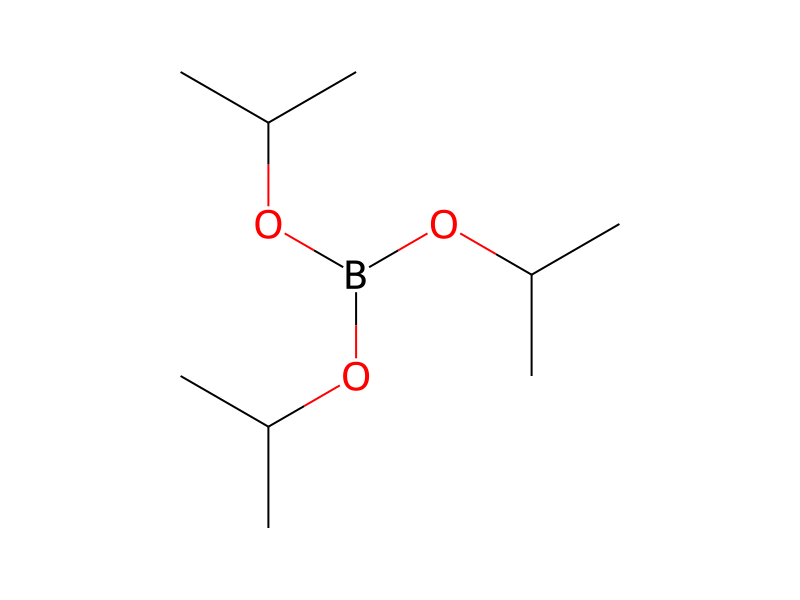
[N:1]1([C:6]2[CH:13]=[CH:12][C:9]([C:10]#[N:11])=[CH:8][CH:7]=2)[CH:5]=[CH:4][CH:3]=[N:2]1.C([N-]C(C)C)(C)C.[Li+].[B:22](OC(C)C)([O:27]C(C)C)[O:23]C(C)C.Cl>C1COCC1>[C:10]([C:9]1[CH:12]=[CH:13][C:6]([N:1]2[C:5]([B:22]([OH:27])[OH:23])=[CH:4][CH:3]=[N:2]2)=[CH:7][CH:8]=1)#[N:11]Participants




Procedure
4-(1H-Pyrazol-1-yl)benzonitrile (Eur. J. Org. Chem. 2004, 695-709) (1.5 g, 8.87 mmol) in dry THF (50 ml) under argon was stirred at −78° C. whilst lithium diisopropylamide (1.8M solution in THF/hexane/ethyl benzene; 5.2 ml, 9.32 mmol) was added dropwise during 20 min. Stirring and cooling were continued for 1 h, triisopropyl borate (8 ml, 34.5 mmol) was added dropwise during 30 min and then the temperature was allowed to rise overnight to RT. The pH of the reaction mixture was adjusted to 5 with 1M HCl and the mixture was then concentrated to a minimum volume and extracted with ethyl acetate (200 ml) and brine (3×100 ml). The organic phase was collected, dried (Na2SO4), filtered and evaporated to a brown solid (1.32 g) which was used in the next step without further purification.
Workup
- additionwas added dropwise during 20 min
- temperaturecooling
- concentrationthe mixture was then concentrated to a minimum volume
- extractionextracted with ethyl acetate (200 ml) and brine (3×100 ml)
- customThe organic phase was collected
- dry with materialdried (Na2SO4)
- filtrationfiltered
- customevaporated to a brown solid (1.32 g) which
- customwas used in the next step without further purification
Sources & evidence
- ORD record
- ord-540249c45f654159b1afcc1960ff67f1
- Source dataset
- uspto-grants-2013_04
- Patent number
- US08410114B2
Reaction notes
Loading…