4-Bromophenol → 4-(4-Bromophenoxy)tetrahydro-2H-pyran
Reaction equation

[Br:1][C:2]1[CH:7]=[CH:6][C:5]([OH:8])=[CH:4][CH:3]=1.[O:9]1[CH2:14][CH2:13][CH:12](O)[CH2:11][CH2:10]1.C1(P(C2C=CC=CC=2)C2C=CC=CC=2)C=CC=CC=1.N(C(OCC)=O)=NC(OCC)=O>C1COCC1>[Br:1][C:2]1[CH:7]=[CH:6][C:5]([O:8][CH:12]2[CH2:13][CH2:14][O:9][CH2:10][CH2:11]2)=[CH:4][CH:3]=1Participants





Procedure
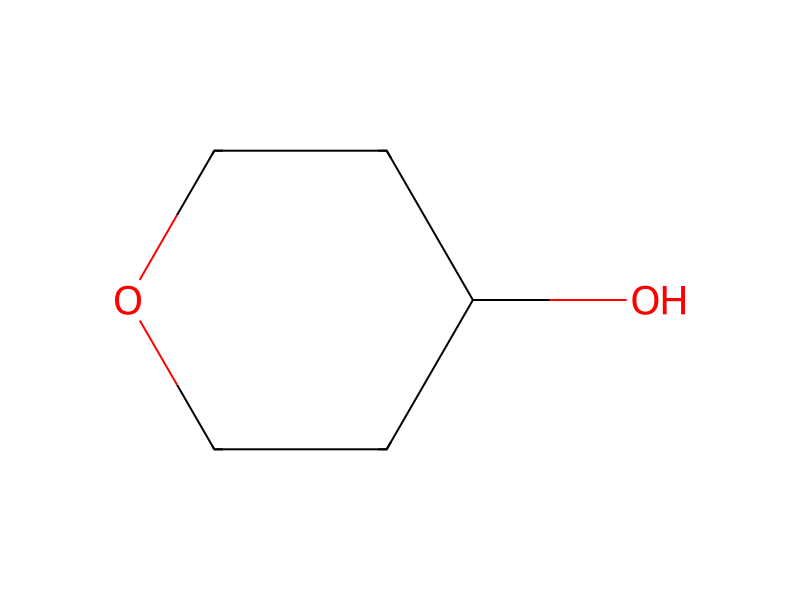
To a solution of 4-bromophenol (15.0 g), tetrahydropyran-4-ol (9.Og) and triphenylphosphine (23.08 g) in THF (100 ml) was added dropwise at 0° C. diethyl azodicarboxylate (40% toluene solution) (38.3 g), and the mixture was stirred at room temperature for 3 days and concentrated under reduced pressure. To the residue was added diethylether, and precipitated crystals were removed by filtration. The filtrate was concentrated, and the residue was dissolved in ethyl acetate. The solution was washed with 1N sodium hydroxide solution (×3) and saturated brine, dried with magnesium sulfate and concentrated under reduced pressure. The residue was purified with silica gel column chromatography (ethyl acetate/hexane=1:4) to give colorless crystals of 4-(4-bromophenyloxy)tetrahydropyran (15.94 g).
Workup
- concentrationconcentrated under reduced pressure
- additionTo the residue was added diethylether
- customprecipitated crystals
- customwere removed by filtration
- concentrationThe filtrate was concentrated
- dissolutionthe residue was dissolved in ethyl acetate
- washThe solution was washed with 1N sodium hydroxide solution (×3) and saturated brine
- dry with materialdried with magnesium sulfate
- concentrationconcentrated under reduced pressure
- customThe residue was purified with silica gel column chromatography (ethyl acetate/hexane=1:4)
Sources & evidence
- ORD record
- ord-391fc2abc7d7478ba9f772af53b9c1ac
- Source dataset
- uspto-grants-2001_05
- Patent number
- US06235771B1
Reaction notes
Loading…