Propargyl alcohol → 3-Phenyl-2-propyn-1-ol
Reaction equation

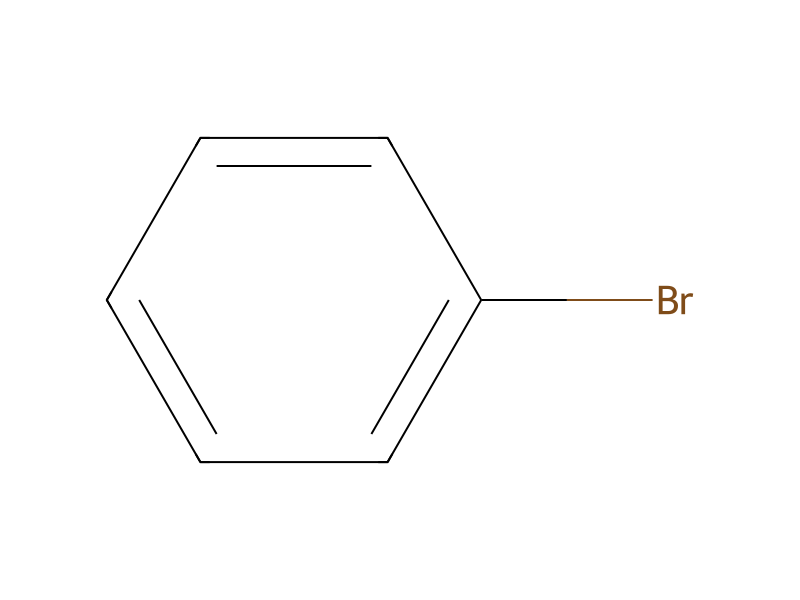
Br[C:2]1[CH:7]=[CH:6][CH:5]=[CH:4][CH:3]=1.[CH:8]#[C:9][CH2:10][OH:11].C(NCC)C.BrC1C=CC=CN=1>[Cu]I.C(OCC)C>[C:2]1([C:8]#[C:9][CH2:10][OH:11])[CH:7]=[CH:6][CH:5]=[CH:4][CH:3]=1Participants






Procedure
A mixture of 0.7 g (1 mmol) of bis-triphenylphosphinepalladium dichloride and 0.38 g (2 mmols) of copper (I) iodide is added, with stirring, to 31.6 g (200 mmols) of bromobenzene, 16.8 g (300 mmols) of 1-propyn-3-ol and 300 ml of diethylamine. The reaction mixture is stirred in an argon atmosphere at room temperature (20°-25° C.), and within one hour the mixture heats up to about 30° C. A precipitate commences to occur, and after a reaction time of 6 hours, no further bromopyridine can be detected according to chromatographic analysis. 200 ml of diethyl ether are added to the reaction mixture and this is then filtered. The filtrate is washed with 200 ml of water, dried over magnesium sulfate, and concentrated by evaporation to leave a solid residue. Recrystallisation from diethyl ether yields 1-(phenyl)-propyn-3-ol. 1H-NMR Spectrum 100 MHz (CDCl3, TMS) δ in ppm: 2.4(s); 4.5(s); 7.2-7.5(m) in the ratio of 1:2:5.
Workup
- additionis added
- customafter a reaction time of 6 hours
- filtrationthis is then filtered
- washThe filtrate is washed with 200 ml of water
- dry with materialdried over magnesium sulfate
- concentrationconcentrated by evaporation
- customto leave a solid residue
- customRecrystallisation from diethyl ether
Sources & evidence
- ORD record
- ord-d782d0742d88483e9af8e08b6add48c1
- Source dataset
- uspto-grants-1982_03
- Patent number
- US04322432
Reaction notes
Loading…