Acrylonitrile → HCID 3041687, compound
Reaction equation

Cl[C:2]([C:4]1[CH:13]=[CH:12][C:7]([CH:8]=[CH:9][C:10]#[N:11])=[CH:6][CH:5]=1)=[O:3].BrC1C=CC(C(O)=[O:20])=CC=1.C(#N)C=C.C(N(CC)CC)C.C1(C)C=CC=CC=1P(C1C=CC=CC=1C)C1C=CC=CC=1C>C([O-])(=O)C.[Pd+2].C([O-])(=O)C.C1(C)C=CC=CC=1>[C:2]([C:4]1[CH:13]=[CH:12][C:7]([CH:8]=[CH:9][C:10]#[N:11])=[CH:6][CH:5]=1)([OH:20])=[O:3]Participants
8







Procedure
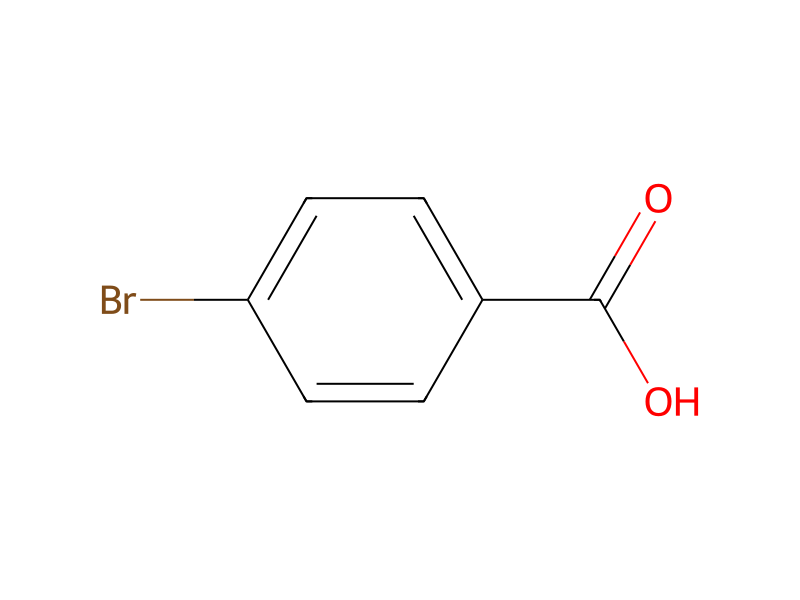
The 4-chloroformylcinnamonitrile can be prepared as follows: 10.05 g (50 mmols) of 4-bromobenzoic acid, 3.31 g (62.5 mmols) of acrylonitrile, 12.6 g (125 mmols) of triethylamine, 0.112 g (0.5 mmol) of palladium acetate, 0.608 g (2 mmols) of tri-o-tolylphosphine and 20 ml of toluene are boiled under reflux for 6 hours. The reaction mixture is extracted by shaking with 100 ml of 2N hydrochloric acid and the crude product is filtered off and recrystallised from methanol. 3 g (35% of theory) of 4-carboxycinnamonitrile are obtained in the form of pale yellow crystals; melting point 281° C.
Workup
- temperatureunder reflux for 6 hours
- extractionThe reaction mixture is extracted
- filtrationthe crude product is filtered off
- customrecrystallised from methanol
Sources & evidence
- ORD record
- ord-61d2c50a4f9646b4893d1583f9c07024
- Source dataset
- uspto-grants-1990_04
- Patent number
- US04918215
Reaction notes
Loading…