Hydrochloric Acid → HCID 18638689, compound
Reaction equation

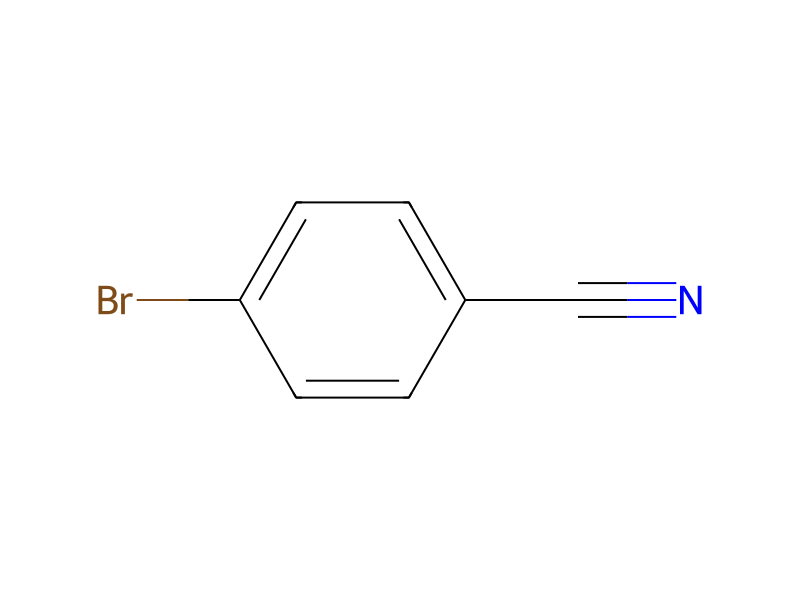
[Br:1][C:2]1[CH:9]=[CH:8][C:5]([C:6]#[N:7])=[CH:4][CH:3]=1.N[C@@H:11]([C:16]([OH:18])=[O:17])[C:12]([SH:15])([CH3:14])[CH3:13].C(=O)([O-])[O-:20].[K+].[K+].Cl>CO.O>[Br:1][C:2]1[CH:9]=[CH:8][C:5]([C:6]([NH:7][C@@H:11]([C:16]([OH:18])=[O:17])[C:12]([SH:15])([CH3:14])[CH3:13])=[O:20])=[CH:4][CH:3]=1Participants
7
Reactant 4



Product 1

Reagents, catalysts & solvents 2


Procedure
36.4 g (0.2 mole) 4-bromobenzonitrile, 29.8 g (0.2 mole) D-penicillamine and 13.8 g (0.1 mole) potassium carbonate were heated in 350 ml methanol and 150 ml water for 6 hours at the boiling point. After the mixture was acidified with concentrated hydrochloric acid to pH 4, it was heated one hour to a boil. After it cooled off, 53.6 g (81% of theory) of the product were isolated as a colorless precipitate with a melting point of 176° C.
Workup
- temperaturewas heated one hour to a boil
- temperatureAfter it cooled off
- custom53.6 g (81% of theory) of the product were isolated as a colorless precipitate with a melting point of 176° C.
Sources & evidence
- ORD record
- ord-7bd8ee60a66549c5b084e23e33688600
- Source dataset
- uspto-grants-1990_04
- Patent number
- US04918223
Reaction notes
Loading…