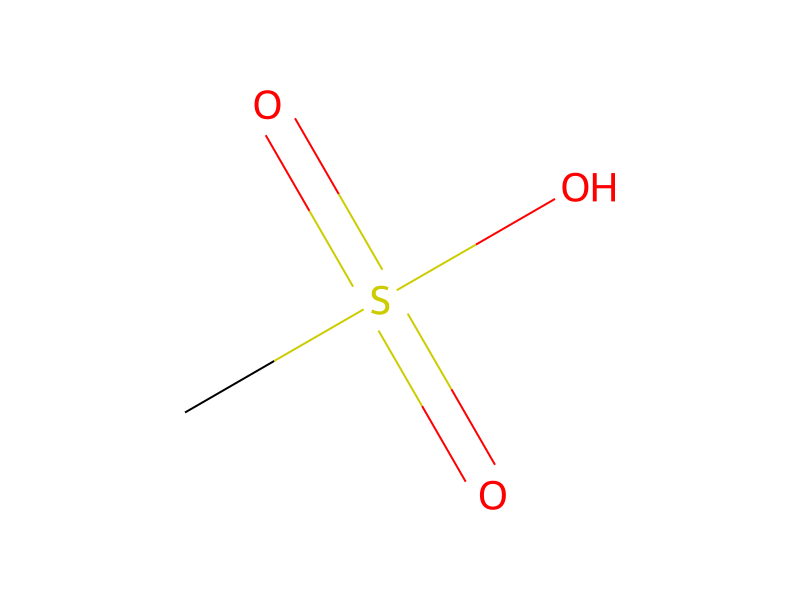
Methanesulfonic Acid → Phenyl carbamate
Reaction equation

CS(O)(=O)=O.C(N([CH2:11][CH3:12])CC)C.[N:13].NC1S[CH:17]=[CH:18]N=1.[C:20]([O:23][CH2:24][CH3:25])(=[O:22])C>FC(F)(F)C(O)=O.C(Cl)Cl>[C:20](=[O:22])([O:23][C:24]1[CH:25]=[CH:12][CH:11]=[CH:18][CH:17]=1)[NH2:13]Participants






Procedure
Scheme 4 depicts a method for preparing compounds of formula 1 wherein R1 is nitrogen-substituted cycloalkyl. A dry solution of cyclobutanone-3-carboxylic acid 9 in tetrahydrofuran is treated with diphenylphosphoryl azide and triethylamine at about 23° C. and is warmed at about 60° C. After nitrogen evolution has ceased, benzyl alcohol is added to provide 10. A solution of 2-aminothiazole in tetrahydrofuran at about −78° C. is treated with 2 equivalents of n-butyllithium, is stirred approximately 1 hour, 2 equivalents of chlorotrimethylsilane are added dropwise, then the solution is warmed to about −10° C. The solution is cooled back to about −78° C., 1 equivalent of n-butyllithium is added dropwise and after approximately 10 minutes a solution of ketone 10 in tetrahydrofuran is added. Following aqueous work-up and silica gel chromatography, aminothiazole of formula 5 is obtained. Treatment of 5 in methylene chloride—trifluoroacetic acid with triethylsilane yields 4. Removal of the benzyloxycarbonyl protecting group with methanesulfonic acid (8 equiv.) in trifluoroacetic acid followed by selective acylation of the cycloalkyl amine with an acid anhydride R8C(═O)OC(═O)R8 and triethylamine in methylene chloride gives 4. Acylation of the aminothiazole nitrogen can be accomplished by mixing a carboxylic acid (HO(═O)C(CR10R11)nR4), propanephosphonic acid cyclic anhydride, and triethylamine in a solvent such as ethyl acetate or dichloromethane to afford compounds of formula 1.
Workup
- customgives 4
Sources & evidence
- ORD record
- ord-ecac51a8ce5b4b2b878bb784436d5170
- Source dataset
- uspto-grants-2004_04
- Patent number
- US06720427B2
Reaction notes
Loading…