Hydrochloric Acid → Ethyl[(Z)-1-(2-chloro-4-fluorophenyl)-2-cyanoethenyl]carbamate
Reaction equation

[Na].[NH2:2][C:3]([C:7]1[CH:12]=[CH:11][C:10]([F:13])=[CH:9][C:8]=1[Cl:14])=[CH:4][C:5]#[N:6].[C:15](=O)([O:19]CC)[O:16][CH2:17][CH3:18].Cl>C(O)C.O.C(OCC)(=O)C>[CH2:17]([O:16][C:15](=[O:19])[NH:2]/[C:3](/[C:7]1[CH:12]=[CH:11][C:10]([F:13])=[CH:9][C:8]=1[Cl:14])=[CH:4]\[C:5]#[N:6])[CH3:18]Participants
8
Reactant 4



Product 1

Reagents, catalysts & solvents 3



Procedure
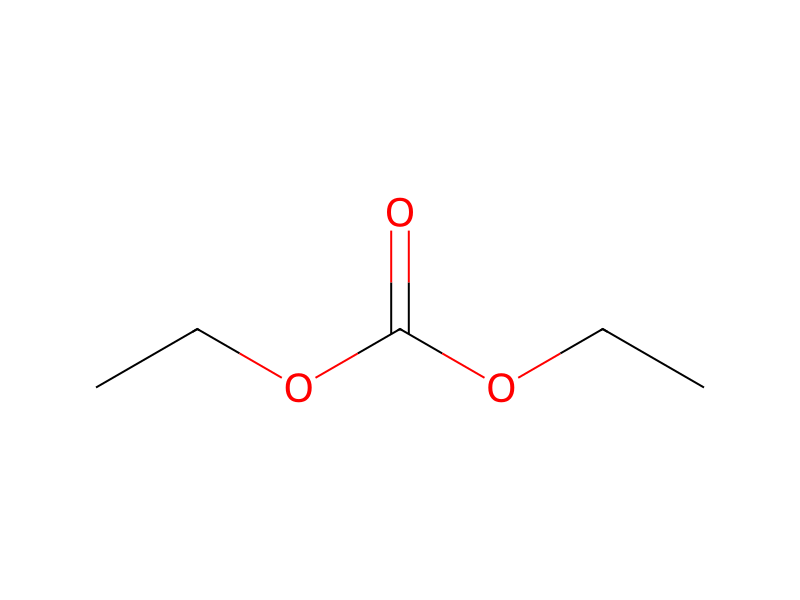
At 40° C., 982 mg (42.7 mmol) of sodium were dissolved in ethanol (53 ml). 5.6 g (28.5 mmol) of 3-amino-3-(2-chlor-4-fluorophenyl)prop-2-enonitrile and 7.4 g (62.7 mmol) of diethyl carbonate were added, and the reaction solution was stirred under reflux for 4 h. 200 ml of ethyl acetate and 150 ml of water were added to the reaction mixture, and the pH was adjusted to pH=5 with hydrochloric acid. The organic phase was separated off, dried over magnesium sulfate and concentrated on a rotary evaporator. Removal of the solvent gave 6.77 g (88% of theory) of the product as a mixture of E and Z isomers.
Workup
- temperatureunder reflux for 4 h
- customThe organic phase was separated off
- dry with materialdried over magnesium sulfate
- concentrationconcentrated on a rotary evaporator
- customRemoval of the solvent
- customgave 6.77 g (88% of theory) of the product
- additionas a mixture of E and Z isomers
Sources & evidence
- ORD record
- ord-0b4642f7695d42a1897f6d22a96ea405
- Source dataset
- uspto-grants-2013_05
- Patent number
- US08436003B2
Reaction notes
Loading…