Methanesulfonic Acid → Methanesulfonic Acid
Reaction equation

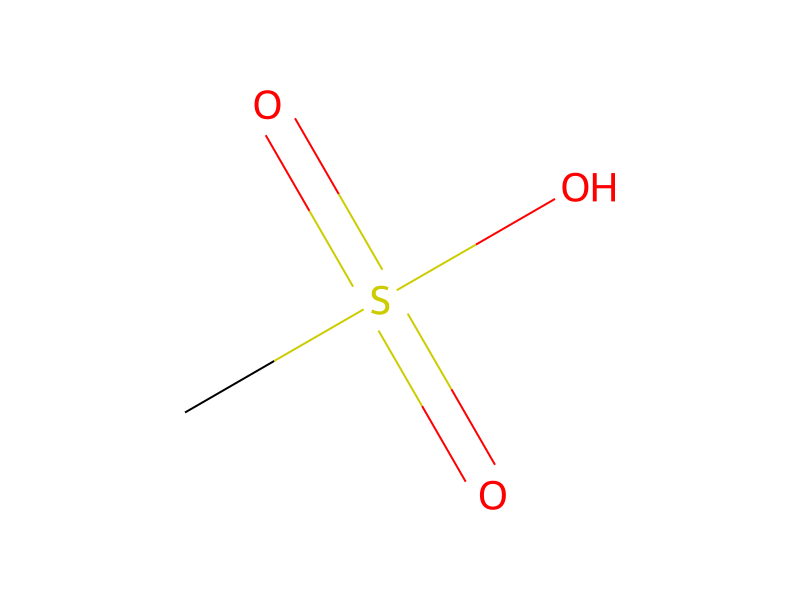
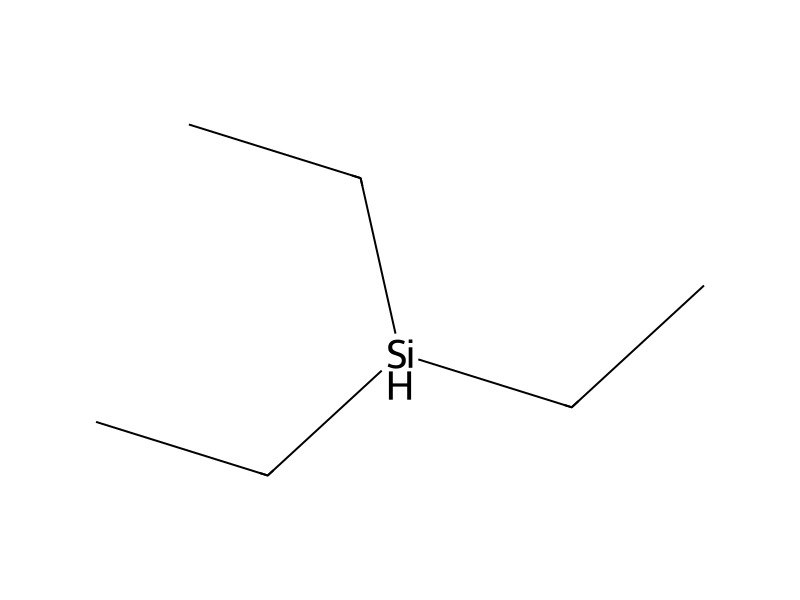
[NH:1]1[CH2:6][CH2:5][NH:4][CH2:3][C:2]1=[O:7].[F:8][C:9]([F:14])([F:13])[C:10]([OH:12])=[O:11].[CH3:15][S:16]([OH:19])(=[O:18])=[O:17].[BH4-].[Na+].C([SiH](CC)CC)C>O.O1CCCC1.O1CCOCC1.ClCCl>[NH:1]1[CH:6]=[CH:5][NH:4][CH2:3][C:2]1=[O:7].[F:8][C:9]([F:14])([F:13])[C:10]([OH:12])=[O:11].[CH3:15][S:16]([OH:19])(=[O:18])=[O:17]Participants
Reactant 5



Product 3

Reagents, catalysts & solvents 4




Procedure
In step c, scheme 5, cleavage of the acetal and reductive cyclization of 26 leads to piperazinone 22 (L=a bond, p=0, R8 and R10═H), described as intermediate in scheme 4. This conversion is performed either in one step using an acid, e.g., trifluoroacetic acid or methanesulfonic acid, and a reducing agent such as sodium borohydride or triethylsilane, in solvents such as dichloromethane, 1,4-dioxane, tetrahydrofuran, water, or mixtures thereof. Alternatively, the reaction may be performed in two steps, by first forming a 3,4-dihydro-1H-pyrazin-2-one intermediate in the presence of an acid, e.g., trifluoroacetic acid or methanesulfonic acid, in a solvent such as water or dichloromethane, and subsequent catalytic hydrogenation at pressures between 1 bar and 10 bar, using a suitable catalyst, e.g., palladium on activated charcoal, in solvents such as methanol, ethanol, ethyl acetate, or mixtures thereof, at temperatures between 0° C. and 50° C.
Workup
- customAlternatively, the reaction
Sources & evidence
- ORD record
- ord-c21d2425e3364cfabc2ee73496818074
- Source dataset
- uspto-grants-2013_05
- Patent number
- US08445674B2
Reaction notes
Loading…