2,6-Dibromopyridine → 2-Bromo-6-(cyclobutyloxy)pyridine
Reaction equation

[CH:1]1([OH:5])[CH2:4][CH2:3][CH2:2]1.[Na].[Br:7][C:8]1[CH:13]=[CH:12][CH:11]=[C:10](Br)[N:9]=1>C1COCC1.CCOC(C)=O>[Br:7][C:8]1[CH:13]=[CH:12][CH:11]=[C:10]([O:5][CH:1]2[CH2:4][CH2:3][CH2:2]2)[N:9]=1Participants
6
Reactant 3
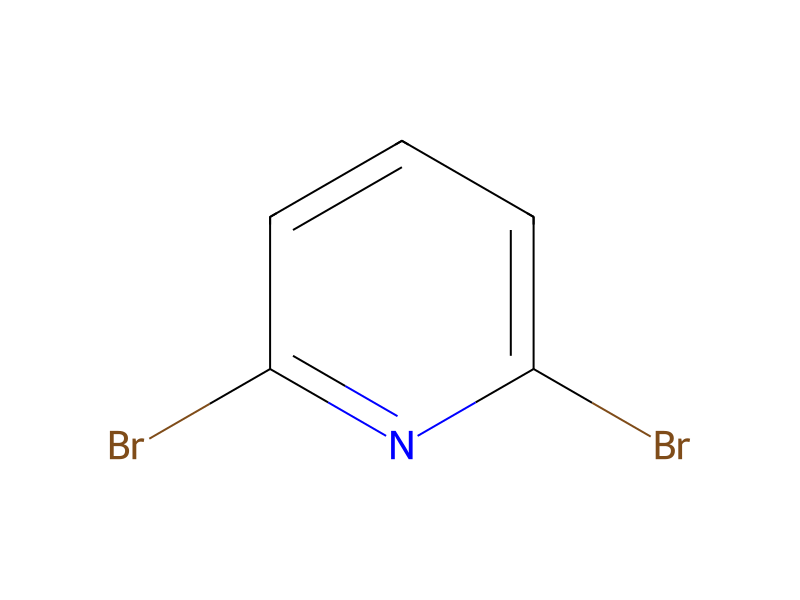


Product 1

Reagents, catalysts & solvents 2


Conditions
- Temperature
- 90 °C
Procedure
To cyclobutanol (1 mL), was added sodium (36 mg, 1.56 mmol). When the sodium was consumed, the mixture was diluted with 1 mL THF and 2,6-dibromopyridine (250 mg, 1.06 mmol). The mixture was stirred at 90° C. for 3 h, then was diluted with EtOAc. The organic phase was washed with water (2×) and brine, dried (Na2SO4) and concentrated. The crude material was purified by flash chromatography (0 to 10% EtOAc/hexanes gradient) to afford 106 mg of 158.1 as a colorless oil. LCMS (2 min gradient) RT=1.87 min, 228.17 (M+H)+.
Workup
- customWhen the sodium was consumed
- washThe organic phase was washed with water (2×) and brine
- dry with materialdried (Na2SO4)
- concentrationconcentrated
- customThe crude material was purified by flash chromatography (0 to 10% EtOAc/hexanes gradient)
Sources & evidence
- ORD record
- ord-3a1cb5be78b04cecb734423aedd9aa93
- Source dataset
- uspto-grants-2009_08
- Patent number
- US07576098B2
Reaction notes
Loading…