Acetone → Methyl 4-octyloxybenzoate
Reaction equation

[OH:1][C:2]1[CH:11]=[CH:10][C:5]([C:6]([O:8][CH3:9])=[O:7])=[CH:4][CH:3]=1.C(=O)([O-])[O-].[K+].[K+].CC(C)=O.[CH2:22](Br)[CH2:23][CH2:24][CH2:25][CH2:26][CH2:27][CH2:28][CH3:29]>C(OCC)(=O)C>[CH2:22]([O:1][C:2]1[CH:3]=[CH:4][C:5]([C:6]([O:8][CH3:9])=[O:7])=[CH:10][CH:11]=1)[CH2:23][CH2:24][CH2:25][CH2:26][CH2:27][CH2:28][CH3:29]Participants
Reactant 4

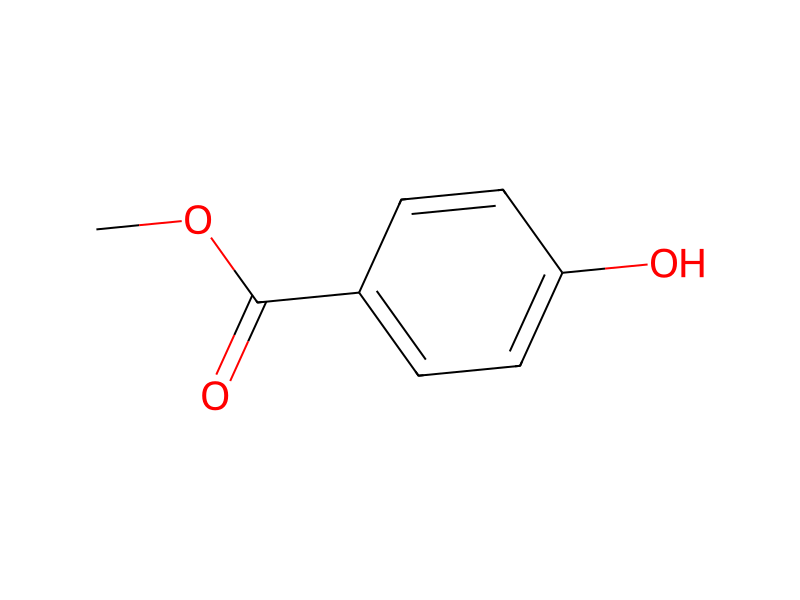
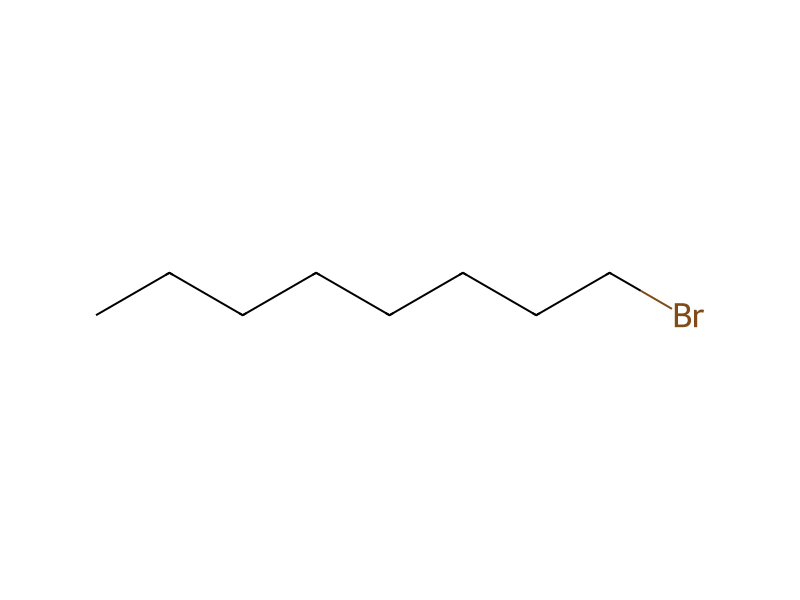

Product 1

Reagents, catalysts & solvents 1

Procedure
Into a flask was introduced 251.0 g (1.65 mol) of methyl 4-hydroxybenzoate, 276.37 g (1.99 mol) potassium carbonate and 1200 g of acetone. This was refluxed for 45 min followed by the dropwise addition of 386.17 g (1.99 mol) of 1-octylbromide over a 1 hour period. The reaction mixture was refluxed for two days. Filtration of the cooled reaction mixture and evaporation of the filtrate gave an oil. This was taken up in ethyl acetate and extracted with 5% NaOH (2×100 ml) followed by water (2×100 ml). The organic layer was dried (MgSO4), concentrated, and transferred to a 1 L three necked flask. The contents of the flask was subjected to high vacuum distillation to remove the excess 1-octylbromide. The pot residue was essentially pure methyl 4-octoxybenzoate (376 g, 86%).
Workup
- temperatureThis was refluxed for 45 min
- temperatureThe reaction mixture was refluxed for two days
- filtrationFiltration of the cooled reaction mixture and evaporation of the filtrate
- customgave an oil
- extractionextracted with 5% NaOH (2×100 ml)
- dry with materialThe organic layer was dried (MgSO4)
- concentrationconcentrated
- distillationThe contents of the flask was subjected to high vacuum distillation
- customto remove the excess 1-octylbromide
Sources & evidence
- ORD record
- ord-0764d6fac5434d0cb410ab9e22a39fa7
- Source dataset
- uspto-grants-2008_10
- Patent number
- US07442760B2
Reaction notes
Loading…