Trifluoroacetic acid → 4-Chloro-5-hydroxy-7-iodo-2-(1-methyl-1-phenylethyl)isoindolinone
Reaction equation

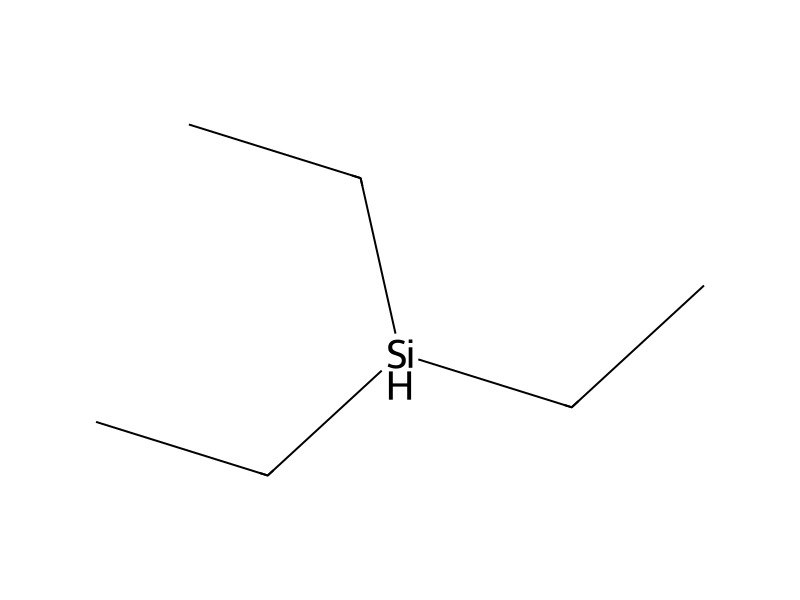
[Cl:1][C:2]1[C:10]([O:11]COC)=[CH:9][C:8]([I:15])=[C:7]2[C:3]=1[CH:4](O)[N:5]([C:17]([CH3:25])([C:19]1[CH:24]=[CH:23][CH:22]=[CH:21][CH:20]=1)[CH3:18])[C:6]2=[O:16].FC(F)(F)C(O)=O.C([SiH](CC)CC)C.C(=O)([O-])O.[Na+]>[N+](C)([O-])=O.O>[Cl:1][C:2]1[C:10]([OH:11])=[CH:9][C:8]([I:15])=[C:7]2[C:3]=1[CH2:4][N:5]([C:17]([CH3:25])([C:19]1[CH:24]=[CH:23][CH:22]=[CH:21][CH:20]=1)[CH3:18])[C:6]2=[O:16]Participants
7
Reactant 4



Product 1

Reagents, catalysts & solvents 2


Procedure
In a similar manner to Step 4 of Example 16, 4-chloro-5-methoxymethoxy-3-hydroxy-7-iodo-2-(1-methyl-1-phenylethyl)isoindolinone (100 mg, 0.21 mmol) was dissolved in nitromethane (4 mL), and the solution was treated with trifluoroacetic acid (0.097 mL, 1.26 mmol) and triethylsilane (0.200 mL, 1.25 mmol). The mixture was added with water and saturated aqueous sodium hydrogencarbonate solution and extracted with ethyl acetate. The organic layer was washed with saturated brine and dried over anhydrous sodium sulfate. The solvent was evaporated under reduced pressure to obtain 4-chloro-5-hydroxy-7-iodo-2-(1-methyl-1-phenylethyl)isoindolinone (97.0 mg, yield 98%).
Workup
- extractionextracted with ethyl acetate
- washThe organic layer was washed with saturated brine
- dry with materialdried over anhydrous sodium sulfate
- customThe solvent was evaporated under reduced pressure
Sources & evidence
- ORD record
- ord-1bb3b9cb8735410c8b91dde127e1ef07
- Source dataset
- uspto-grants-2010_06
- Patent number
- US07745641B2
Reaction notes
Loading…