Toluene → octyl levulinate
Reaction equation

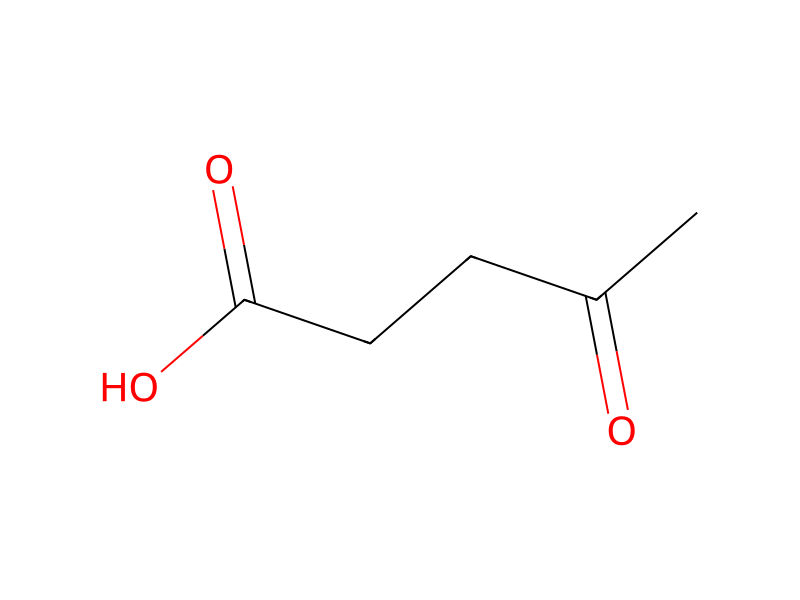
[C:1]([OH:8])(=[O:7])[CH2:2][CH2:3][C:4]([CH3:6])=[O:5].[C:9]([O-])([O-])=O.[K+].[K+].[C:15]1([CH3:21])[CH:20]=[CH:19][CH:18]=[CH:17][CH:16]=1>[Br-].C([N+](CCCC)(CCCC)CCCC)CCC.CN(C=O)C>[C:1]([O:8][CH2:9][CH2:16][CH2:17][CH2:18][CH2:19][CH2:20][CH2:15][CH3:21])(=[O:7])[CH2:2][CH2:3][C:4]([CH3:6])=[O:5]Participants
6
Reactant 3


Product 1

Reagents, catalysts & solvents 2


Procedure
I-Bromooctane (332 g, 1.72 mol) was added to a stirring mixture of levulinic acid (200 g, 1.72 mol), tetrabutylammonium bromide (55.1 g, 0.17 mol), and K2CO3 (357 g, 2.58 mol) in DMF (500 mL) drop-wise and stirred at room temperature for overnight. The resulting mixture was diluted in toluene and the organic layer was washed with HCl (10%), brine, and water. The solvent was concentrated in vacuo and the oil was purified by vacuum distillation to afford the product octyl levulinate as a clear oil.
Workup
- washthe organic layer was washed with HCl (10%), brine, and water
- concentrationThe solvent was concentrated in vacuo
- distillationthe oil was purified by vacuum distillation
Sources & evidence
- ORD record
- ord-a73d5371a51742f1bb8e3afb853c2fdf
- Source dataset
- uspto-grants-2015_06
- Patent number
- US09061965B2
Reaction notes
Loading…